Shipyard
Overview
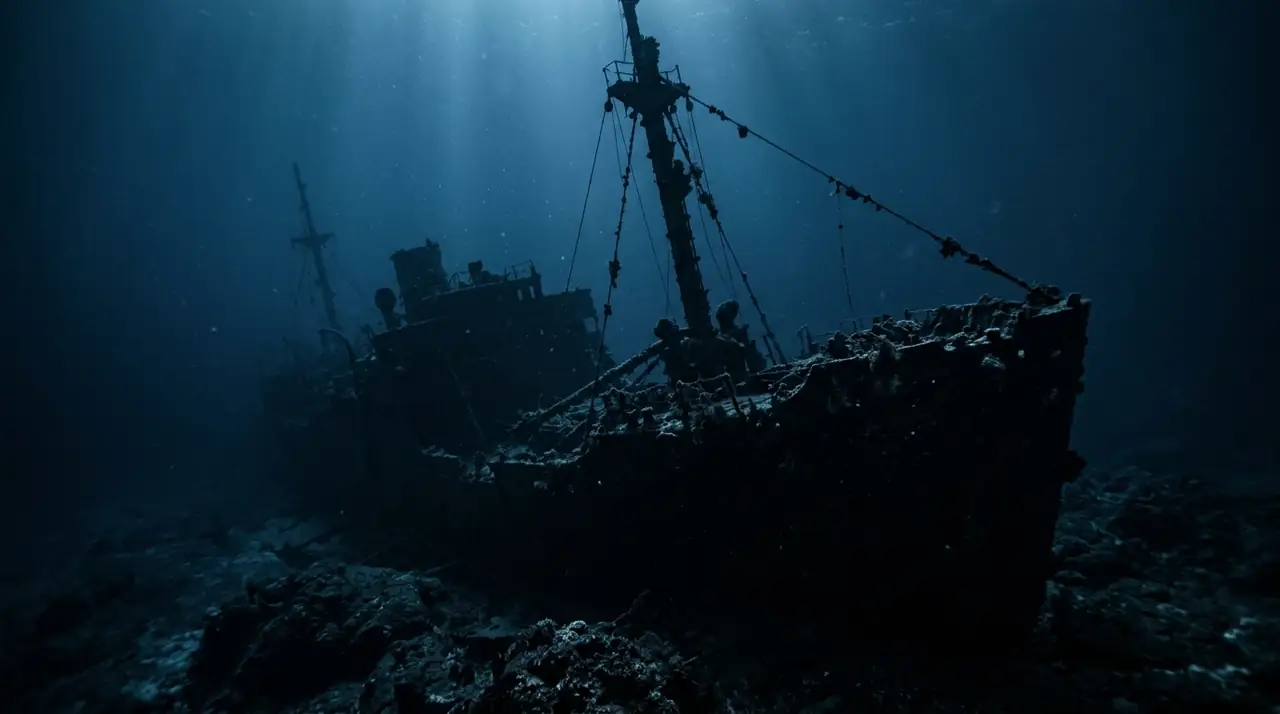
Shipyard is one of Lhaviyani Atoll's most distinctive dive sites, featuring two shipwrecks resting side by side on a sandy seabed between 20 and 30 metres. The vessels have been underwater for decades, and nature has thoroughly reclaimed them — their hulls, superstructures, and rigging are now encrusted with hard and soft corals, sponges, and hydroids, creating vibrant artificial reefs in an otherwise featureless sandy landscape. The larger wreck is the main attraction, its intact hull providing a dramatic backdrop for wide-angle photography. Schools of tall-finned batfish hover around the superstructure in lazy formations, their disc-shaped bodies catching the light. Large groupers inhabit the interior spaces, and giant moray eels peer from holes in the corroded metalwork. The smaller wreck nearby, though less intact, has developed equally impressive coral coverage and hosts its own community of residents. Between and around the wrecks, the sandy bottom harbours its own attractions. Stingrays rest half-buried in the sand, garden eels sway in the current, and sea turtles cruise between the two structures. The hard surfaces of the wrecks attract an exceptional diversity of invertebrate life — nudibranchs, flatworms, and cleaner shrimps provide macro subjects, while larger sea fans and black coral trees grow from exposed metal edges. Mild currents and the relatively sheltered location make Shipyard an enjoyable dive for intermediate-level divers. The wrecks are large enough to fill an entire dive, but the swim between them is short enough that both can be explored in a single immersion. It is a fascinating example of how artificial structures become integrated into the marine ecosystem.
Early access
Plan a dive here
Open the DiveOne planner to sketch a recreational plan before you go. It is a planning assistant, not a dive computer.
Marine life
Dive profile
DEPTH PROFILE
DEPTH PROGRESSION & WAYPOINTS: Shipyard
Location
Frequently asked questions
What are the wrecks at Shipyard?
Two cargo vessels rest on a sandy bottom at approximately 20–30 m. They have been underwater long enough to be extensively colonised by hard and soft corals, creating artificial reefs teeming with marine life.
Can you penetrate the wrecks?
Limited penetration is possible in some areas where the structure is intact and openings are large enough. However, most of the interest is on and around the exterior, where coral growth and marine life are concentrated.
Is this site suitable for underwater photography?
Excellent for both macro and wide-angle. The wrecks provide dramatic structural backdrops, schools of batfish create stunning compositions, and the abundant macro life on the coral growth keeps photographers busy throughout the dive.
Reviews
Reviews
No reviews yet
Data Provenance
This profile is compiled from 3 operator submissions and 142 community logs. Key facts (depth, entry) are verified against official hydrographic charts.