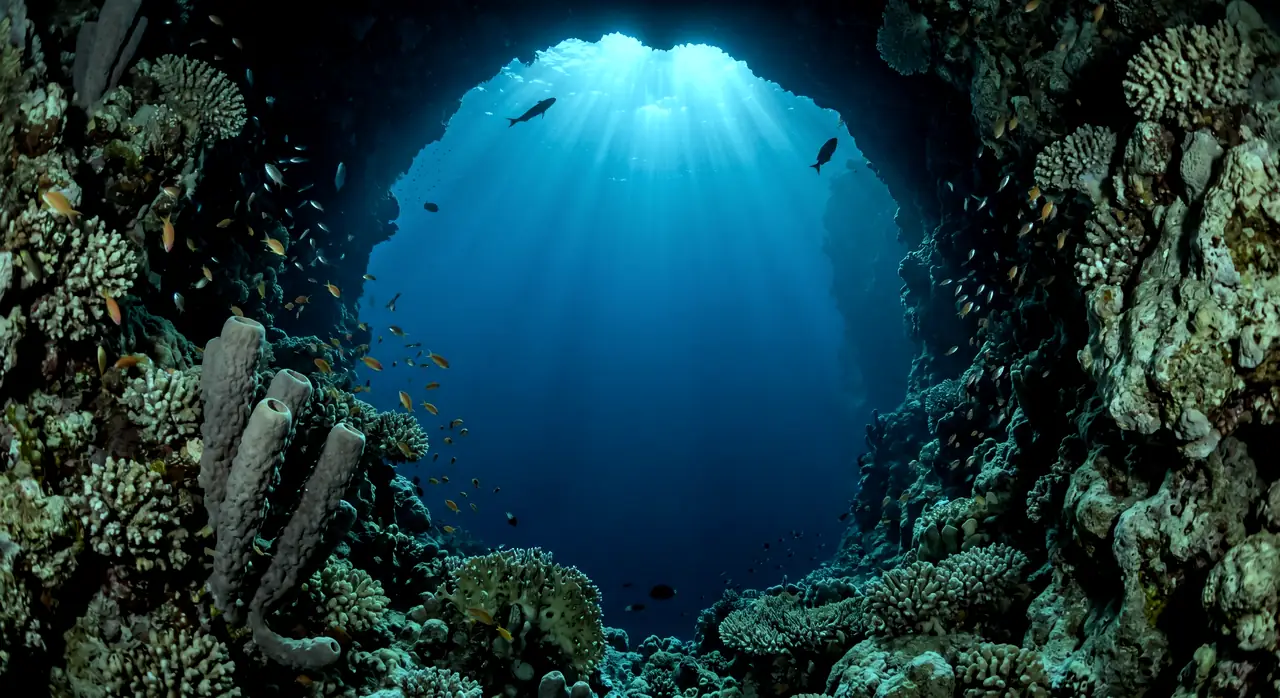
Blue Hole
Overview
The Blue Hole in Dahab is one of the most iconic dive sites on Earth — a massive submarine sinkhole plunging over 100 meters into the reef flat of the Gulf of Aqaba's western shore. Located just 15 minutes north of Dahab town, it offers effortless shore entry from a natural reef platform. The site's centerpiece is a bell-shaped shaft roughly 60 meters in diameter at the surface, narrowing as it descends. At 56 meters on the seaward side, the famous Arch — a short tunnel — connects the hole's interior to the open reef wall, providing a breathtaking passage for experienced divers. Most recreational divers enjoy the rim dive, descending along the inner wall to 25–30 meters where hard corals, sea fans, and dense schools of glassfish create vivid photo opportunities. Resident Napoleon wrasse often approach divers with curiosity, while lionfish perch on coral heads throughout the shallower sections. The exterior reef wall drops vertically into deep blue, with anthias clouds and occasional barracuda patrols. Visibility at the Blue Hole is exceptional, often exceeding 40 meters, and currents are virtually absent inside the hole. Night dives reveal hunting lionfish and sleeping parrotfish along the rim. The site is suitable for all levels: snorkelers can peer into the abyss from the surface, Open Water divers explore the upper walls, and technical divers push the deeper passages. Shore-based dive centres in Dahab run trips throughout the day, and a small café at the entry point makes surface intervals comfortable. Water temperatures peak at 28 °C in August and cool to around 21 °C in February.
Early access
Plan a dive here
Open the DiveOne planner to sketch a recreational plan before you go. It is a planning assistant, not a dive computer.
Marine life
Dive profile
DEPTH PROFILE
DEPTH PROGRESSION & WAYPOINTS: Blue Hole
Location
Frequently asked questions
What certification do I need to dive the Blue Hole?
For the standard rim dive along the shallow coral shelf, Open Water certification is sufficient. The famous Arch passage at 56 meters requires Advanced Open Water with significant deep-diving experience. Technical diving certification is strongly recommended for any exploration beyond recreational limits.
When is the best time to dive the Blue Hole?
The Blue Hole is diveable year-round, but the best conditions are from March to November when water temperatures range 22–28 °C and visibility regularly exceeds 30 meters. Winter months (December–February) bring cooler water around 21 °C but fewer crowds.
What marine life can I see at the Blue Hole?
The coral wall hosts resident Napoleon wrasse, dense schools of glassfish, lionfish, moray eels, and anthias. In the blue water you may spot barracuda and occasional sea turtles. The rim's hard corals support a rich ecosystem of invertebrates and smaller reef fish.
Reviews
Reviews
No reviews yet
Data Provenance
This profile is compiled from 3 operator submissions and 142 community logs. Key facts (depth, entry) are verified against official hydrographic charts.