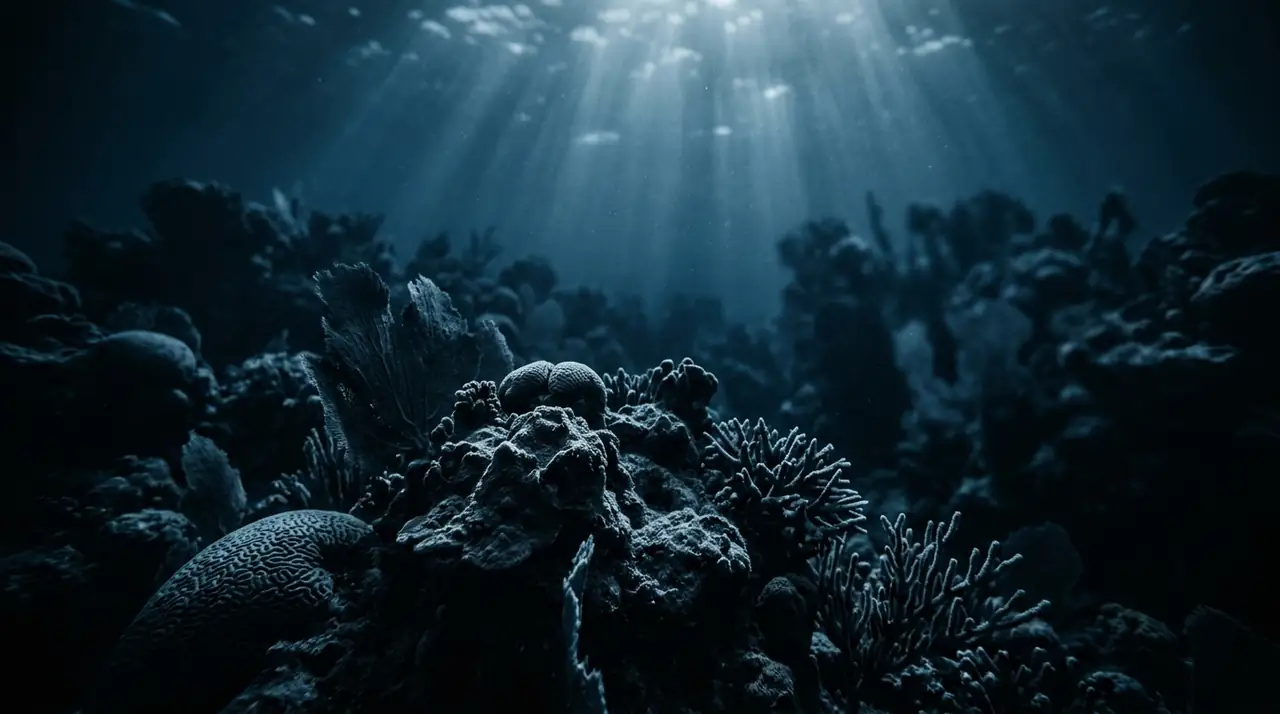
Woodhouse Reef
Overview
Woodhouse Reef is the longest and arguably the most underrated of the four great reefs in the Strait of Tiran, that narrow gateway between the Red Sea proper and the Gulf of Aqaba. While Jackson Reef and Thomas Reef draw most of the attention, Woodhouse stretches nearly a kilometer between them, a slender coral ridge whose walls drop vertically on both sides into channels over 200 meters deep. The currents that funnel through these channels make Woodhouse a site of exceptional pelagic action for divers willing to handle strong water movement. The standard dive plan is a drift along the eastern wall, entering from the boat near the reef's southern end and riding the current northward. The wall is impeccably maintained by the current itself, which scours away sediment and delivers nutrients that feed spectacular fan corals, soft corals in shades of pink and purple, and dense fields of anthias that erupt in orange clouds from every ledge. The drop-off is sheer, and looking down past your fins into bottomless blue water is a constant feature of the dive. The pelagic life is what draws experienced divers to Woodhouse. Large schools of barracuda, numbering in the hundreds, form shimmering silver columns along the wall. Giant trevally patrol in hunting packs, their metallic bodies flashing as they turn on prey. Napoleon wrasse of impressive size cruise by at intervals, and eagle rays occasionally sweep past on broad black wings. During cooler months, hammerhead sharks have been sighted in the deep blue water beyond the wall, solitary or in small groups, their distinctive silhouettes unmistakable against the cobalt background. At the northern tip of the reef, the wreck of the Loullia adds historical interest. This Panamanian cargo ship ran aground in 1981 and has been slowly dissolving into the reef ever since. The lower hull plates and structural ribs remain on the shallow reef flat, heavily colonized by hard corals and providing shelter for groupers, moray eels, and clouds of glassfish. From the surface, the wreck's outline is still visible as a dark shadow on the reef. The western wall of Woodhouse offers a different character: more sheltered, with less current and better conditions for examining the reef's detail. Coral gardens here are in excellent condition, with table corals extending like platforms over the drop-off and massive Porites colonies providing habitat for countless invertebrates. Butterflyfish pairs patrol territories with mathematical precision, and the occasional octopus can be spotted changing color as it moves between coral heads. Visibility at Woodhouse typically ranges from 20 to 40 meters, with the clearest water during incoming tides that push clean oceanic water through the strait. Water temperatures vary from 21 degrees in winter to 28 in summer. The site demands advanced skills due to strong and sometimes unpredictable currents that can change direction mid-dive, and dive operators rightly treat Tiran's reefs with respect.
Early access
Plan a dive here
Open the DiveOne planner to sketch a recreational plan before you go. It is a planning assistant, not a dive computer.
Marine life
Dive profile
DEPTH PROFILE
DEPTH PROGRESSION & WAYPOINTS: Woodhouse Reef
Location
Frequently asked questions
What is Woodhouse Reef and where is it located?
Woodhouse Reef is the longest of the four major reefs in the Strait of Tiran, the narrow waterway separating the Sinai Peninsula from Tiran Island at the entrance to the Gulf of Aqaba. The reef stretches nearly one kilometer in a north-south orientation between Jackson Reef to the north and Thomas Reef to the south. Its elongated shape and position in the strait's strongest currents make it a favorite among experienced divers visiting Sharm el-Sheikh.
What happened to the ship wreck on Woodhouse Reef?
The Loullia, a Panamanian-flagged cargo vessel, ran aground on the northern tip of Woodhouse Reef in 1981. The ship sat on the reef for years, gradually breaking up and becoming a landmark visible from dive boats and even from shore on clear days. The upper structure has largely collapsed, but the lower hull remains on the reef flat, its metal skeleton now colonized by hard and soft corals. It serves as an artificial reef attracting groupers, moray eels, and schooling fish.
How do currents affect diving at Woodhouse Reef?
Currents at Woodhouse can be very strong, driven by tidal exchanges in the Strait of Tiran. The reef's elongated shape acts as a current barrier, creating accelerated flow along both its eastern and western walls. Dives are typically planned as drift dives, entering at one end and being picked up by the boat at the other. The eastern wall receives the strongest current and produces the best pelagic encounters. Dive operators assess conditions daily, and the site may be skipped if currents are too powerful.
Reviews
Reviews
No reviews yet
Data Provenance
This profile is compiled from 3 operator submissions and 142 community logs. Key facts (depth, entry) are verified against official hydrographic charts.