Whale Rock
Overview
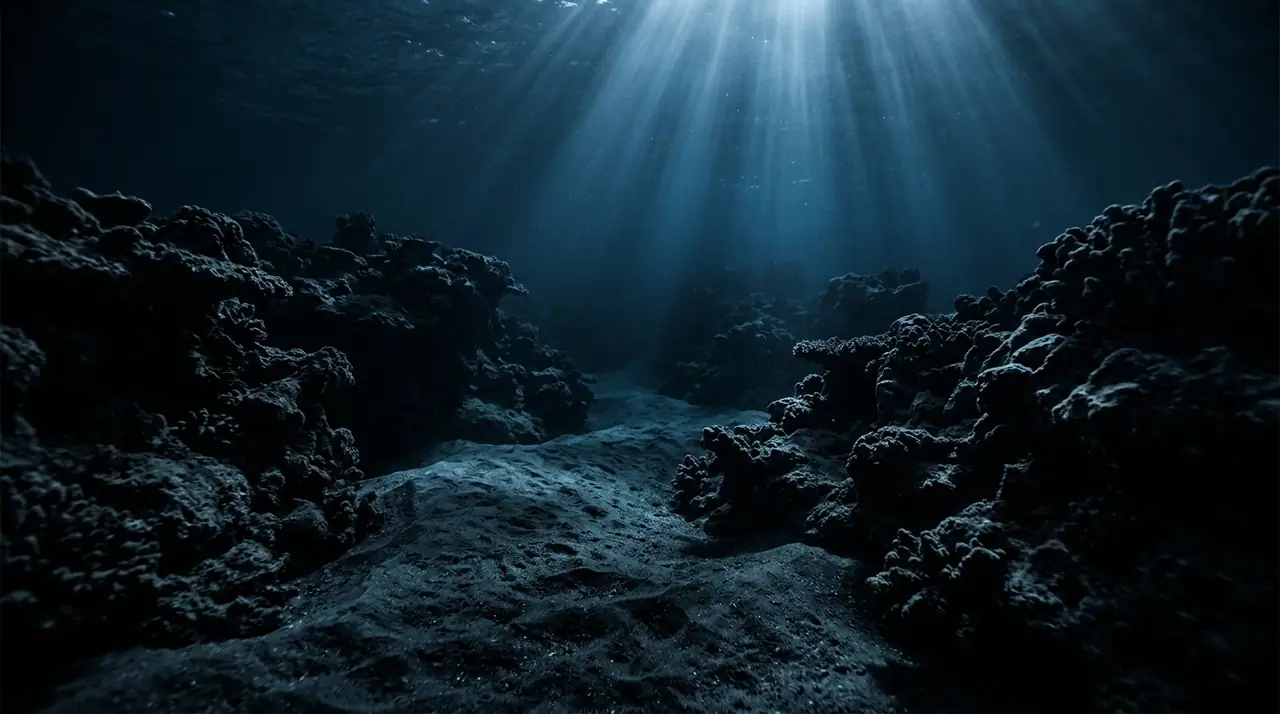
Whale Rock is one of those rare dive sites where the marine life concentration makes the surrounding ocean feel empty by comparison. This massive basalt pinnacle off Mauritius's west coast rises from a sandy seabed at 26 metres to within 12 metres of the surface, creating an underwater island that attracts and concentrates fish life in extraordinary density. The volcanic rock is perforated with holes and crevices that shelter what may be the highest density of moray eels on any single dive site in the western Indian Ocean. The boat departed Flic en Flac and cleared the lagoon pass in ten minutes, anchoring over the pinnacle in open blue water. The descent revealed the rock materializing from the blue at 15 metres visibility, a dark mass growing larger as I approached. The top of the pinnacle is a broad plateau at 12 metres, covered in encrusting coral and algae, with fish swirling above it in a living tornado. Schools of two-spot snapper and blueline snapper circled the rock in dense formations, creating a wall of silver and gold that I had to swim through to reach the pinnacle surface. Surgeonfish grazed in carpet-like aggregations. Fusiliers streamed past in ribbons. The biomass concentrated around this isolated structure was extraordinary, as if every fish within a kilometre had decided this was the place to be. The morays revealed themselves gradually. A giant moray at least two metres long occupied a crevice at 16 metres, its muscular body coiled and its mouth gaping rhythmically. Three metres away, a honeycomb moray peered from a smaller hole. Then another giant moray at a cleaning station, its jaws wide while banded coral shrimp worked inside. I counted fourteen morays of three species on a single circumnavigation of the pinnacle. The density was astonishing. Deeper on the sandy base, scorpionfish and lionfish waited in ambush positions. Lobsters waved antennae from cracks in the basalt. An octopus retreated into a hole, changing colour from textured brown to smooth white as it squeezed through an impossibly narrow gap. Whale Rock rewards repeated visits. The same structure reveals different residents depending on time of day, season, and patience. It is Mauritius diving distilled to its essence: volcanic geology creating habitat, oceanic water delivering nutrients, and life concentrating wherever the two converge.
Early access
Plan a dive here
Open the DiveOne planner to sketch a recreational plan before you go. It is a planning assistant, not a dive computer.
Marine life
Dive profile
DEPTH PROFILE
DEPTH PROGRESSION & WAYPOINTS: Whale Rock
Location
Frequently asked questions
Where exactly is Whale Rock located?
Whale Rock is located approximately 2 kilometres offshore from Flic en Flac on the west coast of Mauritius, beyond the outer edge of the lagoon reef. The boat ride from Flic en Flac takes roughly 10 to 15 minutes. The pinnacle sits on a sandy bottom in open water, rising as an isolated structure that attracts marine life from the surrounding area. Its position outside the lagoon means it receives cleaner oceanic water and typically better visibility than sites inside the reef.
Why are there so many moray eels at Whale Rock?
The volcanic basalt formation is riddled with crevices, holes, and small caves that provide ideal shelter for moray eels. The pinnacle structure concentrates prey fish which attract and sustain a large eel population. Multiple species coexist including giant morays exceeding two metres, honeycomb morays, and whitemouth morays. At cleaning stations on the rock, morays can be observed with mouths open while cleaner shrimp work over their teeth and gills. The density of morays makes this one of the best sites in the Indian Ocean for observing these animals.
What is the best time to dive Whale Rock?
The best conditions occur from October to April during the Mauritian summer when water temperatures are warmest and the west coast is most sheltered from prevailing winds. During this period visibility typically ranges from 20 to 30 metres. The winter months from May to September bring cooler water and occasional west swells that can make the site inaccessible. Morning dives generally offer better visibility before afternoon thermal mixing reduces clarity.
Reviews
Reviews
No reviews yet
Data Provenance
This profile is compiled from 3 operator submissions and 142 community logs. Key facts (depth, entry) are verified against official hydrographic charts.