Wewak WWII Wrecks
Overview
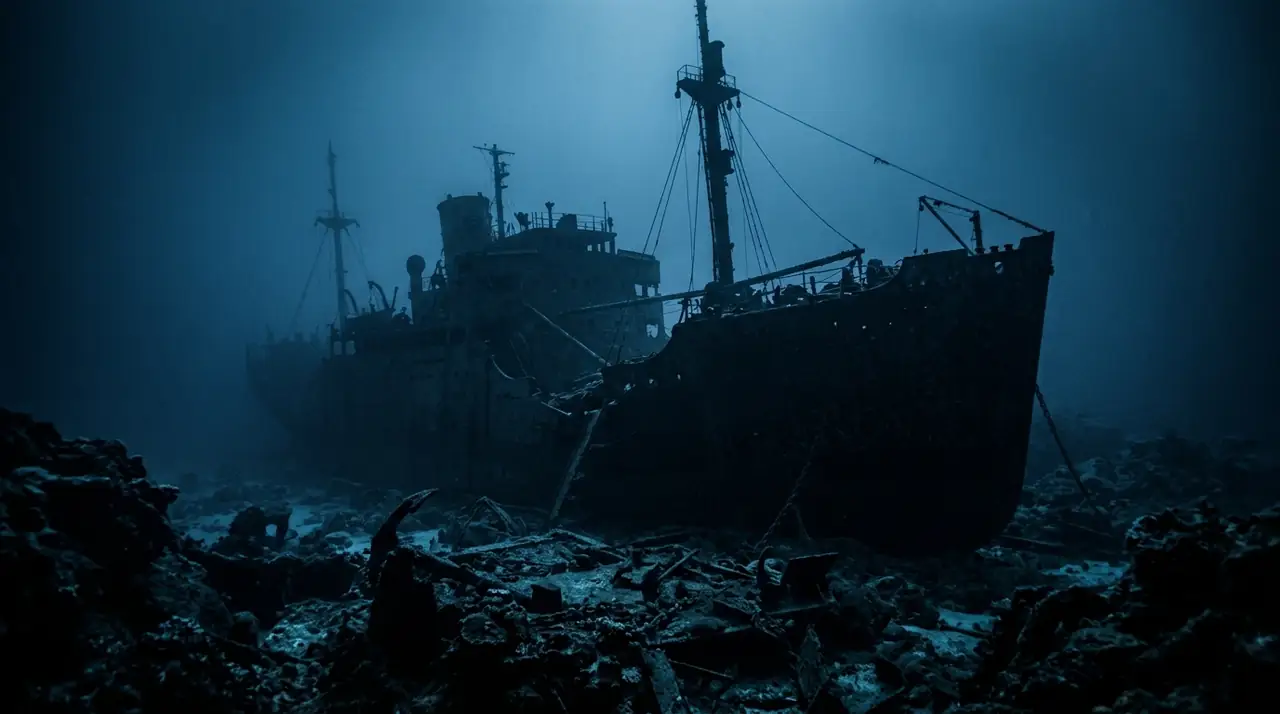
Wewak was the largest Japanese military base on the New Guinea mainland during World War II, a sprawling complex of airfields, supply dumps, and harbour facilities that supported operations across the region. From 1943 onward, Allied air attacks systematically destroyed the base's infrastructure, sinking ships in the harbour and scattering wreckage across the bay floor. Today this quiet provincial capital on Papua New Guinea's north coast gives little outward sign of its violent past, but beneath the warm waters of Wewak Bay lies a scattered museum of wartime debris that has spent eighty years being transformed into a tropical reef. I dived Wewak with a local guide who had grown up swimming over the wrecks and knew every one by sight. Our first site was a Japanese transport ship lying on her port side at 18 metres, her hull split open amidships by what was likely a bomb hit. The wreck was barely recognisable as a ship beneath the growth. Soft corals in every shade of pink, purple, and yellow covered every surface. Sea fans the size of dining tables grew from the exposed deck beams. Clownfish colonies occupied anemones attached to the hull plating, their territorial displays continuing uninterrupted by my arrival. Swimming along the wreck's exposed starboard side, I could see through the bomb damage into the cargo holds. The interior was a tangle of fallen structures colonised by sponges and encrusting coral, with schools of glassfish filling the open spaces in shimmering clouds. A large moray eel occupied a gap in the hull plating, its mouth opening and closing in the rhythmic breathing pattern that always looks more threatening than it is. Batfish in a group of six drifted alongside the wreck, their disc-shaped bodies turning slowly as they tracked my progress.
Early access
Plan a dive here
Open the DiveOne planner to sketch a recreational plan before you go. It is a planning assistant, not a dive computer.
Marine life
Dive profile
DEPTH PROFILE
DEPTH PROGRESSION & WAYPOINTS: Wewak WWII Wrecks
Location
Near Wewak, in the East Sepik Province region of Papua New Guinea.
Frequently asked questions
What WWII wrecks can I dive at Wewak?
Wewak was a major Japanese military base during World War II and was subjected to extensive Allied bombing from 1943 to 1945. The harbour and surrounding waters contain multiple wrecks including Japanese transport ships, landing barges, and at least two aircraft. The most accessible wrecks are in the main bay at depths of 10 to 25 metres. Some wrecks have been identified through wartime records while others remain unidentified. The wrecks are heavily encrusted with coral and support dense marine life, making them equally interesting as wreck dives and reef dives.
How do I get to Wewak and arrange diving?
Wewak is accessible by air from Port Moresby with Air Niugini and PNG Air, with flights several times per week. The town has basic infrastructure including hotels and guesthouses. Dive facilities in Wewak are limited compared to more established PNG dive destinations like Kimbe Bay or Milne Bay. You may need to arrange diving through local contacts or a specialist PNG dive travel operator. Some liveaboard operators include Wewak in their itineraries on extended voyages. Bringing your own essential equipment is recommended.
How does Wewak compare to other PNG WWII wreck diving at Rabaul?
Rabaul, on the island of New Britain, is PNG's most famous WWII wreck diving destination with better-established dive infrastructure. Wewak offers a completely different experience: the wrecks are generally in shallower water, the diving infrastructure is more basic, and you are unlikely to encounter other divers. The wreck variety is different as Wewak was primarily a supply and staging base rather than a major naval port like Rabaul. For experienced wreck divers who have already visited Rabaul and want to explore less-documented sites, Wewak offers genuine discovery potential.
Reviews
Reviews
No reviews yet
Data Provenance
This profile is compiled from 3 operator submissions and 142 community logs. Key facts (depth, entry) are verified against official hydrographic charts.