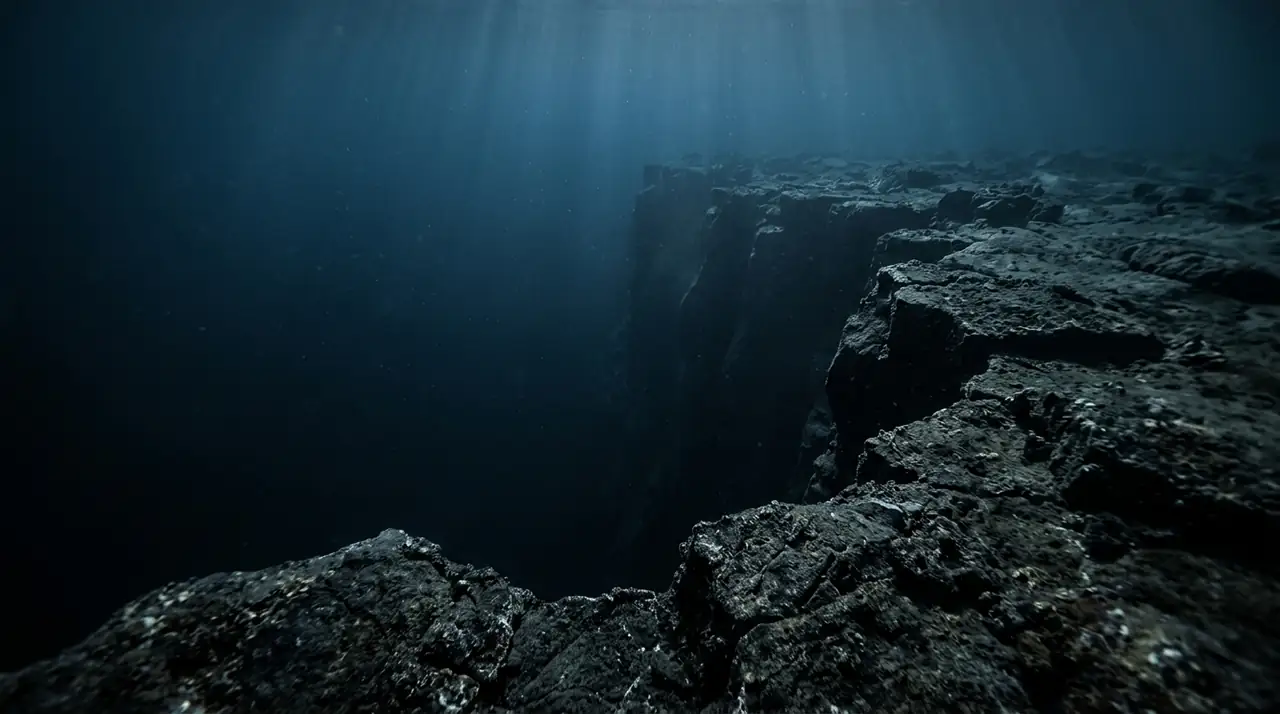
West Bay Wall
Overview
West Bay Wall sits at the western tip of Roatan, the largest of Honduras's Bay Islands, where one of the Caribbean's most photographed beaches gives way to one of its most dramatic underwater drop-offs. The transition from turquoise shallows to vertical wall happens with startling abruptness: a coral garden at ten metres, a brief sandy shelf, then nothing but blue as the reef face plunges into water exceeding six hundred metres deep. The shallow reef crest above the wall is healthy and colourful, with brain corals, star corals, and fire coral creating habitat for clouds of blue chromis, creole wrasse, and juvenile reef fish. Cleaning stations are active, and patient divers can watch Nassau groupers hovering while tiny gobies remove parasites. But it is the wall that makes West Bay extraordinary. Rolling over the edge at around twelve metres, the reef face drops away with a verticality that triggers a primal awareness of depth. Massive barrel sponges in deep purple and orange protrude from the wall in clusters, some large enough to sit inside. Purple and gold sea fans extend perpendicular to the wall face, catching the current and creating a tapestry of colour against the deep blue background. Green moray eels occupy crevices along the wall, their heads protruding with mouths agape in the breathing motion that initially alarms new divers but is entirely benign. Queen angelfish and French angelfish cruise the wall face in pairs. Spotted eagle rays occasionally emerge from the blue, gliding along the wall edge before disappearing into the depths. The wall continues deeper than recreational limits allow, but the zone between twelve and thirty metres contains the densest marine life. West Bay benefits from Roatan's position on the Mesoamerican Barrier Reef, the second largest reef system in the world. The island's dive industry is mature and competitive, with numerous operators offering daily departures. The combination of world-class wall diving within minutes of a stunning beach has made West Bay the defining image of Roatan diving.
Early access
Plan a dive here
Open the DiveOne planner to sketch a recreational plan before you go. It is a planning assistant, not a dive computer.
Marine life
Dive profile
DEPTH PROFILE
DEPTH PROGRESSION & WAYPOINTS: West Bay Wall
Location
Frequently asked questions
How close is West Bay Wall to the beach?
West Bay Wall is remarkably close to shore, with the reef crest beginning approximately 50 metres from the beach in water around 10 metres deep. The wall itself drops off within another 20 metres, meaning divers can go from standing on one of the Caribbean's most beautiful beaches to floating above a 600-metre vertical drop in a matter of minutes. Most dive operators access the wall by short boat rides of two to five minutes from West Bay beach, though determined shore divers can reach it by swimming from the beach. The proximity makes West Bay one of the most accessible wall dives in the Caribbean.
How does West Bay Wall compare to other Roatan dive sites?
West Bay Wall is often considered the most scenic wall dive on Roatan's western end due to its dense coral and sponge coverage and excellent visibility. The West End Wall and Half Moon Bay Wall are nearby alternatives with similar topography but slightly less dramatic drop-offs. Mary's Place, on the south side, offers a unique crevice dive rather than a wall. West Bay distinguishes itself through the combination of healthy shallow reef crest, dramatic wall, and the backdrop of the famous beach. Experienced Roatan divers often rate the south side sites as more interesting for exploration but acknowledge West Bay as the island's signature wall.
What is the best time of year to dive West Bay Wall?
Diving is excellent year-round on Roatan, but conditions at West Bay Wall are typically best from March through September when seas are calmer and visibility frequently exceeds 30 metres. October through February brings occasional northerly swells that can reduce visibility and create surge on the shallow reef crest, though the wall itself remains diveable in all but the roughest conditions. Water temperature stays above 26 degrees Celsius throughout the year, and a three-millimetre wetsuit is sufficient for most divers. Whale sharks occasionally pass through Bay Islands waters between March and May.
Reviews
Reviews
No reviews yet
Data Provenance
This profile is compiled from 3 operator submissions and 142 community logs. Key facts (depth, entry) are verified against official hydrographic charts.