Watamula
Overview
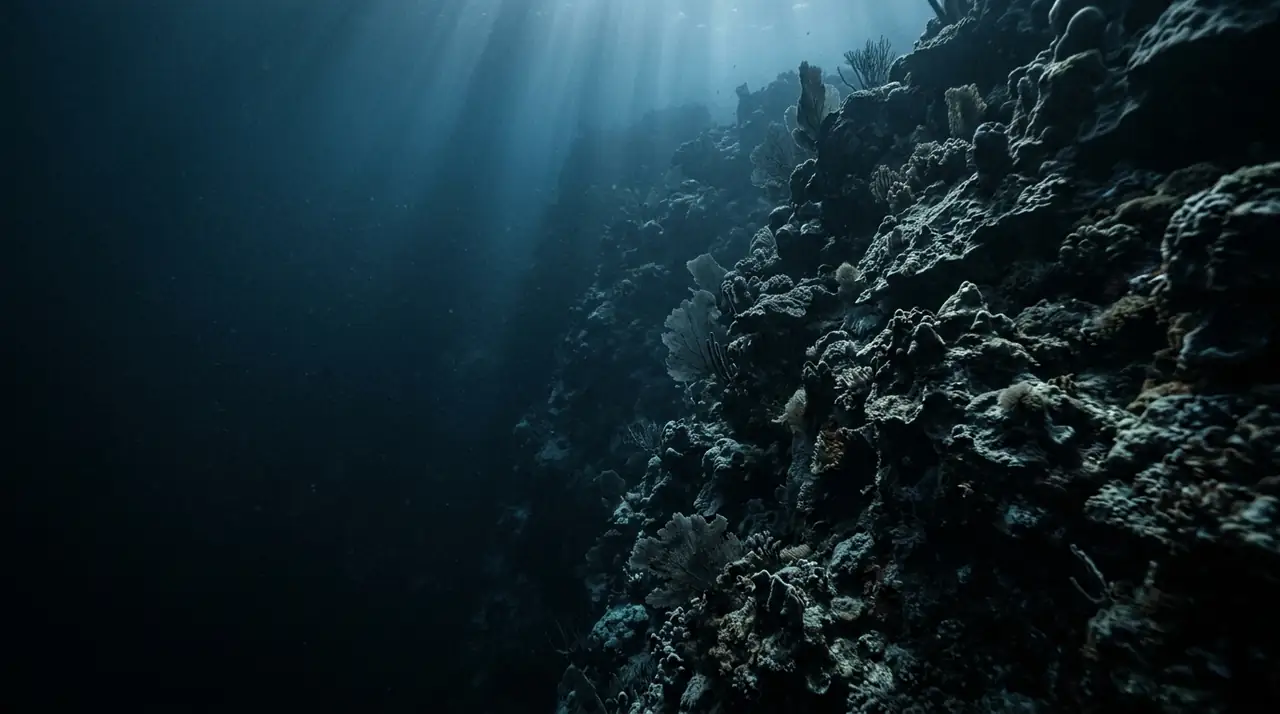
Curacao's leeward coast gets all the love. The calm turquoise water, the easy shore entries, the picture-perfect coral gardens that have made this Dutch Caribbean island a favourite for decades. But drive forty-five minutes west of Willemstad, past the last resort and beyond where the paved road ends, and the island reveals a different face entirely. Watamula is the wild northwestern headland where Curacao meets the open Caribbean, and the diving here carries a raw energy that the sheltered south coast cannot match. The entry is a scramble across volcanic rock that drops into deep water with no gradual slope, no sandy approach. I timed my giant stride between swells and dropped immediately into blue water. The wall starts right at the surface and goes straight down. Within the first ten metres the character of this site declared itself: thick orange tube sponges grew horizontally from the wall, their openings facing the current like satellite dishes, and enormous barrel sponges sat on every ledge. The coral coverage was denser and more varied than anything I had seen on the south coast. At fifteen metres a school of Atlantic tarpon materialised from around the headland. They moved in a loose column, perhaps eighty fish, each one a chrome cylinder reflecting the morning light. They circled the point in a slow orbit, passing within five metres of my position against the wall. Tarpon are common in Curacao but in these numbers they become something else entirely, a river of silver flowing through blue space. The wall steepened below twenty metres and the daylight faded to twilight. Black coral trees appeared, their delicate branches carrying a faint golden lustre that belied their name. Gorgonian fans of unusual size grew from horizontal fissures, and I spotted a pair of flamingo tongue snails on one, their leopard-spotted mantles vivid against the purple lattice. A spotted eagle ray cruised past at the edge of visibility, wings tipping in the current, unhurried and elegant. The current strengthened as I rounded the point at twenty-five metres. I deployed my surface marker buoy and rode the drift along the northern face, where horse-eye jacks formed a tornado of silver above a cleaning station. A Caribbean reef shark appeared below me, grey and muscular, patrolling the wall base with the confident indifference of an apex predator on its home ground. It turned once to look up, decided I was uninteresting, and continued its patrol into the blue.
Early access
Plan a dive here
Open the DiveOne planner to sketch a recreational plan before you go. It is a planning assistant, not a dive computer.
Marine life
Dive profile
DEPTH PROFILE
DEPTH PROGRESSION & WAYPOINTS: Watamula
Location
Frequently asked questions
Is Watamula a shore dive or a boat dive and how do I access it?
Watamula is a shore dive but the entry is challenging. The site is located at the far northwestern tip of Curacao, about 45 minutes' drive from Willemstad. You enter from a rocky platform that requires careful timing between swells. The rocks are sharp and uneven, and a giant stride entry into deep water is the standard technique. Some dive operators run boat trips to Watamula from Westpunt which eliminate the difficult shore entry. A 4-wheel drive vehicle is recommended to reach the access point as the final stretch of road is unpaved.
How strong are the currents at Watamula and who should dive here?
Watamula is Curacao's most exposed dive site and currents can be unpredictable. On calm days the current is manageable for experienced divers, but on rougher days it can be dangerously strong with surge at the entry point. Advanced Open Water certification and significant experience with current diving are required. Most local dive operators will only take you here if you demonstrate good buoyancy control and air management. A surface marker buoy is mandatory. The site should not be attempted during strong trade wind periods when the northwest coast becomes very rough.
What makes Watamula different from other Curacao dive sites?
Most Curacao diving is on the sheltered southern leeward coast with gentle conditions and easy shore entries. Watamula is the opposite. Its position on the exposed northwest tip means it receives open Caribbean currents and swells that the leeward sites never see. This exposure brings pelagic species such as reef sharks, eagle rays, and large barracuda that are uncommon on the south coast. The coral growth is also different here, with large black coral trees and deep gorgonians that thrive in the nutrient-rich current. The tarpon aggregations in the shallows are among the largest in the ABC islands.
Reviews
Reviews
No reviews yet
Data Provenance
This profile is compiled from 3 operator submissions and 142 community logs. Key facts (depth, entry) are verified against official hydrographic charts.