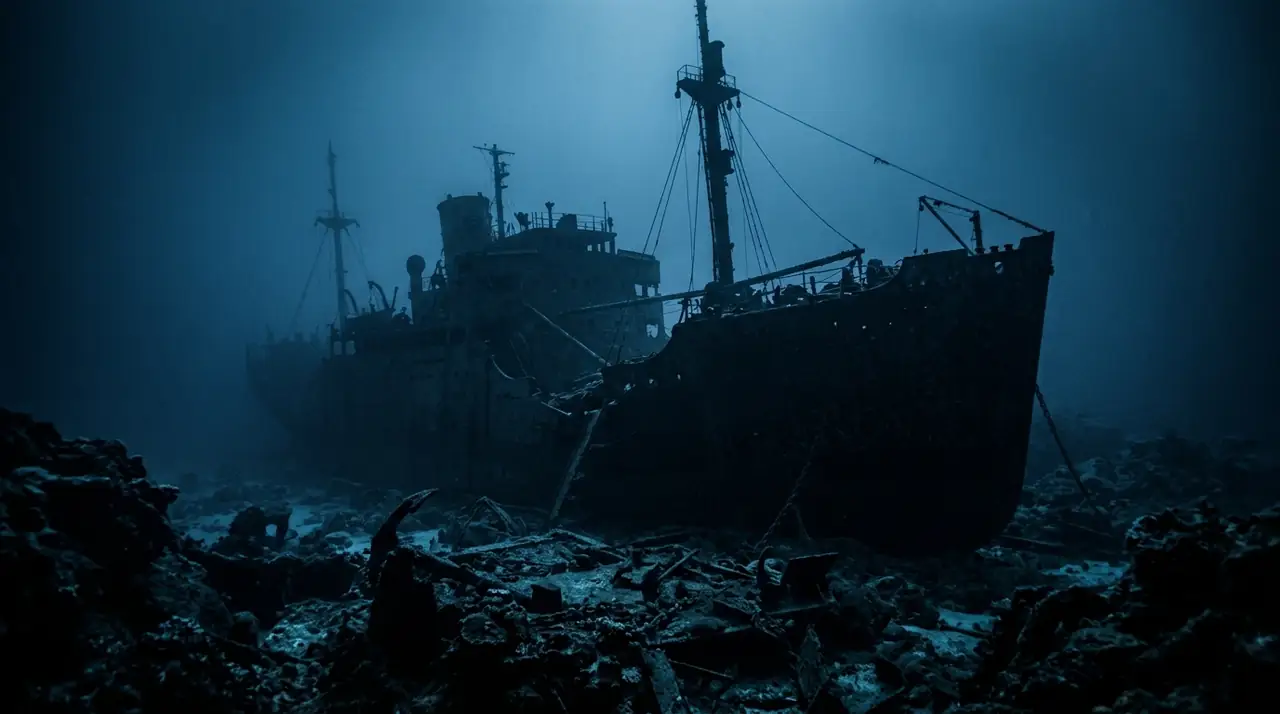
Vis B-24 Liberator Wreck
Overview
The B-24 Liberator wreck south of Vis Island is one of the most extraordinary aircraft dives in the Mediterranean. Resting on a clean white sandy bottom at 42 metres, this American heavy bomber sits remarkably intact, both wings spread wide, engines still attached, and the fuselage largely complete. It is a time capsule from 1944, preserved by cold Adriatic waters and the remoteness of Croatia's most distant inhabited island. During the Allied bombing campaign against Axis oil refineries in Ploesti, Romania, hundreds of B-24 Liberators flew from bases in southern Italy across the Adriatic. This aircraft sustained anti-aircraft damage on the return flight and made an emergency water landing near Vis, then held by Yugoslav partisans. The crew survived and were rescued. Descending the shot line in the extraordinary clarity that defines Vis diving, the bomber materialises on the seabed like a ghost from history. Visibility regularly exceeds 30 metres, and the dark outline of the aircraft is visible from considerable distance. The wingspan stretches over 33 metres, and both Wright Cyclone engines remain mounted on the port wing, propeller blades bent from impact but otherwise intact. I circled the aircraft slowly at 40 metres, conscious of limited bottom time. Dusky groupers have taken up residence beneath the wings, hovering with the confidence of fish that rarely encounter divers. Conger eels peer from gaps in the fuselage. The entire structure is draped in hydroids and small gorgonian fans, and nudibranchs are scattered across the aluminium surfaces. The cockpit section is partially collapsed but recognisable, with instrument panel fragments still visible. Croatian authorities have designated this a protected cultural heritage site, and dive operators must maintain distance from the structure. No penetration or contact is permitted. The ascent requires careful decompression planning, and the safety stop at five metres offers a different pleasure. The shallow waters around Vis teem with damselfish, and the visibility from above makes the bomber visible as a shadow on the seafloor far below. Vis has emerged as Croatia's most sophisticated diving destination precisely because sites like this remain carefully managed.
Early access
Plan a dive here
Open the DiveOne planner to sketch a recreational plan before you go. It is a planning assistant, not a dive computer.
Marine life
Dive profile
DEPTH PROFILE
DEPTH PROGRESSION & WAYPOINTS: Vis B-24 Liberator Wreck
Location
Frequently asked questions
What is the B-24 Liberator wreck near Vis and how did it get there?
The B-24 Liberator was an American heavy bomber shot down during the strategic bombing campaign against Axis oil refineries in Ploesti, Romania, during 1944. The aircraft made an emergency water landing south of Vis Island after sustaining anti-aircraft damage on its return to bases in southern Italy. The crew were rescued by Yugoslav partisans who controlled Vis at the time. The aircraft sank intact to the sandy bottom at around 42 metres where it has remained remarkably well preserved due to the cold, clear Adriatic waters and the remoteness of the site.
What certification level is required to dive the B-24 wreck?
The wreck rests at approximately 42 metres, requiring Advanced Open Water certification at minimum, though most operators recommend Deep Diver speciality or equivalent experience at depths beyond 30 metres. The dive is conducted on enriched air nitrox to extend bottom time, which is limited to around 15 to 20 minutes at this depth. Conditions are generally calm with mild currents, but the depth demands good buoyancy control and efficient air consumption. Croatian authorities strictly regulate access to protect this historic site.
When is the best time to dive the B-24 Liberator?
The optimal season runs from late May through September when water temperatures reach 20 to 25 degrees Celsius at the surface and visibility regularly exceeds 30 metres. July and August offer the warmest conditions and calmest seas, though these are also the busiest months for tourism on Vis. June and September provide excellent diving with fewer crowds. Winter diving is possible but water temperatures drop to 13 degrees and weather windows for boat access are less predictable.
Reviews
Reviews
No reviews yet
Data Provenance
This profile is compiled from 3 operator submissions and 142 community logs. Key facts (depth, entry) are verified against official hydrographic charts.