Vestmanna Sea Caves
Overview
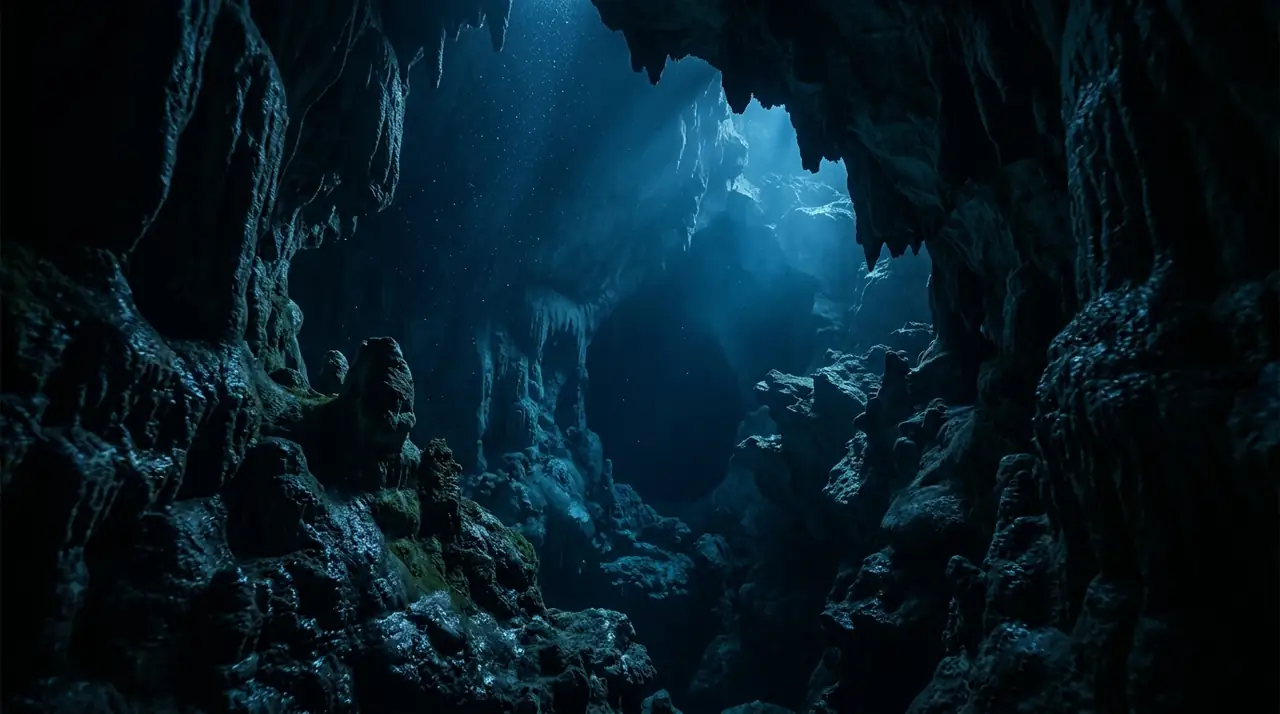
The Vestmanna bird cliffs on the island of Streymoy are the Faroe Islands' most famous natural spectacle: 400 metres of sheer basalt rising from the North Atlantic, home to hundreds of thousands of nesting seabirds. Tourist boats motor beneath the cliffs in summer, pointing cameras at puffins and guillemots lining every ledge. What the tourists do not see is what lies at water level and below: a series of enormous sea caves carved into the basalt by millennia of Atlantic storms, extending deep into the cliff face in chambers large enough to park a house inside. I had arranged a private boat from Vestmanna harbour, crewed by a local fisherman who knew the coastline intimately. The morning was rare: dead calm, the Atlantic a flat grey mirror, no swell. These conditions happen perhaps twenty days a year in the Faroes, and without them, diving the caves is not feasible. We motored along the cliff base, the rock towering above us in columnar basalt formations that looked like a giant's organ pipes. Fulmars and kittiwakes wheeled overhead, and I could smell the guano and the salt and the damp rock. The first cave was an arched opening perhaps ten metres wide and eight metres tall, the basalt dark and wet. I rolled off the boat and descended immediately. The water was eight degrees, biting through my drysuit at the wrists and neck seal. Inside the cave the light shifted from green to grey to near-darkness as I finned deeper. The walls were basalt hexagonal columns broken and tumbled, their surfaces colonised by breadcrumb sponge in orange patches and dahlia anemones in deep crimson. Kelp grew where light reached, the fronds waving in the gentle surge that even on a calm day penetrates the caves.
Early access
Plan a dive here
Open the DiveOne planner to sketch a recreational plan before you go. It is a planning assistant, not a dive computer.
Marine life
Dive profile
DEPTH PROFILE
DEPTH PROGRESSION & WAYPOINTS: Vestmanna Sea Caves
Location
Frequently asked questions
Can I actually scuba dive in the Vestmanna sea caves?
Scuba diving in the Vestmanna sea caves is possible but requires careful planning, appropriate experience, and favourable weather conditions. The caves are exposed to Atlantic swell and surge, which can make diving dangerous or impossible during rough weather. Calm conditions are essential. There is no established dive operator in the Faroe Islands dedicated to cave diving at Vestmanna, so you will need to arrange a private boat and bring your own equipment or contact the small Faroese diving community for local support. The caves are typically dived during the calmest summer weather windows in June to August.
How do I get to the Faroe Islands and what facilities are available for divers?
The Faroe Islands are accessible by air from Copenhagen, Reykjavik, Edinburgh, and several other European cities via Atlantic Airways and other carriers. The Smyril Line ferry connects the Faroes to Denmark and Iceland. Vestmanna is a small village on the island of Streymoy, about 30 minutes by car from the capital Torshavn. There is no dedicated dive centre in the Faroes, so visiting divers should bring their own equipment. Air fills can sometimes be arranged through the local fire service or the small diving club. Accommodation in Vestmanna is limited to a few guesthouses.
What makes Vestmanna sea caves different from other cave diving?
Unlike tropical cave systems or freshwater caves, the Vestmanna sea caves are open-ended sea caverns carved by Atlantic waves into basalt cliffs over thousands of years. They are not overhead environment dives in the technical sense, as most caves have large openings and natural light penetrates well inside. The experience is more akin to cavern diving in a dramatic cold-water setting. The combination of the massive basalt architecture, the cold and surging Atlantic water, and the seabird colonies on the cliffs above creates an atmosphere unlike any other dive site.
Reviews
Reviews
No reviews yet
Data Provenance
This profile is compiled from 3 operator submissions and 142 community logs. Key facts (depth, entry) are verified against official hydrographic charts.