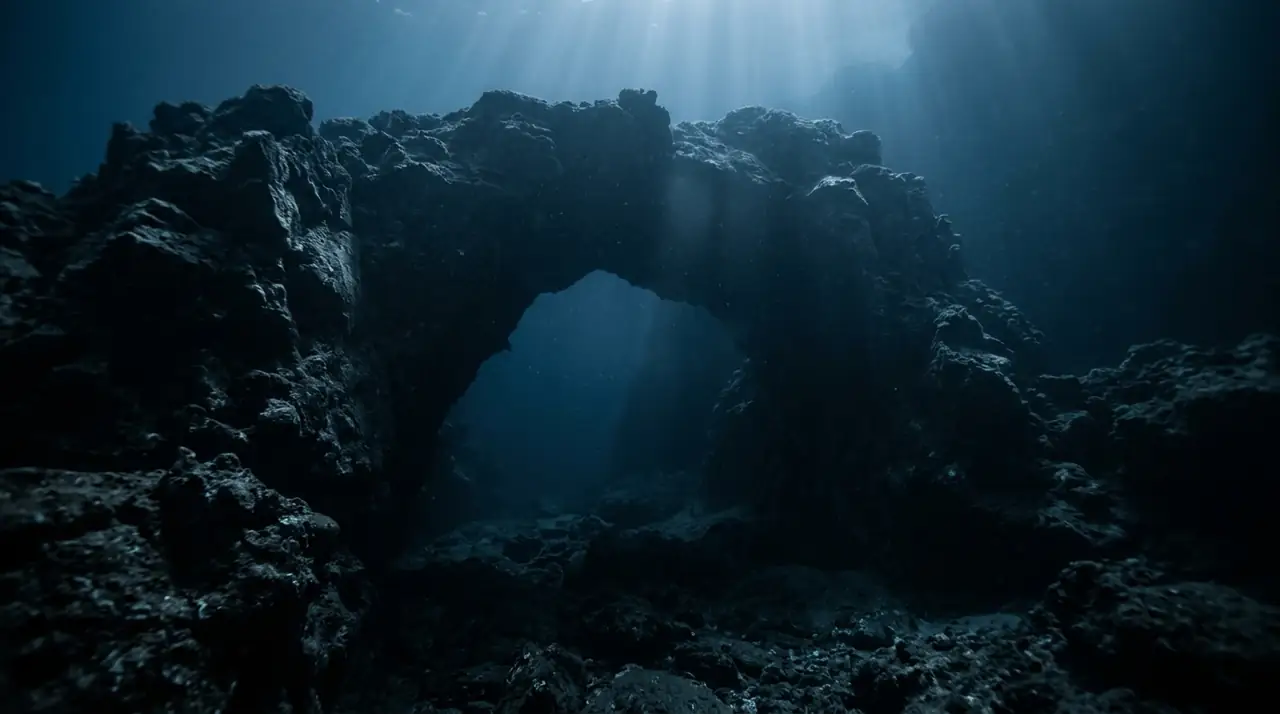
Verde Island Passage
Overview
The Verde Island Passage is a narrow strait between the southern coast of Luzon and the small volcanic Verde Island, and it holds a distinction that no other body of water on Earth can claim: the highest concentration of marine shore fish species per unit area, as documented by Dr. Kent Carpenter's landmark 2006 study. This is the center of the center of the Coral Triangle, the point where the planet's marine biodiversity reaches its absolute peak. Diving here is diving at the summit of life on Earth. The passage is only 30 kilometers wide at its narrowest, but within that constriction, currents from the South China Sea and the Sibuyan Sea collide, creating upwellings and nutrient flows that sustain a density of marine species that scientists still struggle to fully catalogue. Over 1,700 species of reef fish have been documented, along with hundreds of coral species and a macro fauna that keeps taxonomists busy describing new species. The underwater terrain is as varied as the biology: pinnacles rise from 35 meters to within snorkeling depth, walls drop vertically into dark channels, and current-swept ridges concentrate fish in staggering numbers. I descended along one of the passage's signature pinnacles on a moderate incoming current, and the species count became immediately absurd. Within the first five minutes I logged anthias in three distinct color morphs, a school of bigeye trevally numbering in the hundreds, a pair of Napoleon wrasse, and a yellow frogfish wedged into a sponge at 15 meters. The pinnacle was carpeted in hard and soft corals competing for space, with crinoids unfurling their feathery arms into the current to filter-feed. The density of life per cubic meter of water felt physically palpable. The deeper channels between pinnacles produce the larger encounters. Devil rays and occasional thresher sharks cruise through during current peaks, and schools of barracuda form silver walls in the blue water beyond the reef edge. The shallower reef flats on the passage's margins support macro life that rivals Anilao's famous muck diving: seahorses, ghost pipefish, blue-ringed octopus, and nudibranchs in bewildering variety. Visibility in the passage ranges from 10 to 25 meters, with clearer conditions during the dry season and on incoming tides. The nutrient-rich water that drives the biodiversity also means plankton levels can reduce visibility, a trade-off that most divers gladly accept. Water temperatures range from 25 to 30 degrees, with cooler thermoclines occasionally pushing through the deeper channels. The passage's proximity to Manila, just two hours by road to the Anilao dive resorts that serve as the primary access point, makes this arguably the most accessible world-class diving on the planet. What takes days of travel to reach in Raja Ampat or the Banda Islands exists here within a weekend trip from a capital city of 14 million people.
Early access
Plan a dive here
Open the DiveOne planner to sketch a recreational plan before you go. It is a planning assistant, not a dive computer.
Marine life
Dive profile
DEPTH PROFILE
DEPTH PROGRESSION & WAYPOINTS: Verde Island Passage
Location
Near Batangas City, in the Calabarzon region of Philippines.
Frequently asked questions
Why is the Verde Island Passage called the center of the center of marine biodiversity?
In 2006, marine biologist Dr. Kent Carpenter and his team published a landmark study that identified the Verde Island Passage as having the highest concentration of marine shore fish species per unit area on Earth. The passage sits at the apex of the Coral Triangle and benefits from the convergence of currents from the South China Sea and the Pacific, creating conditions that support over 1,700 species of reef fish. This density surpasses even Raja Ampat and the Great Barrier Reef in species per unit area.
How do I access diving in the Verde Island Passage?
The passage is accessible from Batangas City, approximately a two-hour drive from Manila. Multiple dive resorts and operators are based in Anilao on the southern Batangas coast, which is the primary jumping-off point. Boats reach the best dive sites in the passage within 30 to 60 minutes. Verde Island itself has a few small operators. The proximity to Manila makes this one of the most accessible world-class dive destinations anywhere.
What currents should I expect in the Verde Island Passage?
Currents in the passage can be powerful and unpredictable, driven by tidal exchanges between the South China Sea and the inland seas. Strong currents are actually a positive factor, as they deliver the nutrients and larvae that sustain the extraordinary biodiversity. Dive operators time dives to catch incoming or slack tides when possible. Some sites require drift diving techniques, and experience with current diving is essential for the more exposed locations.
Reviews
Reviews
No reviews yet
Data Provenance
This profile is compiled from 3 operator submissions and 142 community logs. Key facts (depth, entry) are verified against official hydrographic charts.