Vattaru Kandu
Overview
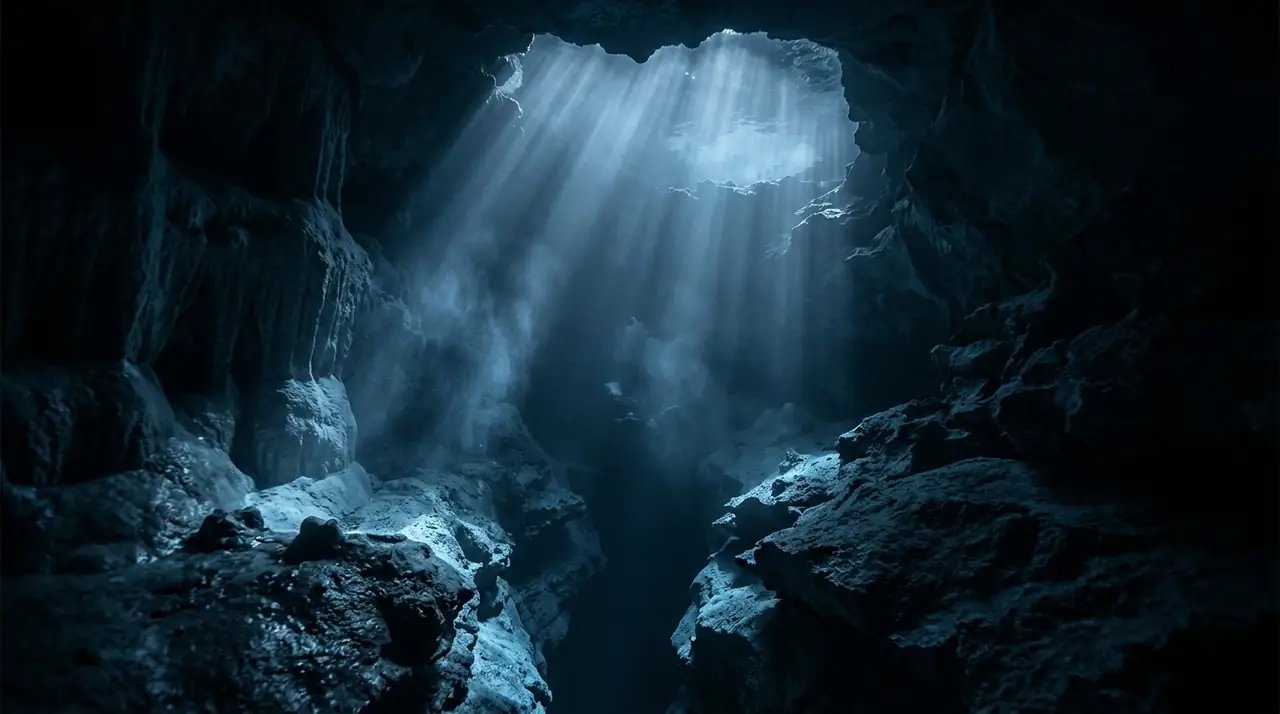
Vattaru Kandu is a deep channel slicing through the western rim of Vaavu Atoll, one of the Maldives' less-visited atolls despite offering some of the archipelago's finest channel diving. The kandu faces the open Indian Ocean to the west, and when the northeast monsoon drives water into the atoll from January through April, the channel becomes a funnel concentrating everything the open ocean sends: nutrients, plankton, and the predators that follow both. The dive is a drift, initiated by a negative entry into the current at the channel's outer edge. Descending to twenty-five metres on the northern wall, the channel stretches ahead as a blue corridor flanked by coral-encrusted walls. The current pushes steadily inward, and within moments the first grey reef sharks appear: a pair cruising the wall edge, then five more in loose formation behind. By the time the drift has covered fifty metres, the sharks are everywhere, a gathering of thirty or more grey reef sharks holding position in the current with economical fin movements. The sharks at Vattaru behave with the confidence of an unpressured population. They hold station at the channel entrance, facing into the current, occasionally breaking formation to investigate something in the water column before returning to position. Their density here creates a wall of grey bodies that divers drift past at arm's length, an experience that is simultaneously thrilling and strangely calming in its naturalness. Eagle rays exploit the same current. Squadrons of up to twenty spotted eagle rays pass through the channel in disciplined V-formations, their diamond-shaped bodies undulating with synchronized precision. They appear from the blue beyond the sharks, traverse the channel width, and disappear into the atoll interior. The channel walls reward attention between pelagic passes. Overhangs at twenty to thirty metres shelter gardens of soft coral in purple and orange, with sea fans extending from the wall face into the current. Napoleon wrasses of exceptional size cruise these overhangs, and whitetip reef sharks rest on ledges, indifferent to the river of current and divers passing above.
Early access
Plan a dive here
Open the DiveOne planner to sketch a recreational plan before you go. It is a planning assistant, not a dive computer.
Marine life
Dive profile
DEPTH PROFILE
DEPTH PROGRESSION & WAYPOINTS: Vattaru Kandu
Location
Frequently asked questions
What makes Vattaru Kandu special compared to other Maldivian channels?
Vattaru Kandu benefits from its position on the western rim of Vaavu Atoll, where it receives the full force of the northeast monsoon current during the January-April season. The channel is relatively narrow and deep, creating a funnelling effect that concentrates nutrients and the predators that follow them. The grey reef shark population here is among the densest in the Maldives, with aggregations regularly exceeding 30 individuals. The channel walls feature dramatic overhangs colonised by soft corals and sea fans, adding visual appeal beyond the shark encounters.
When is the best time to dive Vattaru Kandu?
The prime diving season is January through April, during the northeast monsoon when incoming currents are strongest and most consistent. Dive timing within each day is critical: the best encounters occur during incoming current, when nutrients flow from the open ocean into the atoll, drawing sharks and pelagics to the channel mouth. Liveaboard crews monitor current direction and time dives accordingly. During the southwest monsoon from May to October, the current direction reverses and the channel receives outgoing flow, which reduces shark aggregation density significantly.
What experience level is required for Vattaru Kandu?
Vattaru Kandu is an advanced dive site requiring a minimum of Advanced Open Water certification and substantial experience with drift diving and current management. Currents can be strong and occasionally feature downcurrents at the channel entrance. Divers must be comfortable maintaining neutral buoyancy in current, using reef hooks when necessary, and deploying surface marker buoys at the end of the drift. Most liveaboard operators require a minimum of 50 logged dives, and some request a check dive at an easier site before offering Vattaru. The maximum depth of the main drift is around 30 metres with the channel floor at 35.
Reviews
Reviews
No reviews yet
Data Provenance
This profile is compiled from 3 operator submissions and 142 community logs. Key facts (depth, entry) are verified against official hydrographic charts.