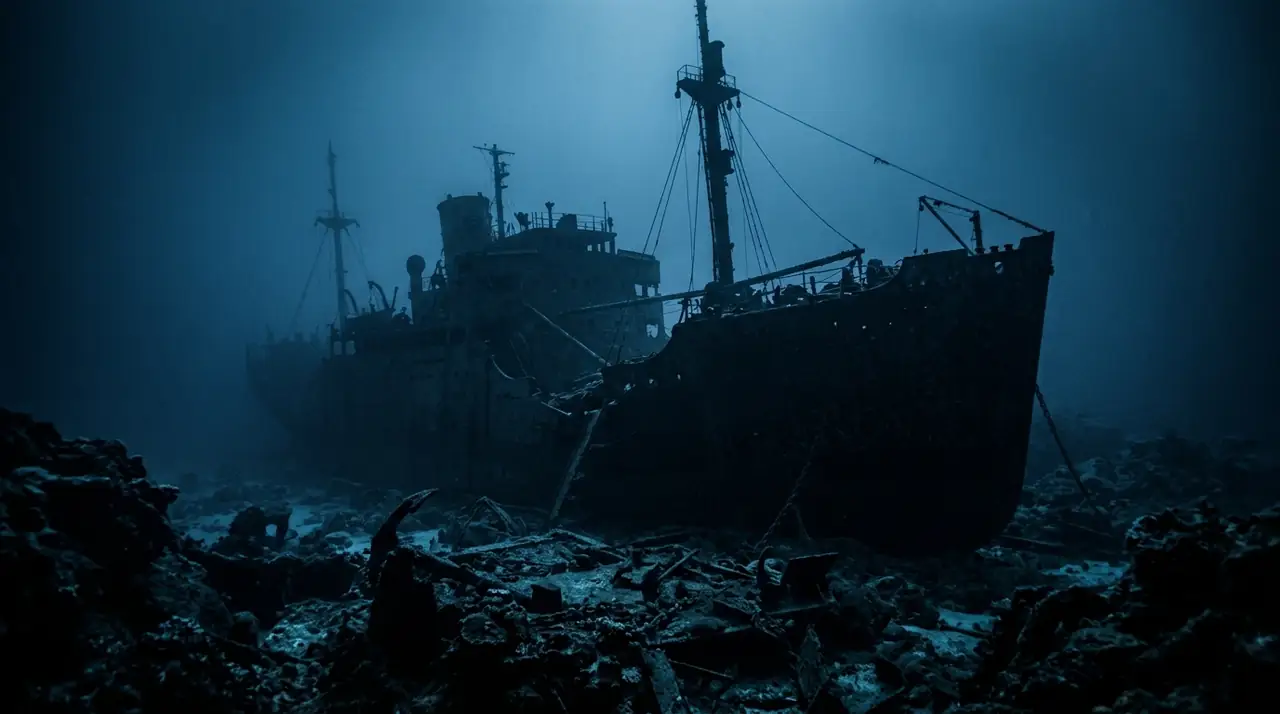
USNS General Hoyt S. Vandenberg
Overview
The USNS General Hoyt S. Vandenberg rests seven miles south of Key West, an enormous grey silhouette materialising from the blue as you descend the mooring line. At 160 metres from bow to stern, this former Cold War missile tracking ship is the second-largest artificial reef ever created, and diving it feels like exploring a sunken city rather than a single vessel. The ship sits perfectly upright on a sandy bottom at 42 metres, with the superstructure rising dramatically to within 12 metres of the surface. This vertical range means every certification level finds something to explore. On my first descent I spent the entire dive between 15 and 20 metres, working through the upper radar platforms where enormous dish antennas now serve as congregation points for schools of Atlantic spadefish numbering in the hundreds. The goliath groupers are the stars. These massive fish, some exceeding 200 kilograms, have claimed the Vandenberg as home territory. I counted seven on a single dive, hanging motionless in doorways and under overhangs with the implacable confidence of apex predators that know they are protected under Florida law. Their sheer size commands respect and a healthy distance. For wreck penetration specialists, the Vandenberg offers extensive interior exploration. The bridge retains its control consoles and helm stations, now draped in hydroids and soft corals. Cargo holds open into cavernous spaces where light filters through hatches above. The radar rooms that once tracked missiles during the Cuban Missile Crisis have become atmospheric swim-throughs colonised by lobsters and moray eels. The surrounding sand bottom regularly produces spotted eagle rays gliding past the hull, and nurse sharks tuck themselves under the keel. Barracuda patrol the upper structure in loose formations, and loggerhead turtles rest on the deck. Night dives transform the Vandenberg into a different world entirely, with basket stars extending from the rigging and bioluminescent organisms sparkling around every surface. The boat ride from Key West takes roughly 45 minutes, and the site sits within the Florida Keys National Marine Sanctuary, ensuring its long-term protection.
Early access
Plan a dive here
Open the DiveOne planner to sketch a recreational plan before you go. It is a planning assistant, not a dive computer.
Marine life
Dive profile
DEPTH PROFILE
DEPTH PROGRESSION & WAYPOINTS: USNS General Hoyt S. Vandenberg
Location
Frequently asked questions
How deep is the Vandenberg wreck and what certification is needed?
The Vandenberg sits upright on a sandy bottom with the keel at approximately 42 metres and the top of the superstructure at around 12 metres. Advanced Open Water certification is recommended for exploring the full wreck, though the upper decks and radar arrays between 12 and 20 metres are accessible to Open Water divers with good buoyancy. Penetration diving into the bridge, radar rooms, and cargo holds requires wreck speciality certification and proper equipment including redundant lights and a guideline.
What marine life has colonised the Vandenberg since sinking?
Since its intentional sinking in May 2009, the Vandenberg has become a thriving artificial ecosystem within the Florida Keys National Marine Sanctuary. Goliath groupers are the headline residents, with individuals exceeding 200 kilograms hovering around the superstructure. Large schools of Atlantic spadefish and yellowtail snapper swirl around the masts. Green moray eels occupy porthole openings, nurse sharks rest under overhangs, and the hull is increasingly covered in coral and sponge growth that attracts a diverse reef fish community.
What was the Vandenberg before it became an artificial reef?
The USNS General Hoyt S. Vandenberg served as a US Army troop transport during World War Two, later becoming a missile tracking ship during the Cold War space race and Cuban Missile Crisis. At 160 metres long, the vessel tracked launches from Cape Canaveral and monitored Soviet missile tests. After decommissioning, the ship was meticulously cleaned of hazardous materials and sunk seven miles south of Key West in the Florida Keys National Marine Sanctuary in 2009.
Reviews
Reviews
No reviews yet
Data Provenance
This profile is compiled from 3 operator submissions and 142 community logs. Key facts (depth, entry) are verified against official hydrographic charts.