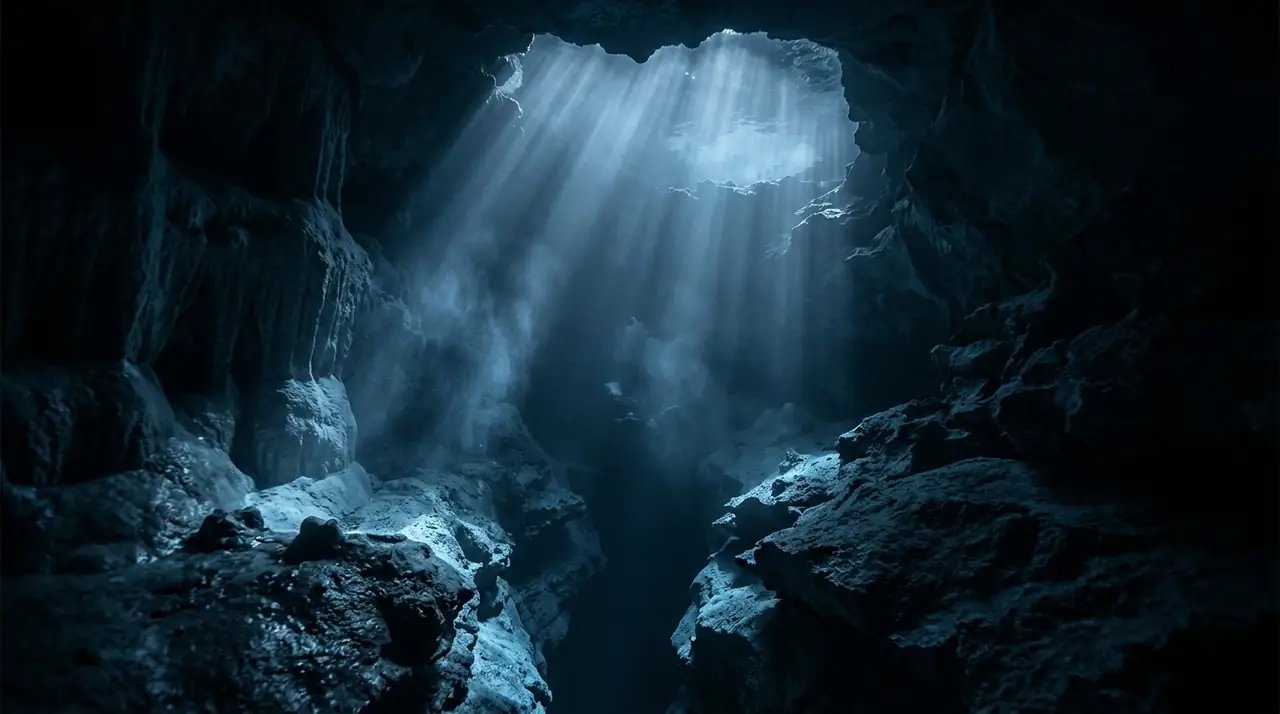
USS Apogon Submarine
Overview
Apra Harbor on Guam's western coast has served as a strategic anchorage for centuries, and the seafloor here reads like a timeline of Pacific military history. The USS Apogon, a Balao-class submarine that served in the Pacific theatre during World War II, sits upright on the sandy bottom at thirty metres, deliberately sunk as a target vessel during atomic bomb tests at Bikini Atoll in 1946 and later towed to Guam. Just fifty metres from its stern lies the bow section of the Tokai Maru, a Japanese freighter torpedoed during the 1944 liberation of Guam. Together they form one of the most remarkable wreck dives in the Pacific. The mooring line dropped us directly onto the conning tower at eighteen metres. The submarine is startlingly intact. The periscope housings, bridge railing, and deck gun mount are all recognisable, covered in a carpet of encrusting sponges and soft coral that gives the steel structure the appearance of a coral reef sculpted in the shape of a warship. I ran my hand along the fairwater plane, still extended at its operating angle, and peered through an open hatch into the darkness of the control room below. Swimming forward along the deck, the torpedo loading hatch gaped open and a green moray eel had claimed the interior as its territory, its head protruding from the opening with an expression of theatrical menace. The bow planes extended symmetrically on either side, their hydrofoil shapes now encrusted with barnacles and juvenile corals. At the bow, a large green sea turtle rested on the forward torpedo tube doors, apparently a regular occupant based on the algae worn clean from its favourite perch. I descended to the sand at thirty metres and looked back at the submarine in profile. It is a profound sight. The hull curves upward from keel to deck in a perfect arc, every frame and rivet visible beneath the marine growth, a machine designed for stealth now permanently exposed. The twin propellers at the stern are intact, their bronze blades green with patina, each one taller than a diver. The crossing to the Tokai Maru took two minutes of finning over open sand. The Japanese freighter's bow section rises from the bottom like a rusted cathedral, its anchor chain still running through the hawsehole. Inside the forward hold, lionfish hung motionless in the filtered light while a school of barracuda circled the mast stump. The juxtaposition of American submarine and Japanese freighter, enemies in life and neighbours in death, gives this dive site a resonance that pure coral diving cannot replicate.
Early access
Plan a dive here
Open the DiveOne planner to sketch a recreational plan before you go. It is a planning assistant, not a dive computer.
Marine life
Dive profile
DEPTH PROFILE
DEPTH PROGRESSION & WAYPOINTS: USS Apogon Submarine
Location
Frequently asked questions
Can I penetrate the USS Apogon and what certification do I need?
The USS Apogon is an intact submarine and penetration is technically possible through several openings, but it is strongly discouraged without proper wreck penetration certification and equipment. The interior is extremely confined with silty conditions that can reduce visibility to zero within seconds. Most Guam dive operators will take Advanced Open Water divers to the exterior of the wreck and allow a look through open hatches but not full interior penetration. For serious exploration inside, a cavern or wreck penetration specialty and redundant air supply are essential.
How deep is the USS Apogon and can beginners dive it?
The conning tower starts at around 18 metres and the deck sits at approximately 24 metres, with the keel resting on sandy bottom at about 30 metres. The depth makes this an advanced dive and most operators require Advanced Open Water certification or equivalent. Strong swimmers with good buoyancy control and at least 30 logged dives may be taken by some operators, but beginners are typically directed to shallower sites in Apra Harbor. Air consumption is a consideration at these depths as the submarine deserves at least 30 minutes of bottom time to appreciate fully.
Can I visit both the USS Apogon and the Tokai Maru in one dive?
Yes, the two wrecks lie approximately 50 metres apart on the sandy bottom of Apra Harbor and most dive guides plan the dive to visit both. A typical profile starts on the Apogon, explores the submarine for 15 to 20 minutes, then crosses the sand to the bow section of the Tokai Maru, a Japanese freighter sunk during the American liberation of Guam in 1944. The total bottom time at 24 to 30 metres means air management is important, and divers on standard 80-cubic-foot tanks may need to abbreviate the second wreck if they are heavy breathers.
Reviews
Reviews
No reviews yet
Data Provenance
This profile is compiled from 3 operator submissions and 142 community logs. Key facts (depth, entry) are verified against official hydrographic charts.