Tufi Fjords
Overview
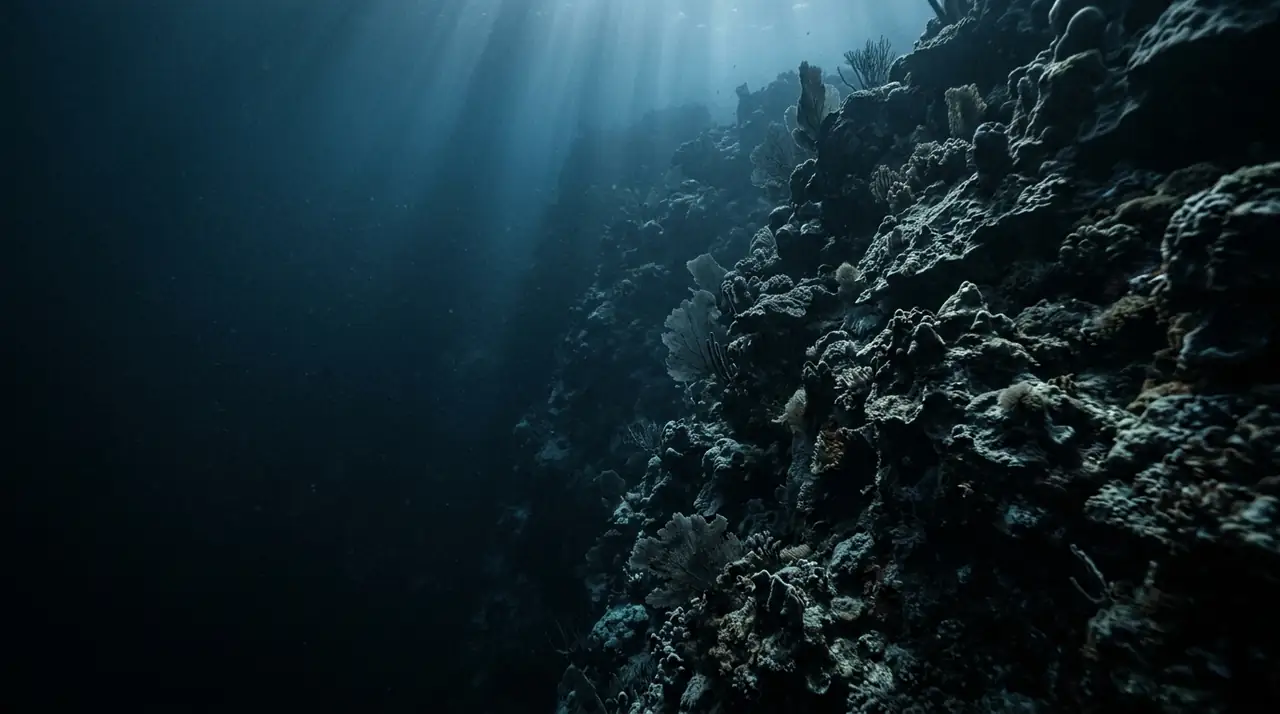
The Tufi fjords are among the most unusual dive environments on the planet, a series of drowned river valleys cutting deep into Papua New Guinea's northern coastline where vertical walls plunge hundreds of metres into ink-black depths. These tropical rias were formed by tectonic subsidence and volcanic activity, and their extreme depth and sheltered nature create diving conditions found nowhere else: sheer cliff-face walls draped in ancient black coral, pristine soft coral gardens, and macro life of extraordinary rarity, all in mirror-calm water with virtually no other divers. The small aircraft from Port Moresby landed on a grass strip perched above the fjords, and I was underwater within two hours. The first dive was on the wall of the main fjord, entering from a wooden platform at the resort and descending immediately into forty metres of visibility. The wall dropped vertically from the surface, dark volcanic rock colonised by sponges and soft coral from the first metre. At fifteen metres, the first black coral tree appeared, its delicate branches extending over a metre from the wall into the still water. These trees, normally found at depths beyond recreational limits, thrive in the low-light conditions of the fjord's steep walls. At twenty-five metres I paused at a ledge where an enormous gorgonian fan spread from the wall, its surface hosting two pygmy seahorses that our guide located with practiced ease. The wall below continued into darkness beyond thirty metres, and the guides spoke of hammerhead sightings at the fjord entrance where the sheltered waters meet the open Solomon Sea. The afternoon dive moved to the fjord floor for muck diving on volcanic sand at sixteen metres. The critter hunting here rivals anything in the Coral Triangle. Within a single hour I photographed a paddle-flap Rhinopias, its body a canvas of purple and white cryptic patterns; two flamboyant cuttlefish walking across the sand in their characteristic gait, their skin pulsing with colour; and an Ambon scorpionfish so perfectly camouflaged that only our guide's trained eye could locate it. What defines Tufi more than any single species is the isolation. In a week of diving I saw no other dive boats, no other divers, no discarded fishing line, no anchor damage. The marine life has never been pressured by human activity, and it shows in the behaviour of every creature. Fish do not flee. Cuttlefish do not retreat. Sharks approach rather than depart. This is diving as it existed before the dive industry discovered most of the tropics. The fjords themselves are hauntingly beautiful above water as well, their steep jungle walls rising from mirror-still waters where local outrigger canoes are the only traffic. Tufi offers the rare experience of genuine frontier diving, technically accessible but practically unknown, in one of the ocean's most singular environments.
Early access
Plan a dive here
Open the DiveOne planner to sketch a recreational plan before you go. It is a planning assistant, not a dive computer.
Marine life
Dive profile
DEPTH PROFILE
DEPTH PROGRESSION & WAYPOINTS: Tufi Fjords
Location
Frequently asked questions
How do I get to Tufi and what facilities are available?
Tufi is reached by small aircraft from Port Moresby, with flights operating several times per week to the grass airstrip at Tufi Station. The flight takes approximately one hour. The Tufi Dive Resort is the only dive operation in the area and offers accommodation, meals, and guided diving. Facilities are comfortable but remote and basic by international resort standards. Alternatively, some liveaboard vessels include Tufi fjords in extended Papua New Guinea itineraries. Bring all personal dive equipment as rental availability is limited.
What are the fjords like and why are they special for diving?
The Tufi fjords are tropical rias, drowned river valleys with vertical walls dropping to extreme depths, created by volcanic and tectonic activity along Papua New Guinea's northern coast. Unlike typical reef diving, the walls are sheer cliff faces dropping hundreds of metres, draped in black coral trees, soft corals, and gorgonians. The sheltered fjord environment means currents are negligible and surface conditions are always calm. Water clarity varies from 15 metres near shore to 40 metres at the outer fjord entrances. The isolation means marine life is pristine and unhabituated.
What macro life can I find in the Tufi fjords?
Tufi's volcanic sand and rubble slopes host extraordinary critter diversity. Rhinopias scorpionfish in both weedy and paddle-flap varieties have been documented here. Flamboyant cuttlefish walk across the sand, Ambon scorpionfish hide in debris, and pygmy seahorses occupy gorgonians on the fjord walls. The muck diving rivals Lembeh Strait in diversity but with a fraction of the diver traffic. Mandarin fish emerge at dusk in sheltered rubble patches. Blue-ringed octopuses are regularly encountered during day dives on sandy slopes.
Reviews
Reviews
No reviews yet
Data Provenance
This profile is compiled from 3 operator submissions and 142 community logs. Key facts (depth, entry) are verified against official hydrographic charts.