Tokong Laut
Overview
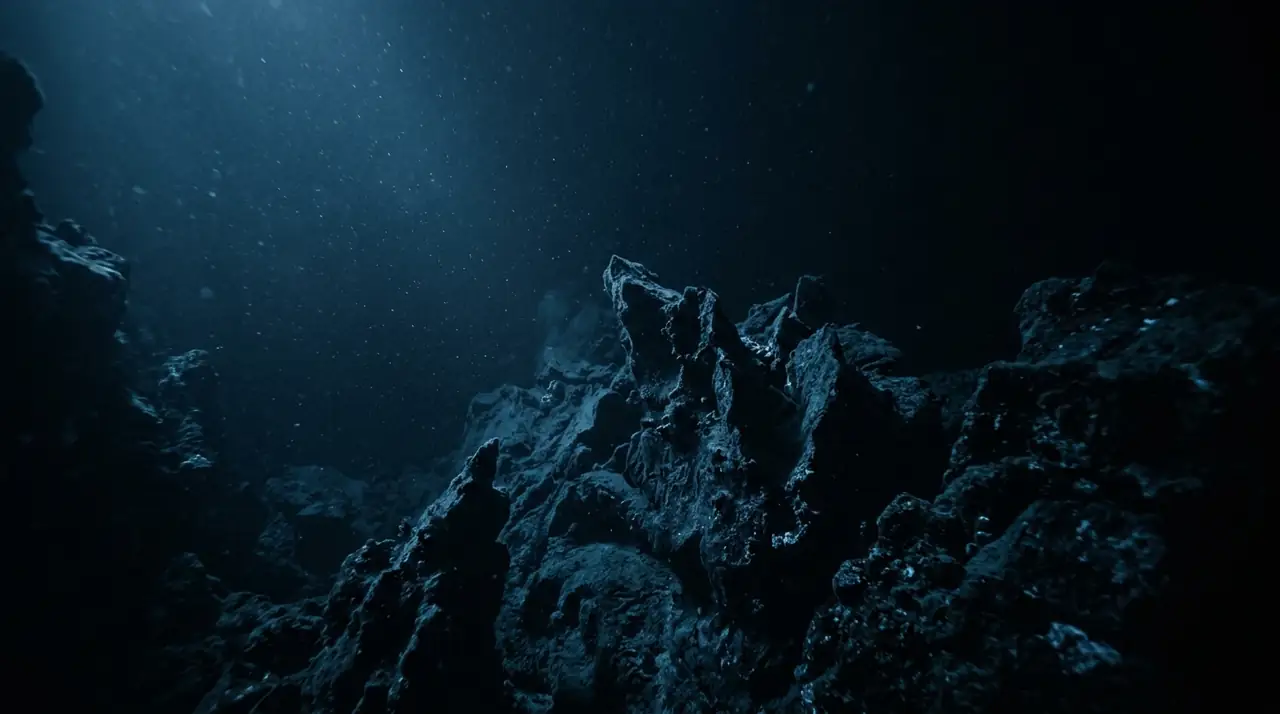
Tokong Laut rises from the deep floor of the South China Sea between the two Perhentian Islands like a submerged cathedral spire. This isolated pinnacle, whose summit breaks the surface as a small rock barely visible from shore, attracts an intensity of marine life disproportionate to its modest size. The reason is simple: it stands alone in open water, intercepting currents that carry nutrients and the pelagic species that follow them. Our boat departed Perhentian Kecil at dawn on a June morning, the crossing taking twenty minutes to reach the exposed rock. Surface conditions were calm but the current marker showed moderate flow from the northeast. We descended on the sheltered southwestern side, dropping through blue water until the pinnacle materialised from the haze at around eight metres. The top of the pinnacle is a small plateau of hard coral at five to eight metres, surrounded by a vertical drop on all sides to a sandy base between twenty and twenty-four metres. I settled at the northeastern edge where the current brought clean water and pelagic visitors. Within minutes, a school of chevron barracuda numbering several hundred materialised from the blue, their elongated bodies forming a dense column that spiralled around the pinnacle top. They remained for the duration of the dive, reforming their column each time a passing diver disrupted it. At the base of the wall on the north side, three blacktip reef sharks cruised in slow circuits. They kept a respectful distance of five or six metres but showed no inclination to leave, apparently working the current seam where small fish were being swept off the reef. A Napoleon wrasse of impressive size emerged from behind the pinnacle, its thick lips and bulging forehead giving it a grumpy appearance as it inspected our group before disappearing back around the corner. Giant trevally hunted in pairs along the reef edge, their silver bodies erupting in sudden acceleration as they ambushed fusiliers in the current. A green turtle rested on a ledge at fifteen metres, utterly unconcerned by the activity around it. The coral coverage on the pinnacle itself is good but secondary to the open-water encounters that make Tokong Laut the Perhentians' premier dive. The current strengthened during our dive and the ascent required sheltering behind the pinnacle's mass. During the safety stop, looking out into the blue from our protected position, the blue water was alive with schooling fish at every depth, the entire water column animated by the pinnacle's influence on the passing current.
Early access
Plan a dive here
Open the DiveOne planner to sketch a recreational plan before you go. It is a planning assistant, not a dive computer.
Marine life
Dive profile
DEPTH PROFILE
DEPTH PROGRESSION & WAYPOINTS: Tokong Laut
Location
Frequently asked questions
How do I get to Tokong Laut and which island should I stay on?
Tokong Laut is reached by dive boat from either Perhentian Besar or Perhentian Kecil, taking about twenty minutes. Both islands have dive operators that visit the site regularly during the diving season. Perhentian Kecil tends to have more budget accommodation and a younger backpacker crowd while Perhentian Besar offers quieter, more upmarket options. The Perhentian Islands are reached by speedboat from Kuala Besut on the mainland, a thirty-minute crossing. The islands are closed to tourism from November to February during monsoon season.
What conditions should I expect at Tokong Laut?
Tokong Laut is exposed to open South China Sea currents and conditions can change rapidly. On calm days with mild current the diving is straightforward, but moderate to strong currents are common and can make the site challenging. Dive operators check conditions before visiting and will substitute alternative sites when currents are too strong. An Advanced Open Water certification is recommended. Visibility ranges from 10 to 25 metres depending on recent weather, with the clearest water typically in May and June.
Is it true there are whale sharks at Tokong Laut?
Whale shark sightings at Tokong Laut occur occasionally between April and June when nutrient upwelling attracts plankton blooms. These encounters are not predictable or frequent, but the site has a better track record for whale shark sightings than most Perhentian dive sites because its offshore position and depth attract larger pelagic visitors. When whale sharks are spotted, dive operators in the area communicate via radio and boats converge to offer snorkelling opportunities alongside the animals.
Reviews
Reviews
No reviews yet
Data Provenance
This profile is compiled from 3 operator submissions and 142 community logs. Key facts (depth, entry) are verified against official hydrographic charts.