Tanote Bay
Overview
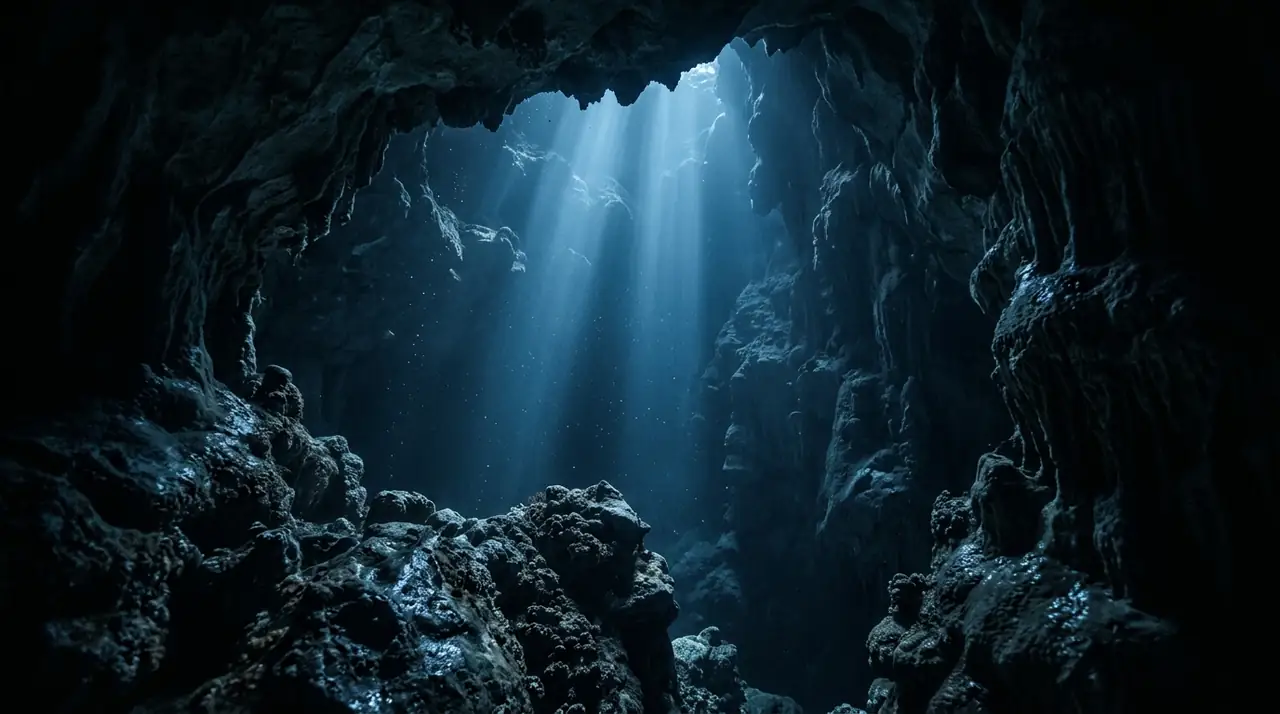
Tanote Bay occupies a bite-shaped indentation on Koh Tao's eastern coast, framed by forested headlands and floored with the granite boulders that define the island's geology. Where these boulders tumble into the sea, they create an underwater playground of swim-throughs, small caves, and shaded overhangs that give the site a three-dimensional complexity unusual for a shallow bay rarely exceeding eighteen metres. The dive begins at the bay's southern end, where granite boulders the size of houses lie scattered from the surface to the sand. Between them, passages wide enough for a diver with tank to pass through create routes that thread the boulder field like corridors in a maze. Natural light filters through gaps above, casting beams that move with the surface swell and illuminate clouds of glassfish sheltering in the shade. The main swim-through at twelve metres is the highlight: a passage perhaps four metres long between two boulders, its ceiling furred with tiny sponges and encrusting corals. Hawksbill turtles are Tanote Bay's most reliable residents. The boulder crevices provide ideal resting spots, and at least three or four individuals can be found on most dives, wedged into gaps with their patterned shells visible from several metres. Green turtles cruise the open sand and reef sections, larger and less shy than the hawksbills. The turtles have become habituated to the steady but not overwhelming diver traffic, allowing close approach without fleeing. The artificial reef projects scattered across the bay's sandy floor demonstrate what determined conservation effort can achieve. Bio-rock frames crackle faintly with the low-voltage current that accelerates calcium carbonate deposition, their surfaces covered in coral fragments showing vigorous growth. Fish have colonised these structures with enthusiasm, and the contrast between the living artificial reefs and the adjacent bare sand is dramatic. Schools of juvenile fish dart between the frames, and larger residents including groupers and porcupinefish have established territories. Koh Tao's reputation as a training island sometimes overshadows its genuine diving quality. Tanote Bay, with its combination of natural boulder architecture, resident turtles, and conservation success stories, demonstrates that the island offers far more than certification factories.
Early access
Plan a dive here
Open the DiveOne planner to sketch a recreational plan before you go. It is a planning assistant, not a dive computer.
Marine life
Dive profile
DEPTH PROFILE
DEPTH PROGRESSION & WAYPOINTS: Tanote Bay
Location
Frequently asked questions
What are the swim-throughs at Tanote Bay like?
Tanote Bay's granite boulders create several natural swim-throughs at depths between 5 and 14 metres. The largest is a passage roughly three metres wide and two metres high between two massive boulders, with natural light visible at both ends. Smaller swim-throughs and gaps between boulders offer varied routes through the underwater landscape. All are accessible to Open Water certified divers, with the passages wide enough that they do not require overhead environment training. The swim-throughs are best explored during morning dives when angled sunlight creates dramatic beam effects through the gaps.
What artificial reef projects exist at Tanote Bay?
Tanote Bay is home to several coral restoration and artificial reef projects managed by dive schools and conservation organisations on Koh Tao. Bio-rock structures use low-voltage electrical current to promote coral growth on metal frames, while concrete reef balls and purpose-built structures provide substrate for natural coral settlement. The projects have been running for several years, and the results are visible: coral fragments transplanted onto structures show strong growth, and fish populations around the artificial reefs are noticeably denser than on adjacent bare substrate. Visiting divers can often participate in coral planting activities through partnering dive schools.
Can I shore dive Tanote Bay?
Yes, Tanote Bay is accessible as a shore dive from the beach at its eastern end. Entry is over a sandy beach, and the reef begins within 30 metres of the shoreline. The bay is sheltered from prevailing westerly winds during the March-September season, making shore entry straightforward on most days. During the northeast monsoon from October to December, the bay can receive swell that makes shore entry challenging. The main diving areas between 5 and 18 metres are within comfortable swimming distance from shore. Several beachfront resorts offer direct access to the dive sites.
Reviews
Reviews
No reviews yet
Data Provenance
This profile is compiled from 3 operator submissions and 142 community logs. Key facts (depth, entry) are verified against official hydrographic charts.