Surigao Strait
Overview
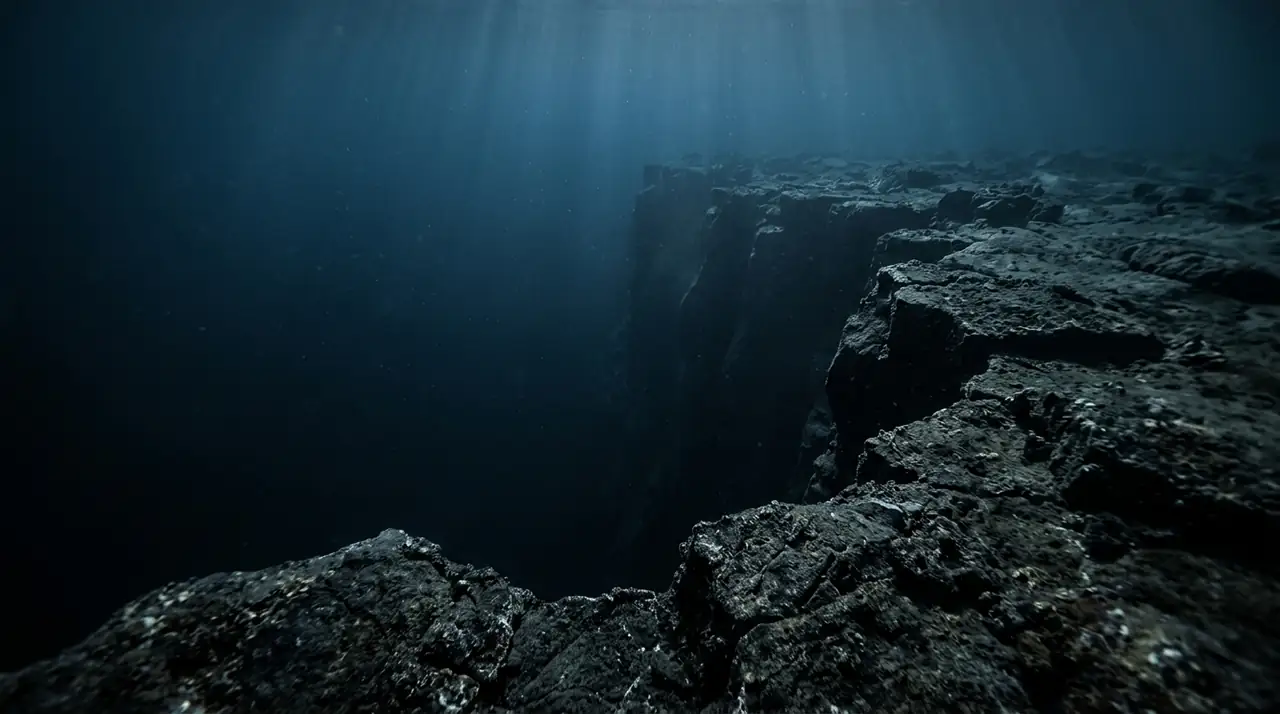
Surigao Strait separates Leyte and Mindanao in the eastern Philippines, a deep channel where Pacific waters funnel into the Visayan Sea. On October 25, 1944, it staged the last battleship engagement in naval history. Today the drama is entirely ecological — powerful currents sweep nutrients through the channel, supporting a food chain ending with some of the ocean's largest animals. Diving here is an expedition. Our operator spent the morning studying tide tables before committing to a plan. We motored into the strait, the surface betraying its force with standing waves and eddies. Timing entry for the brief slack window, we dropped along the channel wall. The reef structure is steep and current-sculpted. Soft corals and gorgonians lean uniformly in the direction of prevailing flow. Large barrel sponges anchor to exposed rock, and black coral bushes occupy depths below 25 metres. Even during slack, a persistent push required reef hooks at exposed points. At 20 metres, the first large shadow materialized — a whale shark moving through the channel with slow tail beats, its spotted body enormous against the blue. The plankton bloom that drew us here had drawn the shark too. It passed within ten metres, unhurried, before disappearing into the reduced visibility downstream. A school of fifty giant trevally appeared next, silver bodies flashing as they changed direction simultaneously. Barracuda stacked in a loose cylinder above us. On the reef, a Napoleon wrasse emerged from behind a fan coral, and an eagle ray banked away from a ledge. Surigao Strait is not a comfortable dive. The currents are real, the logistics sparse, and visibility rarely matches Palawan's crystal waters. But it offers something those places cannot — the genuine possibility of encountering megafauna in a setting that feels wild and unrehearsed.
Early access
Plan a dive here
Open the DiveOne planner to sketch a recreational plan before you go. It is a planning assistant, not a dive computer.
Marine life
Dive profile
DEPTH PROFILE
DEPTH PROGRESSION & WAYPOINTS: Surigao Strait
Location
Near Surigao City, in the Eastern Visayas region of Philippines.
Frequently asked questions
Is it safe to dive in Surigao Strait given the strong currents?
Surigao Strait demands advanced diving skills and experience with strong currents. Tidal flow through the narrow passage between Leyte and Mindanao can produce currents exceeding three knots, with unpredictable surges and down-currents possible. Diving is only conducted during slack water windows or when current runs along the reef rather than pulling divers away from it. Local operators know the tidal patterns intimately and cancel dives when conditions exceed safe limits. Surface marker buoys and experienced boat crews are essential. This is not a site for divers without significant current diving experience.
Can I see WWII wrecks in the Surigao Strait?
The Battle of Surigao Strait in October 1944 was the last major naval engagement involving battleship-to-battleship combat, and several Japanese warships were sunk in these waters. Most wrecks lie in water too deep for recreational diving, but scattered debris, metal fragments, and smaller wreckage has been found at diveable depths along the strait's edges. The historical context adds a sobering dimension to the diving, knowing that these waters witnessed one of World War II's most decisive naval actions. Dedicated wreck hunting requires technical diving capabilities and local knowledge.
How do I arrange diving in Surigao Strait?
Surigao City is the primary base for diving the strait, reachable by flights from Manila or Cebu. The dive industry here is very small — only a couple of operators offer guided dives in the strait, and advance arrangements are essential. Some operators based in southern Leyte or northeast Mindanao also run trips into the strait during optimal conditions. This is genuine frontier diving with minimal infrastructure, so flexibility with schedules and a willingness to adapt to conditions are important. Bringing your own equipment is advisable.
Reviews
Reviews
No reviews yet
Data Provenance
This profile is compiled from 3 operator submissions and 142 community logs. Key facts (depth, entry) are verified against official hydrographic charts.