Sunken Cemetery
Overview
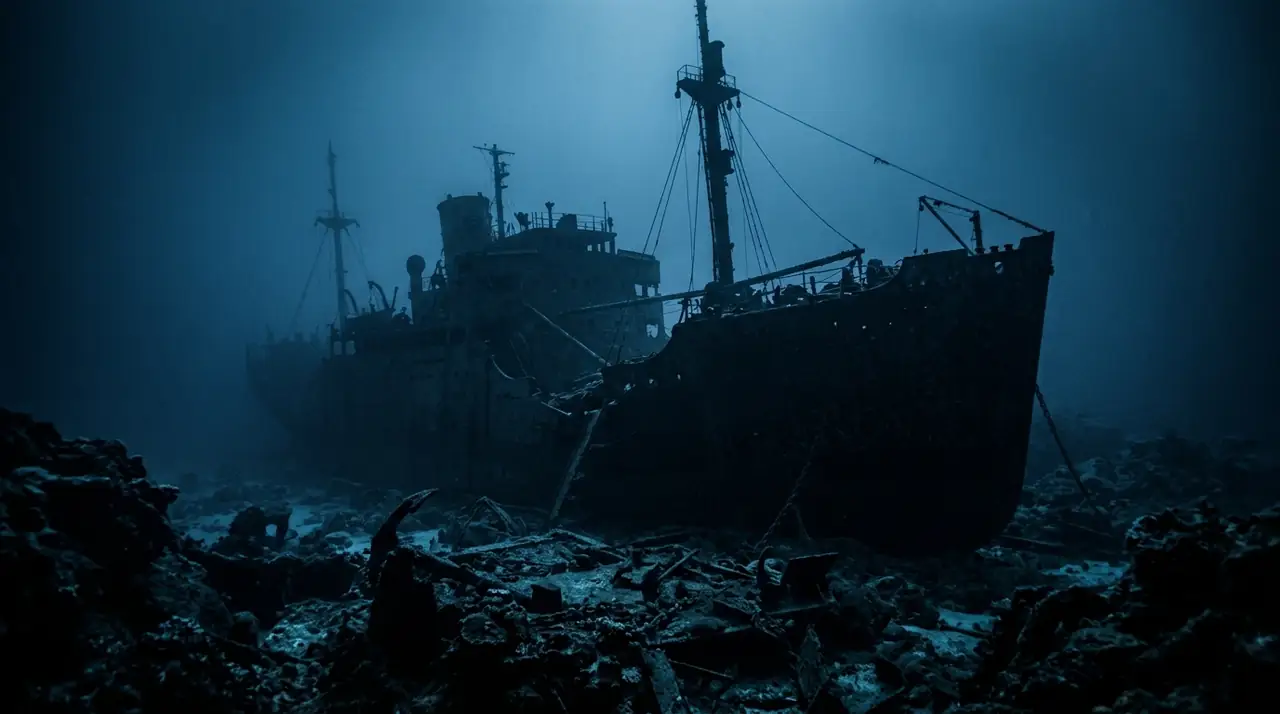
The Sunken Cemetery of Camiguin is one of the most unusual dive sites in the Philippines, a place where human history and marine biology have merged into something genuinely haunting and beautiful. In 1871, Mount Vulcan erupted with enough force to cause the coastal lowlands near Catarman to subside below sea level, taking the town cemetery with them. Today, coral-encrusted tombstones lie scattered across a shallow reef at depths of 3 to 15 metres, while a large white cross rises from the water to mark the site. I entered from a bangka anchored near the cross and descended through warm, slightly green water onto a scene that felt more like a museum exhibit than a dive site. The first tombstone I encountered was a rectangular stone marker at 5 metres, its inscription long eroded but its shape unmistakable. Hard corals had colonized every surface, turning the grave marker into a miniature reef. Clownfish occupied an anemone established in the cavity where a name plate once sat. Swimming deeper to 10 metres, I found more markers and what appeared to be a section of a stone wall, likely part of the cemetery boundary. Damselfish defended territories on the coral-covered stones with the same aggression they show on any reef, utterly indifferent to the human significance of their substrate. Parrotfish grazed across the tops of grave markers, and a pufferfish retreated into a gap between two sunken stones. The dive is shallow and gentle, with mild currents and warm water year-round. What makes it extraordinary is not the marine life density or coral coverage, both modest compared to premier Philippine sites. It is the context. Diving among tombstones that sank during a volcanic catastrophe over 150 years ago, now transformed into living reef by coral polyps, delivers a sense of geological time and impermanence that no other dive site in the region can match.
Early access
Plan a dive here
Open the DiveOne planner to sketch a recreational plan before you go. It is a planning assistant, not a dive computer.
Marine life
Dive profile
DEPTH PROFILE
DEPTH PROGRESSION & WAYPOINTS: Sunken Cemetery
Location
Near Catarman, in the Northern Mindanao region of Philippines.
Frequently asked questions
What is the history behind the Sunken Cemetery of Camiguin?
In 1871, Mount Vulcan erupted violently on Camiguin Island, causing the coastal area near the old Spanish colonial settlement of Catarman to sink below sea level. The town's cemetery, along with portions of the old settlement, were submerged as the land subsided. A large white cross was later erected in the shallow water to mark the site. Over the past 150 years, coral has colonized the tombstones and grave markers, creating a unique fusion of human history and marine ecosystem.
Is the Sunken Cemetery suitable for snorkeling?
Yes, the Sunken Cemetery is excellent for snorkeling. The shallowest grave markers sit in just two to three metres of water, and the large memorial cross is partially above the surface. Visibility varies from 8 to 15 metres depending on weather and tidal conditions. Local boat operators offer snorkel trips from the Catarman waterfront, typically lasting one to two hours. The calm, shallow conditions make it accessible for all ages and swimming abilities.
How do I get to Camiguin Island?
Camiguin has a small airport with occasional flights from Cebu, though the most reliable route is flying to Cagayan de Oro on mainland Mindanao and taking a two-hour bus to Balingoan port, followed by a one-hour ferry to Benoni on Camiguin. Fast ferries also connect Camiguin directly to Bohol and Jagna. The island is small enough to circumnavigate by motorbike in a few hours, and the Sunken Cemetery is located near Catarman on the northwest coast.
Reviews
Reviews
No reviews yet
Data Provenance
This profile is compiled from 3 operator submissions and 142 community logs. Key facts (depth, entry) are verified against official hydrographic charts.