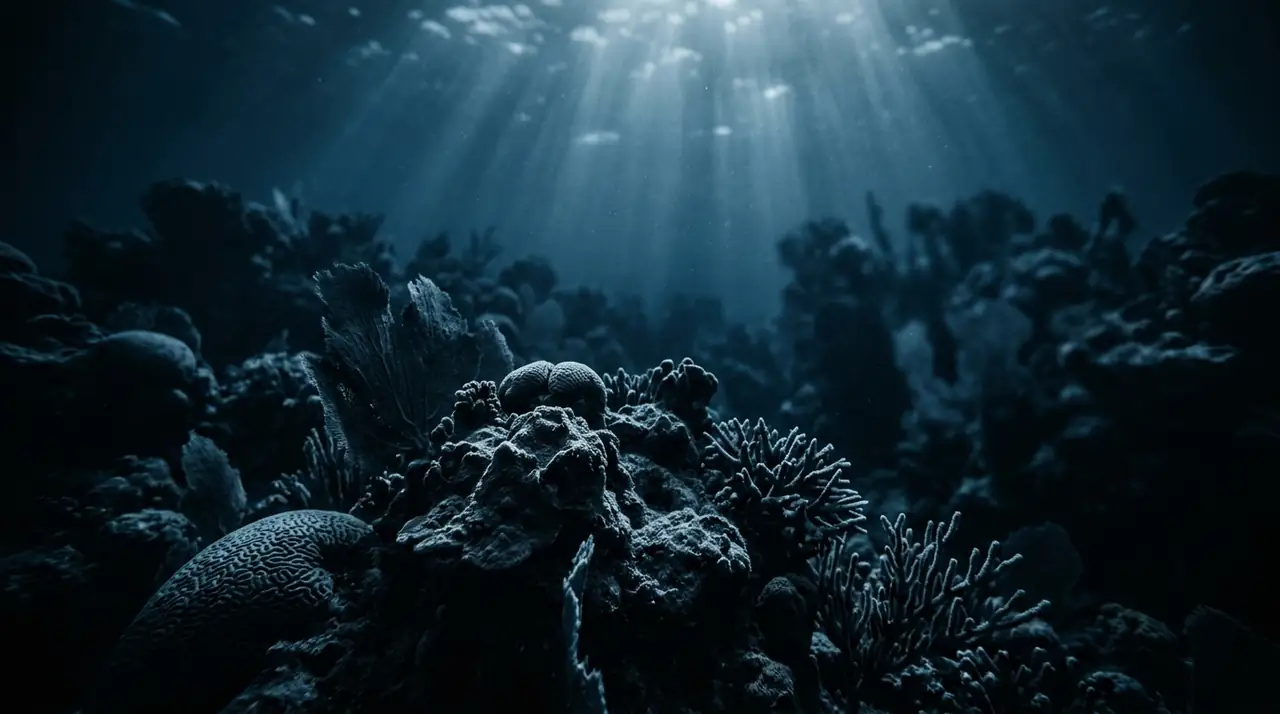
Tarimbang Bay
Overview
Sumba Island sits south of the main Indonesian archipelago, exposed to the open Indian Ocean and largely bypassed by the dive industry. While Bali, Komodo, and Raja Ampat draw hundreds of thousands of divers annually, Sumba receives a tiny fraction. Tarimbang Bay on the southeast coast is one of the few areas where diving has been established, and what lies beneath its turquoise surface is a reef system of startling quality. The boat ride took us past empty white sand beaches backed by savanna grasslands, a landscape that looks nothing like the lush volcanic islands most associate with Indonesia. Dropping in at the outer edge, I was immediately struck by the coral coverage. Dense fields of Acropora stretched across the upper slope in formations so healthy they looked like textbook illustrations. Massive Porites colonies the size of small cars anchored the mid-slope, hosting communities of Christmas tree worms in every colour. At 20 metres, the reef steepens and gorgonian fans begin. Some are enormous, spanning two metres across. It was here that two reef manta rays appeared from the blue, banking slowly toward a cleaning station where small wrasse waited. The mantas circled for nearly fifteen minutes, their wingspans exceeding three metres, completely unbothered by our small group of three divers. The fish life reflects minimal fishing pressure. Schools of bumphead parrotfish crunched through coral heads on the shallow plateau. Giant trevally patrolled the drop-off in pairs. A large Napoleon wrasse followed us for half the dive with calm curiosity that only exists where fish have not learned to fear humans. Whitetip reef sharks rested under ledges, and a hawksbill turtle cruised past at eye level. Sumba will not suit every diver. The infrastructure is minimal, conditions can be challenging, and reaching the best sites requires effort. But for those willing to trade convenience for authenticity, Tarimbang Bay offers a glimpse of what Indonesian reefs looked like before mass tourism arrived.
Early access
Plan a dive here
Open the DiveOne planner to sketch a recreational plan before you go. It is a planning assistant, not a dive computer.
Marine life
Dive profile
DEPTH PROFILE
DEPTH PROGRESSION & WAYPOINTS: Tarimbang Bay
Location
Near Waingapu, in the East Nusa Tenggara region of Indonesia.
Frequently asked questions
How do I arrange diving at Sumba Island?
Sumba has very limited dive infrastructure. A small number of resorts in the Nihiwatu and Tarimbang areas offer guided diving, and a few operators from Bali or Flores run seasonal liveaboard trips that include Sumba stops. Waingapu in the east and Tambolaka in the west have small airports with connections to Bali and Kupang. Overland travel across the island is slow on rough roads. Most diving is arranged through resort packages, and advance planning is essential as there are no walk-in dive shops.
What are the diving conditions like around Sumba?
Conditions vary significantly between the sheltered north coast and the exposed south coast. The south coast receives open Indian Ocean swell and can have strong currents and surge, making it suitable primarily for experienced divers. The north coast offers calmer conditions but fewer dramatic sites. Water temperatures range from 25 to 29 degrees Celsius depending on season, with the cooler upwelling months from July to September sometimes bringing temperatures as low as 22 degrees at depth. Visibility ranges from 15 to 35 metres and is generally best during the dry season.
Is Sumba Island worth visiting for diving alone?
Sumba appeals most to divers who value exploration and solitude over guaranteed encounters. The reefs are genuinely pristine in many areas, and the chance of being the only boat on a site is high. Manta rays are present but not as reliably concentrated as at Komodo or Nusa Penida. What makes Sumba special is the overall reef health and the sensation of diving somewhere truly off the map. Most visitors combine diving with Sumba's other attractions: traditional villages, megalithic tombs, surf breaks, and the island's dramatic savanna landscapes.
Reviews
Reviews
No reviews yet
Data Provenance
This profile is compiled from 3 operator submissions and 142 community logs. Key facts (depth, entry) are verified against official hydrographic charts.