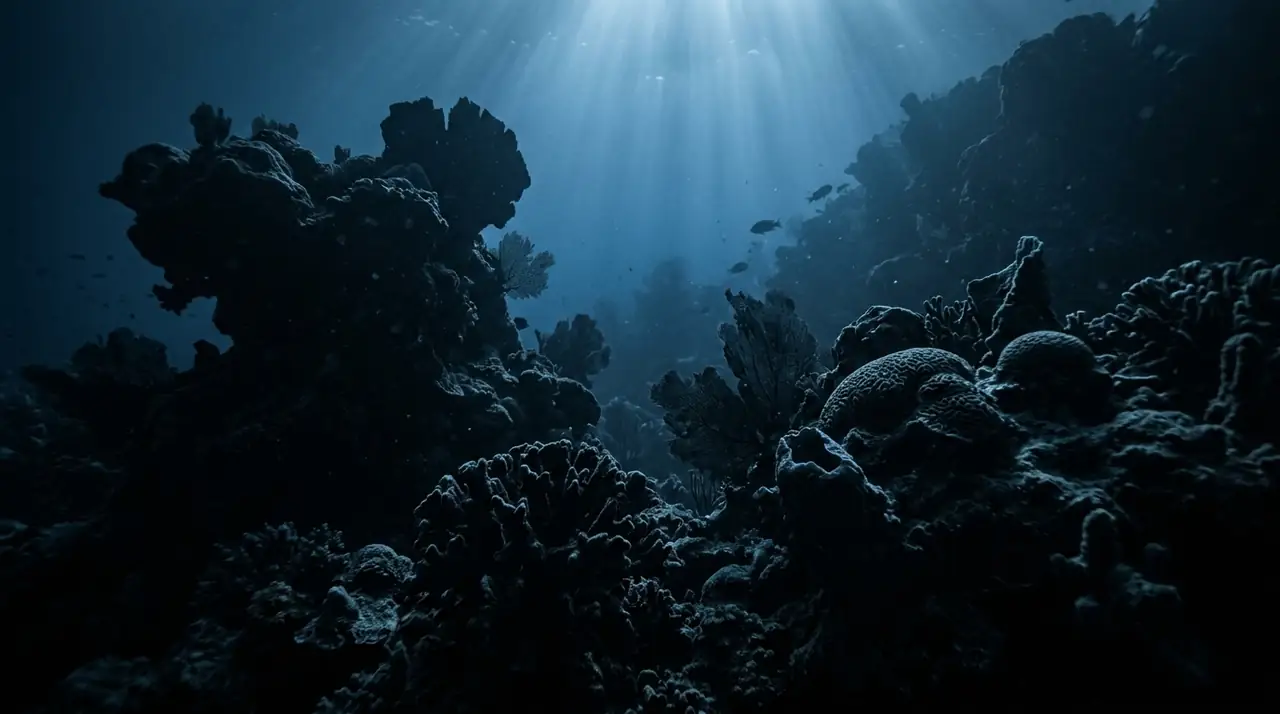
Sodwana Two Mile Approach
Overview
Sodwana Bay sits on the Maputaland coast of KwaZulu-Natal, a stretch of subtropical African coastline where the warm Agulhas Current sweeps south from the Mozambique Channel, carrying tropical water and tropical species to latitudes that should by rights be temperate. The bay is the gateway to the iSimangaliso Wetland Park, a UNESCO World Heritage Site that protects one of Africa's most significant coastal ecosystems. The diving here has been famous since the nineteen seventies, when the first sport divers discovered that the reefs extending offshore from the bay supported hard coral growth that rivalled anything in the western Indian Ocean. The boat launch at Sodwana is an experience that deserves its own paragraph. Rigid inflatable boats are pushed across the beach sand and into the surf zone, where they punch through breaking waves with an enthusiasm that leaves first-time passengers alternately terrified and exhilarated. The launch I experienced on a December morning involved three significant waves, each met with full throttle and a shout from the skipper, before we cleared the break zone and settled into a gentler swell for the ride to the reef. Two Mile Reef is Sodwana's most popular dive site, but I had asked specifically for the southern approach section that receives fewer visitors. Our skipper positioned the boat over a section of reef where the depth sounder showed a bottom profile of scattered pinnacles rising from eighteen to twelve metres. The mooring was a free descent in blue water, the reef revealing itself as I dropped through the water column, appearing first as dark shapes that resolved into detailed coral formations as I closed the distance. The coral coverage was stunning. Hard coral in genuine tropical profusion covered the reef surfaces: table corals, branching Acropora, massive brain corals, and delicate plate corals all competing for space on the rocky substrate. The species diversity was remarkable for a site at twenty-seven degrees south latitude, the Agulhas Current's warm influence clearly expressed in the community composition. Soft corals added colour to the shaded overhangs, and sea fans grew from the current-exposed faces of the larger pinnacles.
Early access
Plan a dive here
Open the DiveOne planner to sketch a recreational plan before you go. It is a planning assistant, not a dive computer.
Marine life
Dive profile
DEPTH PROFILE
DEPTH PROGRESSION & WAYPOINTS: Sodwana Two Mile Approach
Location
Near Sodwana Bay, in the KwaZulu-Natal region of South Africa.
Frequently asked questions
What is the difference between Two Mile Reef and the Two Mile Approach?
Two Mile Reef is Sodwana's most popular dive site, named for its distance from the beach launch point. The main reef area receives the majority of diver traffic and is where most guided dives are conducted. The Two Mile Approach refers to the southern extension of this reef system, a section that receives fewer visitors due to slightly longer boat rides and its position away from the main mooring points. The coral coverage on the approach section is often in better condition due to lower diver impact, and the deeper pinnacles on its outer edge attract larger pelagic species. Dive centres with experienced guides can arrange dives on the approach section, but it is not included in standard dive packages and may require specific requests.
How are boat launches managed at Sodwana Bay?
Sodwana Bay has one of the world's most dramatic dive boat launches. Rigid inflatable boats are launched directly through the surf from the beach, requiring passengers to hold on firmly as the boat punches through the waves. Launches are managed by the KwaZulu-Natal Sharks Board and park authorities, with conditions assessed each morning. If the surf is deemed too dangerous, launches are postponed or cancelled. The launch experience is exciting but can be intimidating for first-timers. All divers must wear lifejackets during the launch and return through the surf zone. Equipment is loaded separately, and divers kit up on the boat after clearing the breakers. The launch system is unique to Sodwana and is considered part of the diving experience.
What marine life is unique to Sodwana compared to other South African dive sites?
Sodwana Bay's position on the edge of the tropics gives it a marine species mix found nowhere else in South Africa. The Agulhas Current delivers warm tropical water from the Mozambique Channel, supporting hard coral growth and tropical fish species at a latitude where they would not normally survive. Potato bass, the gentle giants of Sodwana's reefs, are the site's signature species and are found nowhere else in South African waters in such numbers. Green and loggerhead turtles use the beaches for nesting and the reefs for feeding. Ragged-tooth sharks, known internationally as sand tiger sharks, aggregate on the deeper pinnacles during summer. Manta rays visit seasonally, and whale sharks are occasional visitors during the sardine run season.
Reviews
Reviews
No reviews yet
Data Provenance
This profile is compiled from 3 operator submissions and 142 community logs. Key facts (depth, entry) are verified against official hydrographic charts.