Smitswinkel Bay Wrecks
Overview
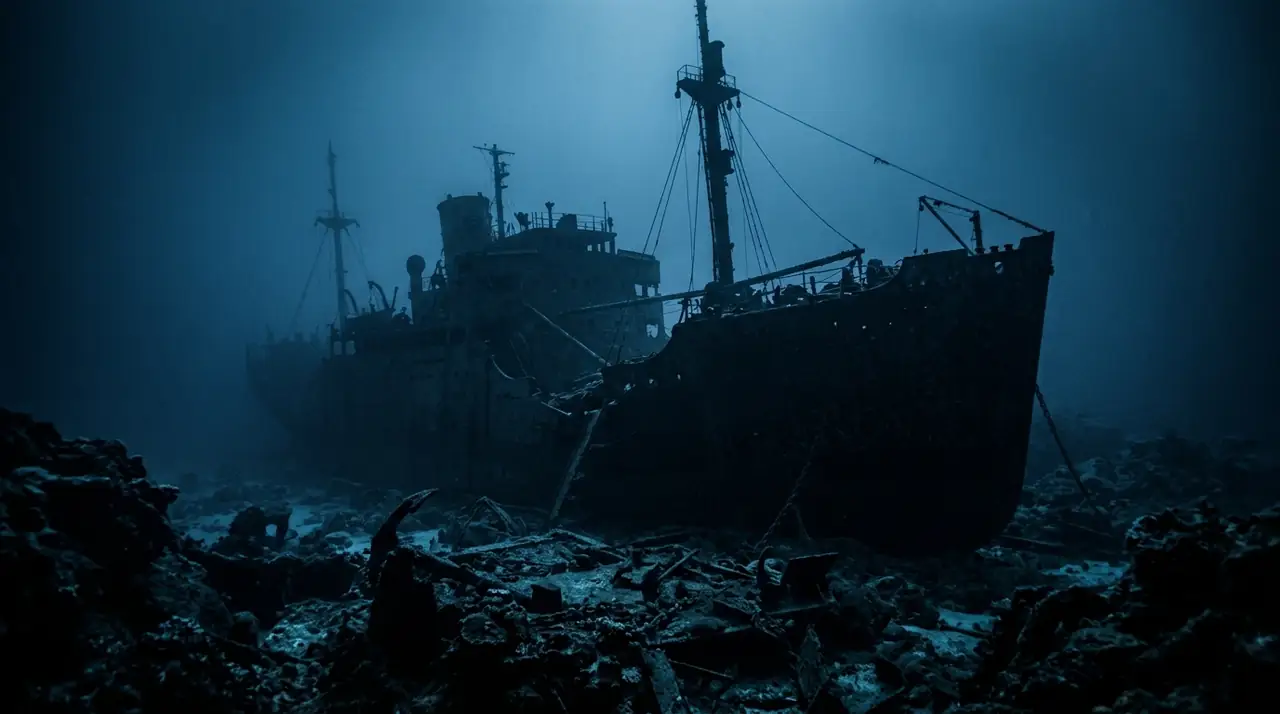
Smitswinkel Bay is a secluded cove on the Cape Peninsula's eastern side, nestled within Table Mountain National Park overlooking False Bay. Below the surface, five deliberately scuttled vessels form one of South Africa's most productive artificial reef complexes. The wrecks were sunk between 1972 and 2004 at depths of 15 to 32 metres on flat sandy bottom. The naval vessels SAS Good Hope and SAS Transvaal are the largest, with Princess Elizabeth, Orotava, and Rockeater completing the cluster. Several lie close enough to visit two on a single dive, and all were carefully prepared with hazardous materials removed and access points cut into hulls. Descending onto the SAS Good Hope, the density of marine life is immediately striking. In nutrient-rich False Bay waters, every surface is colonised. Sea fans and anemones cover deck structures, and the superstructure creates overhangs where Roman seabream and red stumpnose shelter in schools. Hull plates support colourful sponge gardens, and Cape rock lobsters occupy every crevice. Penetration diving is a highlight. Prepared access points allow safe exploration of engine rooms and bridge structures, with light reaching through cut openings. Swimming through companionways surrounded by soft corals growing from walls and ceilings is atmospheric diving at its best. The surrounding sandy bottom hosts short-tail stingrays and pyjama catsharks, a beautifully striped species endemic to South Africa. Broadnose sevengill cow sharks patrol the deeper water, particularly during cooler months when these ancient predators aggregate in False Bay. Smitswinkel Bay's position within Table Mountain National Park ensures genuine marine protection. The bay is accessed by boat from Simon's Town, a fifteen-minute ride passing the famous Boulders Beach penguin colony. Multiple wrecks at accessible depths, rich marine life, and stunning setting make it essential for anyone diving Cape Town.
Early access
Plan a dive here
Open the DiveOne planner to sketch a recreational plan before you go. It is a planning assistant, not a dive computer.
Marine life
Dive profile
DEPTH PROFILE
DEPTH PROGRESSION & WAYPOINTS: Smitswinkel Bay Wrecks
Location
Frequently asked questions
What wrecks can be dived in Smitswinkel Bay?
Five vessels were deliberately scuttled in Smitswinkel Bay between 1972 and 2004 to create an artificial reef. The wrecks include the SAS Good Hope, SAS Transvaal, Princess Elizabeth, Orotava, and Rockeater. They lie at depths ranging from 15 to 32 metres on a sandy bottom, with several wrecks close enough to visit on a single dive. The SAS Good Hope and SAS Transvaal are the largest and most intact, offering good penetration opportunities. The wrecks were carefully prepared before sinking with hazardous materials removed and access points cut into the hull for diver safety.
Are there sharks at Smitswinkel Bay?
Smitswinkel Bay lies within False Bay, which is home to broadnose sevengill cow sharks, a species that aggregates in the bay's kelp forests and around the wrecks. Encounters with these docile prehistoric-looking sharks are possible, particularly during the cooler months from March through September when they are most abundant in False Bay. Pyjama catsharks, a small endemic species with distinctive striped patterning, are commonly found resting on the wrecks and surrounding reef. Great white sharks occasionally patrol the outer bay but are not encountered at the wreck sites.
What are the diving conditions like at Smitswinkel Bay?
Smitswinkel Bay is one of the more sheltered dive sites in the Cape Town area due to its position inside False Bay, protected from the Atlantic swells by the Cape Peninsula. Visibility ranges from 5 to 15 metres and is best during the autumn and winter months from March through August when plankton levels are lower. Water temperatures range from 12 to 20 degrees Celsius depending on season, requiring a wetsuit of at least seven millimetres or preferably a dry suit. Surface conditions are usually calm, though southeast winds in summer can create chop.
Reviews
Reviews
No reviews yet
Data Provenance
This profile is compiled from 3 operator submissions and 142 community logs. Key facts (depth, entry) are verified against official hydrographic charts.