Shark Cave
Overview
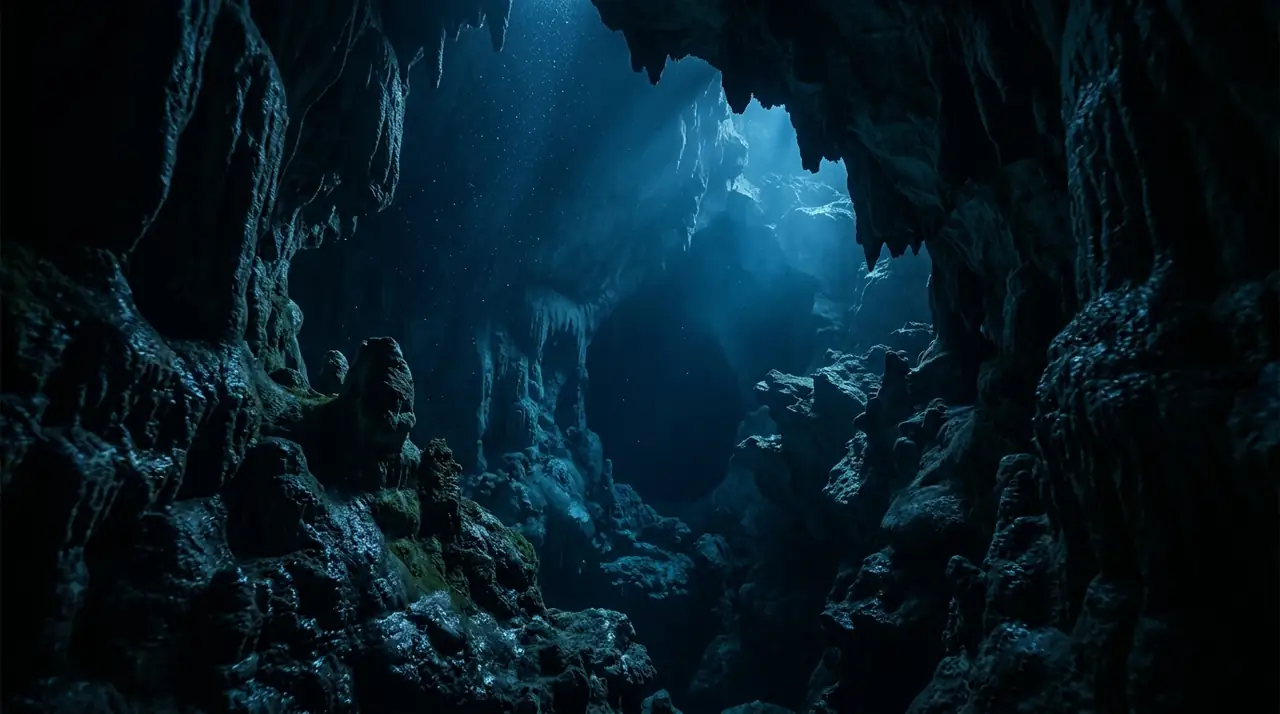
Shark Cave is a limestone cavern system tucked into the base of one of the Mergui Archipelago's countless granite and limestone islands, accessible only by liveaboard from Kawthaung or Ranong. The site takes its name from the tawny nurse sharks that use the cavern as a daytime resting spot, stacking themselves on the sandy floor in the dim interior while the reef outside explodes with colour and life. It is a site of contrasts: shadow and light, stillness and movement, the quiet respiration of sleeping sharks and the kinetic energy of the open reef just metres away. I entered the water on the reef side of the island, descending through a shallow coral garden before the limestone wall revealed the cavern entrance at sixteen metres. The opening was wide, perhaps eight metres across and four metres high, framed by soft corals in deep purples and vivid crimsons that looked almost artificial in their intensity. Sunlight streamed in through the entrance and a secondary opening above, creating shafts of illumination that played across the sandy floor like theatrical spotlights. Inside, the first sharks were visible from the entrance. Five tawny nurse sharks lay on the sand in a loose cluster, their bodies aligned with the gentle current flowing through the cavern. Their eyes were half-closed, their gill slits pulsing with the slow rhythm of resting animals. The largest was well over two metres, its skin a warm brown covered in the faint spots that give the species its distinctive appearance. I settled on the sand at a respectful distance and watched. There is something profoundly calming about being in the presence of sleeping sharks. The usual adrenaline that accompanies shark encounters is replaced by a quieter emotion, something closer to reverence. A bamboo shark lay curled in a crevice near the back of the cavern, its banded body barely visible among the rocks. Lobsters waved their antennae from every crack and crevice, their eyes reflecting my torch beam in green pinpoints. A giant moray eel occupied a prime position at the cavern entrance, its head protruding from the rock with an expression that managed to be both threatening and bored simultaneously. The reef outside the cavern was equally rewarding. The limestone walls were carpeted in dendronephthya soft corals, their translucent branches in pinks, oranges, and whites creating a garden that swayed with the current like flowers in a breeze. Lionfish hung beneath ledges in their characteristic inverted posture, pectoral fins extended. I found a pair of harlequin shrimp on the underside of a coral overhang, their painted bodies one of nature's most extravagant designs, working together to turn over a sea star for feeding. The swim-through exit at the back of the cavern led to a chimney that ascended to twelve metres, opening onto a coral plateau bathed in sunlight. The transition from the dim cavern interior to the sun-drenched reef above was startling, like walking from a cathedral into a tropical garden. Whitetip reef sharks patrolled this section, more active than their nurse shark cousins inside, cruising the reef edge with the purposeful efficiency of animals on the hunt. Shark Cave exemplifies what makes the Mergui Archipelago special. It is not a single-feature site but a complete ecosystem compressed into a small area, offering cavern diving, macro photography, soft coral spectacle, and shark encounters in a single dive. The remoteness that keeps visitor numbers low is also what keeps the reef in such extraordinary condition.
Early access
Plan a dive here
Open the DiveOne planner to sketch a recreational plan before you go. It is a planning assistant, not a dive computer.
Marine life
Dive profile
DEPTH PROFILE
DEPTH PROGRESSION & WAYPOINTS: Shark Cave
Location
Frequently asked questions
Is the cavern at Shark Cave safe for recreational divers?
Yes, the main cavern at Shark Cave is a wide, shallow cavern rather than a true cave, meaning natural light is always visible from inside. The ceiling is high enough to avoid contact, and the sandy floor provides a clear reference point. Intermediate-level divers with good buoyancy control can safely explore the cavern. However, it is important not to stir up the sandy bottom, which can reduce visibility inside the cavern. Your dive guide will brief you on entry and exit routes.
How reliable are the shark sightings at Shark Cave?
Tawny nurse sharks use the cavern as a daytime resting site and are present on the majority of dives, typically in groups of three to eight animals. They rest on the sandy floor with their heads tucked under the rock overhangs. Bamboo sharks are also common, often found in the shallower recesses. Whitetip reef sharks patrol the outer reef edge. The sharks are habituated to divers but should be given respectful distance to avoid disturbing their rest.
Can Shark Cave be combined with other Mergui dive sites?
Shark Cave is typically included in multi-day liveaboard itineraries covering the Mergui Archipelago. It is located in the central Mergui area, closer to the islands than the outer pinnacles like Western Rocky or Black Rock. Most seven to ten day itineraries will include Shark Cave alongside reef, wall, and pinnacle sites. The site makes an excellent contrast to the current-swept pelagic sites, offering a calmer, more contemplative dive experience.
Reviews
Reviews
No reviews yet
Data Provenance
This profile is compiled from 3 operator submissions and 142 community logs. Key facts (depth, entry) are verified against official hydrographic charts.