Sha'ab Rumi
Overview
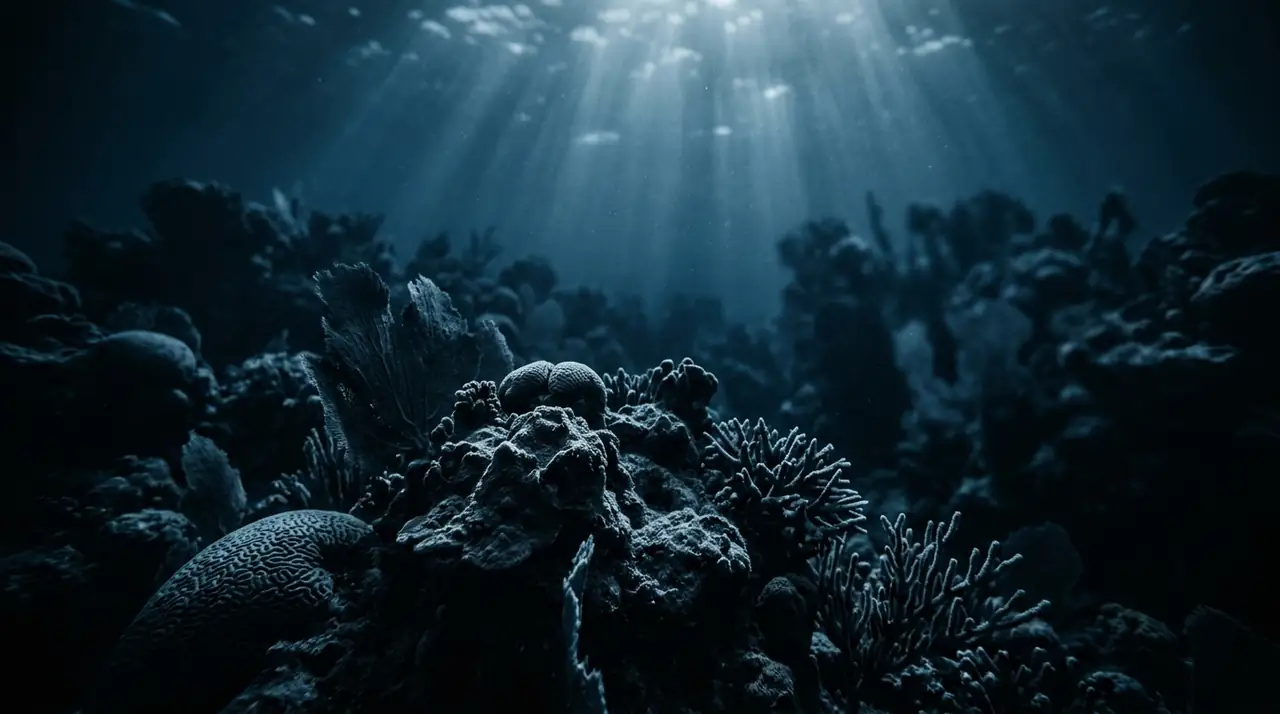
Sha'ab Rumi holds a unique place in diving history. This horseshoe-shaped reef in the central Sudanese Red Sea is where Jacques Cousteau built his Conshelf II underwater habitat in 1963, housing a team of oceanauts who lived and worked beneath the waves for a month. The Oscar-winning documentary World Without Sun brought this reef to global attention, and six decades later it remains one of the most compelling dive destinations on the planet, not just for its history but for its extraordinary marine life. The liveaboard moored inside the lagoon, and our first dive was a pilgrimage to the Conshelf remains. At ten metres on the sandy floor, the garage structure emerged from the blue, a cylindrical metal frame now completely colonised by hard and soft corals. Anemones and clownfish occupied the rusted window frames. Nearby, tool sheds and storage frameworks lay scattered across the sand, each one a miniature reef in its own right. It is a strange and moving experience to hover over the spot where humans first attempted to live permanently underwater, knowing that the reef has quietly absorbed the experiment back into itself. The main event at Sha'ab Rumi is the south plateau. We descended the outer wall at dawn, dropping to thirty metres where the reef shoulder extends into open water as a flat coral platform. The visibility was over thirty metres, and the water was a deep indigo. Within five minutes the first hammerhead appeared, a single large female cruising the thermocline with that distinctive undulating profile. Then the school came. Twenty, thirty, perhaps forty scalloped hammerheads materialised in the blue beyond the plateau, a loose formation of bizarre silhouettes sweeping their cephalofoils from side to side. They held their depth at around thirty-five metres, circling in a wide gyre that brought them past our position three times before they descended and vanished. The wall itself was carpeted in coral. Enormous gorgonian fans grew from the vertical face, their lattices filtering the Red Sea current. Grey reef sharks patrolled the wall in pairs, and a silvertip shark, rarer and bolder than its grey cousins, cruised past at eye level with a deliberate, unhurried gait. A school of bigeye trevally numbering in the hundreds formed a tornado above a coral head, the vortex spinning and reforming as individuals joined and departed. On the return along the reef top, a Napoleon wrasse the size of a small table accompanied us for ten minutes, its curiosity about our cameras apparently insatiable. The reef fish density at Sha'ab Rumi is remarkable, anthias swarming every coral head, surgeonfish grazing in disciplined schools, and giant moray eels poking their heads from seemingly every crevice. This is what the Red Sea looked like before the dive boats came, and Sudan's isolation has preserved it in a state that Egypt's reefs can only remember.
Early access
Plan a dive here
Open the DiveOne planner to sketch a recreational plan before you go. It is a planning assistant, not a dive computer.
Marine life
Dive profile
DEPTH PROFILE
DEPTH PROGRESSION & WAYPOINTS: Sha'ab Rumi
Location
Frequently asked questions
How do I get to Sha'ab Rumi and what liveaboard options exist?
Sha'ab Rumi is located approximately 40 kilometres northeast of Port Sudan and is only accessible by liveaboard. Several operators run weekly itineraries from Port Sudan that include Sha'ab Rumi as a highlight, typically combined with Sanganeb Reef, Angarosh, and other offshore sites. Liveaboard trips usually last seven to ten days. International flights reach Port Sudan via Khartoum or occasionally direct from Dubai or Cairo. Sudan requires a visa for most nationalities, and a separate dive permit must be arranged through the liveaboard operator. The diving season runs from October to May, with most boats pausing during the summer months due to extreme heat.
What is Conshelf II and can I dive the remains?
Conshelf II was Jacques Cousteau's underwater living experiment conducted in 1963. A team of oceanauts lived for a month in a starfish-shaped habitat placed in Sha'ab Rumi's lagoon at about ten metres depth. The experiment was documented in the Oscar-winning film World Without Sun. The main habitat structure has been removed, but the garage that housed the diving saucer, tool sheds, and various metal frameworks remain on the sandy lagoon floor. They are heavily encrusted with coral and marine growth but still recognisable. Diving the remains is part of every liveaboard itinerary and feels like visiting a shrine to underwater exploration.
When is the best time to see hammerhead sharks at Sha'ab Rumi?
Hammerhead shark sightings at the south plateau of Sha'ab Rumi are most reliable from October through February when cooler water temperatures bring the sharks to shallower depths. Early morning dives, particularly the first dive of the day at sunrise, offer the highest probability of encountering schooling hammerheads. The sharks typically patrol the plateau between 25 and 40 metres. While sightings are never guaranteed, Sha'ab Rumi is considered one of the top three hammerhead sites in the Red Sea alongside Daedalus and The Brothers. Calm conditions and good visibility improve the chances significantly.
Reviews
Reviews
No reviews yet
Data Provenance
This profile is compiled from 3 operator submissions and 142 community logs. Key facts (depth, entry) are verified against official hydrographic charts.