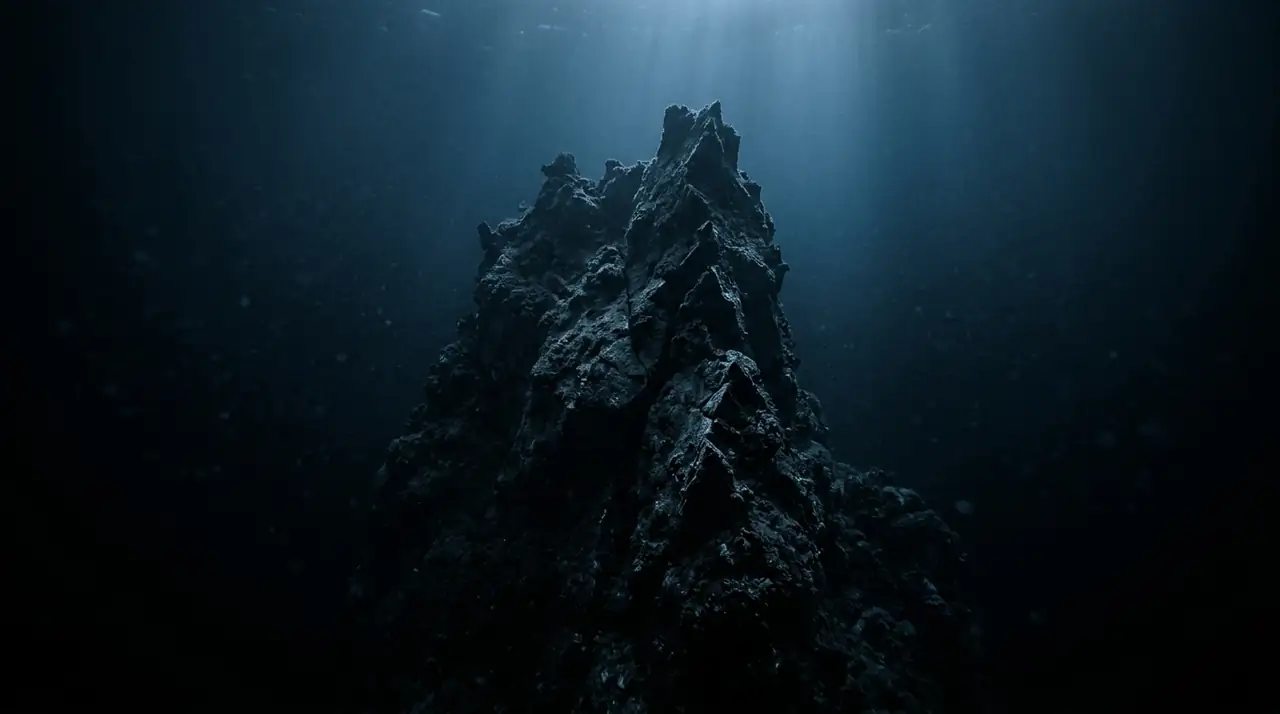
Scotts Head Pinnacle
Overview
Scotts Head Pinnacle rises from the volcanic depths at the southernmost point of Dominica, exactly where the Caribbean Sea and the Atlantic Ocean collide. This underwater mountain is the submerged extension of the dramatic headland that forms the island's southern cape, a place where two bodies of water with different temperatures, salinities, and current patterns converge to create a nutrient-rich ecosystem of exceptional diversity. I descended along the pinnacle's western face into clear Caribbean water, the wall dropping away steeply beneath me into blue-black depths. The rock was volcanic basalt, dark and textured, and every surface was colonised. Sponges of half a dozen species competed for space with encrusting corals, hydroids, and clumps of wire coral spiralling outward from the wall. At 25 metres, a forest of black coral trees appeared along a horizontal ledge, their delicate branches extending into the current to filter passing plankton. I moved carefully through them, watching for the macro life these colonies attract. The guide pointed to a sponge-covered overhang at 20 metres, and there it was: a longlure frogfish, its warty body so perfectly matching the surrounding sponge that I had to stare for several seconds before the shape resolved. Nearby, a pair of seahorses clung to a wire coral, their tails wrapped tightly as the current tugged at their tiny bodies. A spotted drum juvenile performed its characteristic spinning dance under a ledge, its elongated dorsal fin trailing like a ribbon. The pinnacle top between 8 and 12 metres was a different world entirely, bathed in sunlight and swarming with reef fish. Creole wrasse schooled in dense clouds, parting around ascending divers like a living snowstorm. A hawksbill turtle rested on a coral head, its beak tucked under a ledge. Looking down from the top, the pinnacle walls fell away on all sides into the abyss, and the temperature difference between the Caribbean and Atlantic sides was palpable even through a wetsuit. Scotts Head Pinnacle is Dominica's most thrilling dive, a volcanic tower standing at the crossroads of two oceans.
Early access
Plan a dive here
Open the DiveOne planner to sketch a recreational plan before you go. It is a planning assistant, not a dive computer.
Marine life
Dive profile
DEPTH PROFILE
DEPTH PROGRESSION & WAYPOINTS: Scotts Head Pinnacle
Location
Near Scotts Head, in the Saint Mark Parish region of Dominica.
Frequently asked questions
How do I reach Scotts Head Pinnacle?
Scotts Head is at the extreme southern tip of Dominica, about 45 minutes' drive from the capital Roseau. Dive operators based in Roseau and Soufriere offer boat trips to the pinnacle, reaching the site in 15 to 20 minutes. Dominica's Douglas-Charles Airport receives regional flights, and the drive to the south coast takes about 90 minutes.
What makes this different from Champagne Reef nearby?
Champagne Reef is famous for its volcanic hot springs bubbling through the sandy bottom at shallow depths, creating a unique sensory experience. Scotts Head Pinnacle is a deeper, more challenging dive focused on dramatic underwater topography and macro photography opportunities. Champagne Reef suits beginners and offers a novelty factor, while the pinnacle rewards advanced divers with more biodiversity and bigger drop-offs.
What certification is required?
Advanced Open Water certification is required due to depths reaching 40 metres at the base and moderate currents that can develop around the pinnacle. The site is exposed to both Caribbean and Atlantic swells at the island's tip, so sea conditions can change. A surface marker buoy is mandatory. The shallower pinnacle top at 8 metres can be enjoyed by intermediate divers who stay above 18 metres.
Reviews
Reviews
No reviews yet
Data Provenance
This profile is compiled from 3 operator submissions and 142 community logs. Key facts (depth, entry) are verified against official hydrographic charts.