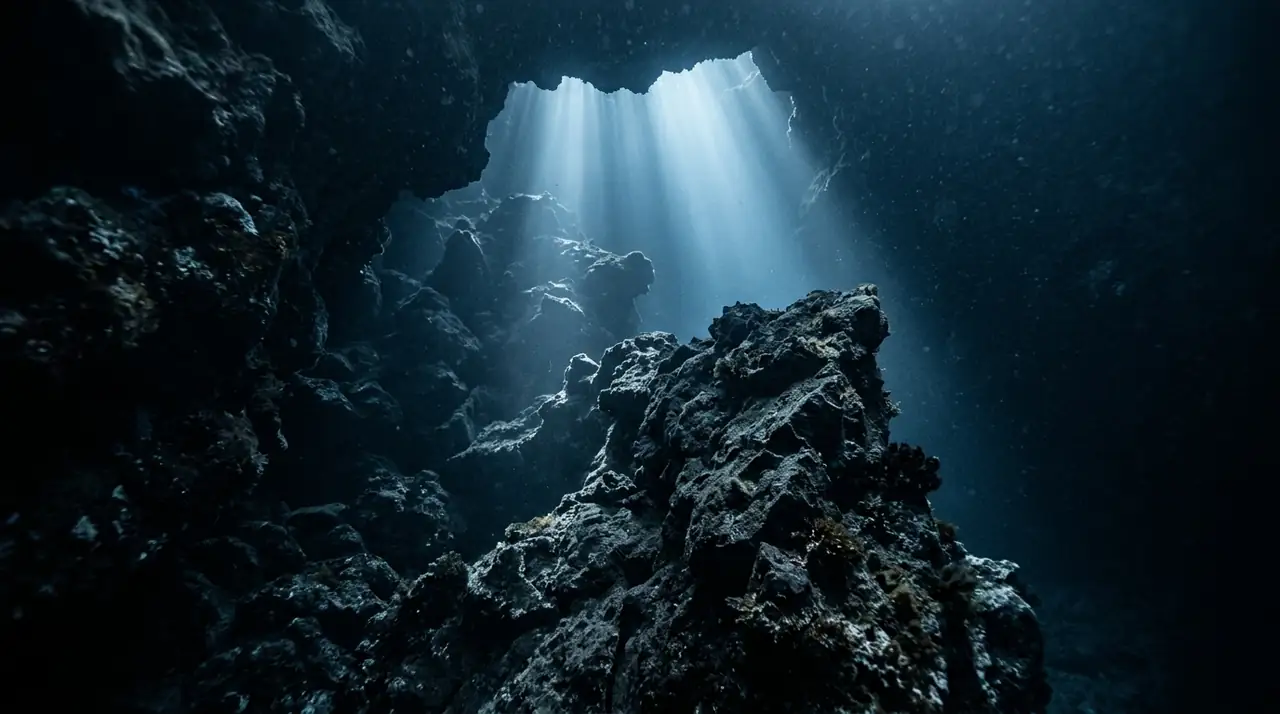
Sawu Sea
Overview
The Sawu Sea is Indonesia's last great marine frontier, a vast stretch of deep ocean between Timor, Sumba, Flores, and Rote islands in East Nusa Tenggara. While the country's famous dive destinations draw crowds to coral reefs, the Sawu Sea offers something fundamentally different: open-water encounters with the largest animals on Earth in waters that most divers have never heard of. This is where deep oceanic trenches channel nutrient-rich upwellings to the surface, creating feeding grounds that attract blue whales, sperm whales, and oceanic manta rays. Diving here is expedition-style by nature. You leave from Kupang or Rote Island on a liveaboard and head into waters that are measured in thousands of meters of depth. The dive sites are not fixed points on a map but rather areas where upwelling activity concentrates marine life. On a good day, you roll into cobalt-blue water with visibility exceeding 30 meters and find yourself surrounded by a procession of pelagic species that you would normally need to travel to the Galapagos or Azores to encounter. Oceanic manta rays are the most reliable large-animal encounter, with individuals displaying wingspans of five meters and more. They feed on the plankton blooms that the upwellings produce, circling in slow barrel rolls near the surface. Unlike their reef manta cousins, these open-ocean giants are often darker in coloration and more wary of divers, making each encounter feel earned rather than guaranteed. The cetacean diversity is what truly sets the Sawu Sea apart. Blue whales pass through between September and December on migration routes between the Indian Ocean and the Pacific. Sperm whales are resident, diving to extraordinary depths in the trenches to hunt squid. Pilot whales, melon-headed whales, and pods of spinner dolphins numbering in the hundreds are regular sightings from the boat, and occasionally underwater. Hammerhead sharks patrol the deeper thermoclines, whale sharks appear during plankton peaks, and mola mola rise from the depths during cooler upwelling events. This is not comfortable, predictable diving. Currents can be powerful and unpredictable, visibility shifts from crystalline to plankton-dense within minutes, and the deep blue water demands mental composure. Surface conditions can deteriorate rapidly in the exposed channels between islands. But for advanced divers seeking encounters that feel genuinely wild and unscripted, the Sawu Sea delivers experiences that exist almost nowhere else in Indonesia.
Early access
Plan a dive here
Open the DiveOne planner to sketch a recreational plan before you go. It is a planning assistant, not a dive computer.
Marine life
Dive profile
DEPTH PROFILE
DEPTH PROGRESSION & WAYPOINTS: Sawu Sea
Location
Frequently asked questions
How do I arrange diving in the Sawu Sea?
The Sawu Sea is accessed primarily via liveaboard expeditions departing from Kupang, the capital of East Nusa Tenggara. A few specialist operators run seasonal trips between October and December. Rote Island, reachable by ferry from Kupang, serves as an alternative staging point. This is expedition-level diving with limited infrastructure, so booking with an established operator experienced in these waters is essential.
What cetaceans can be seen in the Sawu Sea?
The Sawu Sea is one of the most important cetacean habitats in Indonesia. Blue whales migrate through between September and December, using the deep channels between islands. Sperm whales are resident year-round in the deeper trenches. Pilot whales, melon-headed whales, and spinner dolphins are commonly encountered. In total, over twenty cetacean species have been recorded in the Sawu Sea, making it among the most diverse whale and dolphin habitats in the world.
What is the UNESCO designation for the Sawu Sea?
The Sawu Sea was designated as the Sawu Sea Marine National Park in 2014, covering 3.5 million hectares and making it one of the largest marine protected areas in Indonesia. The deep trenches and channels between the islands create upwelling zones that support extraordinary pelagic biodiversity. The park protects critical habitat for migrating cetaceans and is increasingly recognized as one of Southeast Asia's most important marine conservation areas.
Reviews
Reviews
No reviews yet
Data Provenance
This profile is compiled from 3 operator submissions and 142 community logs. Key facts (depth, entry) are verified against official hydrographic charts.