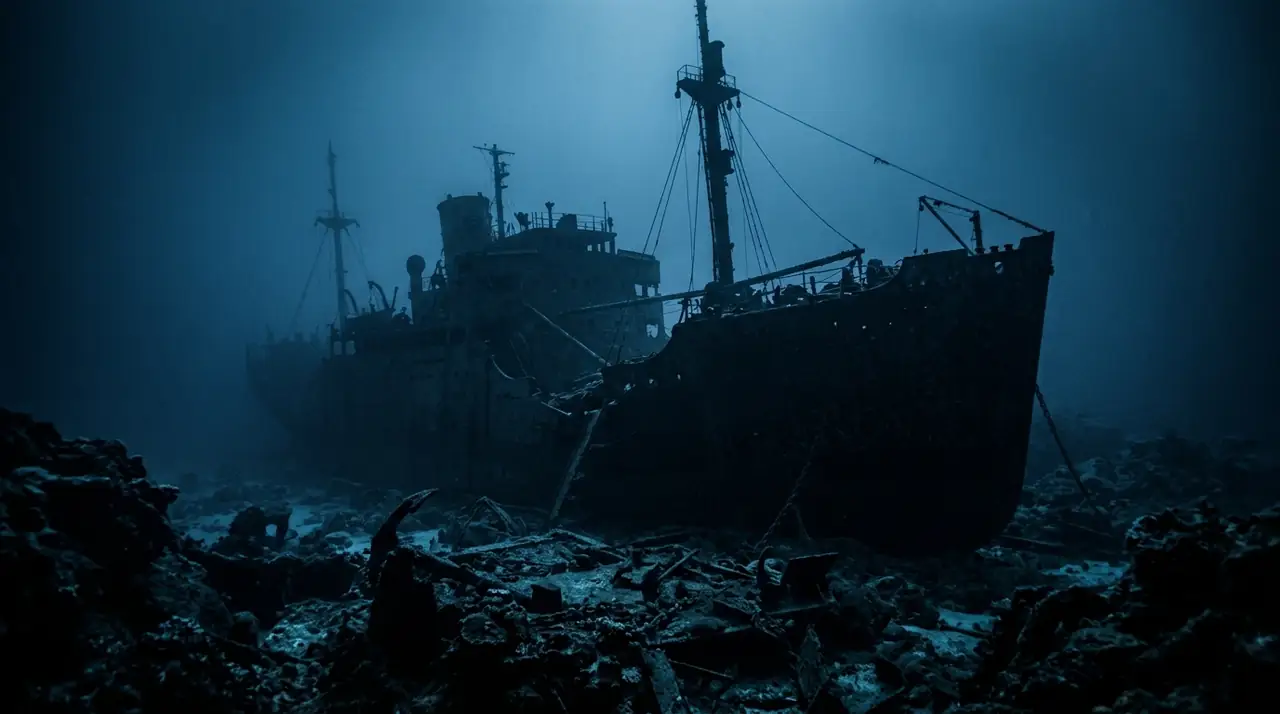
SAS Wreck (St. Didier) Antalya
Overview
The SAS wreck, known locally as the St. Didier, is one of the most rewarding wreck dives on Turkey's Turquoise Coast. This former French Navy patrol vessel was deliberately scuttled off Antalya to create an artificial reef, and in the years since, marine life has transformed it into a thriving underwater ecosystem. The boat ride from Antalya's old harbour takes about 30 minutes beneath the dramatic Taurus Mountains. Descending the mooring line, the wreck appears as a dark silhouette against pale sandy bottom, sitting perfectly upright at around 25 metres. Summer visibility of 20 to 30 metres means the entire vessel is visible from above before reaching deck level. The wreck is approximately 30 metres long and retains much of her superstructure. I began at the bow, where the forward deck is encrusted with sponges and soft corals in orange, yellow, and purple. Schools of damselfish swirl above the deck, and sea bream cruise past in orderly formations. The bridge and wheelhouse provide the most atmospheric section — through the windows, shafts of light penetrate openings cut specifically for diver safety. Marine life colonising the wreck is remarkably dense. Groupers have established territories around the hull, holding position as divers approach. Moray eels occupy crevices along the waterline, their heads protruding as they sway in the current. The hull plates are a macro photographer's paradise: nudibranchs crawl across sponge-encrusted surfaces, and tiny blennies and gobies occupy every available hole. Lionfish, an invasive species now established in the eastern Mediterranean, shelter beneath overhangs. The sandy bottom surrounding the wreck provides contrast, with octopuses hunting across open ground and scorpionfish camouflaged against the sand. Antalya is a vibrant base with excellent dive centres and easy international connections. The SAS wreck is typically dived as part of a two-dive morning trip, often paired with a nearby reef site.
Early access
Plan a dive here
Open the DiveOne planner to sketch a recreational plan before you go. It is a planning assistant, not a dive computer.
Marine life
Dive profile
DEPTH PROFILE
DEPTH PROGRESSION & WAYPOINTS: SAS Wreck (St. Didier) Antalya
Location
Near Antalya, in the Antalya Province, Mediterranean Coast region of Turkey.
Frequently asked questions
What is the SAS wreck in Antalya?
The SAS wreck, also known as St. Didier, is a former French Navy patrol vessel that was acquired by a Turkish dive operator and deliberately sunk off the coast of Antalya to create an artificial reef and dive attraction. The vessel was cleaned of pollutants, had openings cut for safe diver access, and was sunk upright on a sandy bottom at around 25 metres depth. Since its sinking it has become densely colonised by marine life and is now one of the most popular wreck dives on the Turkish Mediterranean coast.
What certification do I need to dive the SAS wreck?
Advanced Open Water certification is recommended as the deck of the wreck sits at around 18 to 20 metres with the sandy bottom at 25 metres. Open Water divers can view the wreck from above but cannot comfortably explore the full structure within their depth limits. The wreck has been prepared for safe recreational penetration with multiple exits cut into the hull, but entering the interior requires wreck diving experience or specialty certification.
When is the best time to dive the SAS wreck?
The Turkish Mediterranean coast has an extended diving season from May through November, with water temperatures ranging from 20 to 28 degrees during this period. Peak conditions occur from June through September with the warmest water and best visibility of 20 to 30 metres. The wreck is in a relatively sheltered location and is diveable on most days during the season. Winter diving is possible but water temperatures drop to around 16 degrees.
Reviews
Reviews
No reviews yet
Data Provenance
This profile is compiled from 3 operator submissions and 142 community logs. Key facts (depth, entry) are verified against official hydrographic charts.