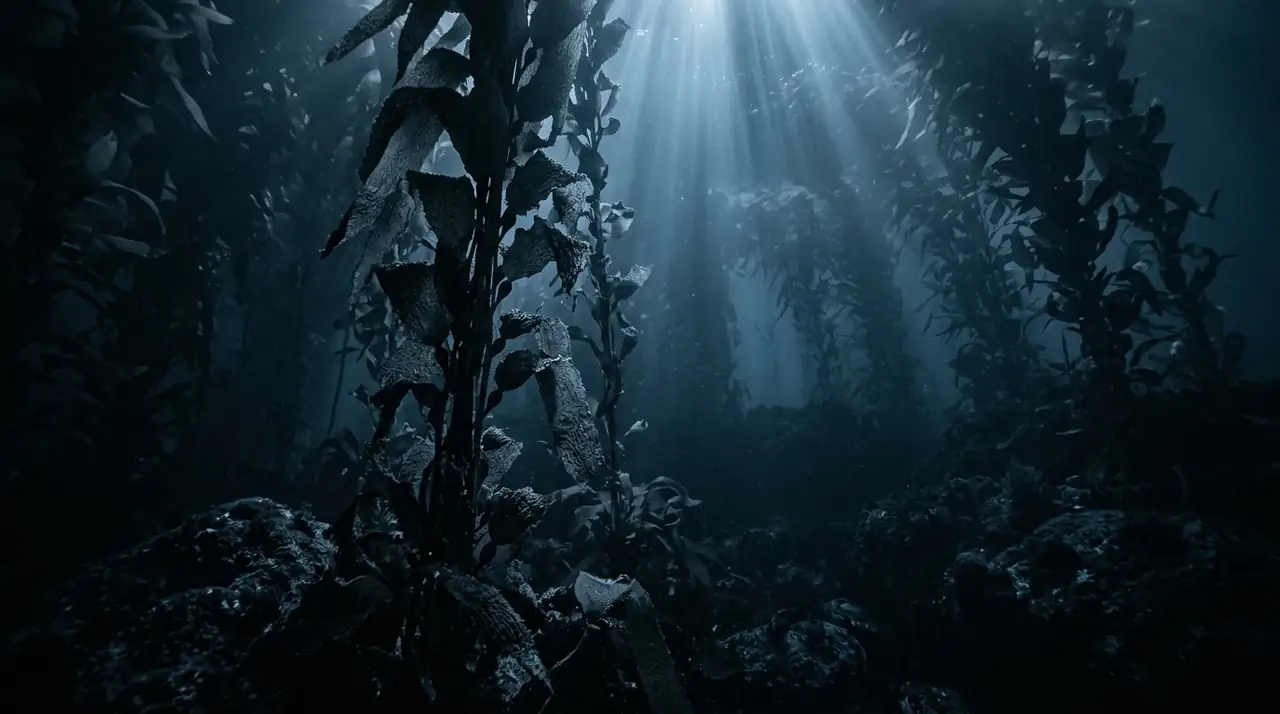
San Diego Kelp Forest
Overview
San Diego's kelp forests are among the most accessible temperate diving destinations in the world, with shore entries at La Jolla Cove and La Jolla Shores putting divers into towering underwater forests within minutes. Giant kelp, Macrocystis pyrifera, grows from rocky reef substrate to the surface in strands reaching thirty metres or more, creating a canopy that filters sunlight into shifting golden beams and shelters one of the Pacific Coast's richest ecosystems. The experience of swimming through a healthy kelp forest is unlike any tropical dive. Amber light filters through the canopy above, creating a cathedral atmosphere with living architecture. Kelp fronds sway gently in the surge, and schools of senoritas and blacksmith chromis move through the mid-water gaps. On the rocky substrate below, bright orange garibaldi, California's state marine fish, defend their territories with surprising aggression for their modest size. La Jolla Shores offers the most accessible entry, a gentle sandy beach where divers can wade in and swim out to the kelp line. During summer months, the shallows here host one of nature's more remarkable aggregations: hundreds of leopard sharks gathering in water barely waist-deep. These elegant spotted sharks are harmless and seemingly indifferent to divers, cruising slowly over the sand in formations that can stretch for hundreds of metres. Point Loma's kelp beds, typically accessed by boat, offer denser forest and more dramatic topography. The rocky reefs here drop in ledges and overhangs, creating habitat for horn sharks tucked into crevices, spiny lobsters waving antennae from dark recesses, and occasionally the massive shadow of a giant black sea bass drifting through the kelp columns. Harbour seals and California sea lions are frequent companions. The seals seem to enjoy buzzing divers, approaching at speed before veering away with apparent amusement. San Diego's diving season peaks from July through November when visibility improves and water temperatures rise. The city's location at the warm southern end of the California kelp range means forests here are among the most productive.
Early access
Plan a dive here
Open the DiveOne planner to sketch a recreational plan before you go. It is a planning assistant, not a dive computer.
Marine life
Dive profile
DEPTH PROFILE
DEPTH PROGRESSION & WAYPOINTS: San Diego Kelp Forest
Location
Frequently asked questions
Where are the best kelp forest dive sites in San Diego?
San Diego offers several outstanding kelp forest locations. La Jolla Cove and La Jolla Shores are the most popular, with easy shore access and dense kelp beds starting in shallow water. Point Loma kelp beds are typically accessed by boat and offer some of the thickest kelp forest in Southern California. The kelp beds off Scripps Pier near the University of California San Diego campus provide a convenient midweek dive. Each location has distinct character, but all feature the towering Macrocystis pyrifera giant kelp that defines California diving.
When can I see leopard sharks in San Diego?
Leopard sharks aggregate in the warm shallow waters of La Jolla Shores primarily from June through September, with peak numbers in July and August. Hundreds of these graceful spotted sharks gather in water less than three metres deep, making them accessible to snorkelers and divers alike. The sharks are completely harmless and seem largely indifferent to human presence. Marine biologists believe the females use the warm shallows as a gestation area. The best encounters occur on calm mornings with clear water, entering from the beach at La Jolla Shores and swimming north along the sandy bottom.
Do I need a wetsuit or drysuit for San Diego diving?
Most San Diego divers use a seven-millimetre wetsuit year-round, though some prefer drysuits during winter and early spring when water temperatures drop to around 14 degrees Celsius. Summer and autumn temperatures of 18 to 22 degrees are comfortable in a thick wetsuit for most people. A hood and gloves are recommended year-round, as the kelp forest canopy shades the water and deeper areas remain cool even in summer. Visibility is generally best from late summer through autumn when plankton blooms subside and ocean conditions stabilize.
Reviews
Reviews
No reviews yet
Data Provenance
This profile is compiled from 3 operator submissions and 142 community logs. Key facts (depth, entry) are verified against official hydrographic charts.