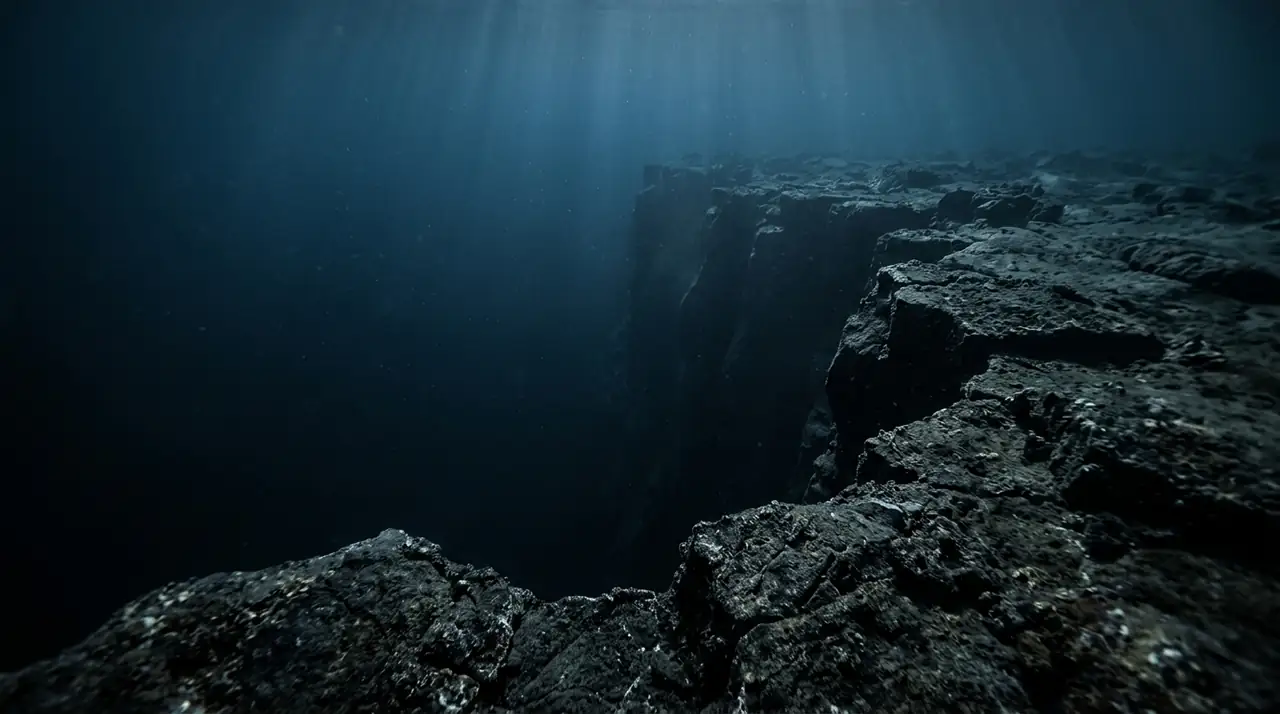
Romblon Island Blue Hole
Overview
Romblon Island sits at the geographic heart of the Philippines, a small marble-rich island in the Sibuyan Sea that has quietly developed a reputation among experienced divers for offering something genuinely different from the country's better-known dive destinations. The Blue Hole, located in the coral wall off the island's western coast, is the site that most divers come for: a vertical sinkhole in white marble limestone that plunges well beyond recreational limits, creating underwater light effects and shark encounters that are unlike anything else in the Visayas or Mimaropa region. The dive begins along a healthy reef wall that drops from a shallow coral garden into deeper water. The marble substrate gives the wall a distinctive pale appearance, lighter than the typical dark volcanic rock of most Philippine dive sites. At around 15 meters, the wall opens into the blue hole itself, a roughly circular shaft perhaps ten meters in diameter that descends vertically. Sunlight enters from above, creating columns of illumination that shift with the sun's angle and the surface conditions, producing a cathedral-like effect in the clearest conditions. Whitetip reef sharks are the blue hole's resident attraction. Groups of three to eight individuals rest on sandy ledges inside the shaft at depths between 25 and 35 meters, their slender bodies stacked side by side in the stillness. They tolerate careful, slow-breathing divers who maintain neutral buoyancy and avoid finning sediment, allowing extended observation of these elegant predators at rest. Occasionally, a larger individual cruises the outer wall before entering the hole, its confident bearing suggesting territorial familiarity. The surrounding reef is where Romblon reveals its second identity as a world-class macro destination. The island's gorgonian fans host Denise's pygmy seahorse, Bargibant's pygmy seahorse, and the more recently described Pontoh's pygmy seahorse, sometimes all three species on a single dive. Nudibranchs of exceptional variety dot the reef surfaces, including species found at very few other locations. Mandarin fish emerge from rubble zones at dusk for their nightly mating dance, and frogfish wedge themselves into sponges on the wall face. Visibility at the blue hole ranges from 15 to 25 meters, with the best conditions during the dry season from November through May when the Sibuyan Sea is calmest. Water temperatures stay between 26 and 30 degrees. The combination of the geological oddity of the marble blue hole, the reliable shark encounters, and the exceptional macro diversity on the surrounding reef makes Romblon a destination that rewards the extra effort required to reach it.
Early access
Plan a dive here
Open the DiveOne planner to sketch a recreational plan before you go. It is a planning assistant, not a dive computer.
Marine life
Dive profile
DEPTH PROFILE
DEPTH PROGRESSION & WAYPOINTS: Romblon Island Blue Hole
Location
Frequently asked questions
How do I reach Romblon Island?
Romblon can be reached by ferry from Batangas port, an overnight journey of approximately 10 hours. Faster RORO ferries run from Batangas to Odiongan on Tablas Island, from where a shorter ferry connects to Romblon Town. There is a small airport on Tablas Island with limited commercial flights. Most dive operators are based in Romblon Town and offer daily boat trips to the blue hole and surrounding dive sites.
Why is Romblon called the Marble Capital of the Philippines?
Romblon province is famous for its marble quarries, which have been operating for centuries. The same marble limestone that is quarried on land extends underwater, creating the distinctive white-walled formations that make the blue hole and surrounding dive sites visually unique. The pale limestone provides a striking contrast to the dark blue water and colorful marine life, creating photographic compositions unlike typical Philippine reef diving.
What skill level is needed for the Romblon Blue Hole?
Advanced certification is required. The blue hole descends beyond 40 meters, and responsible diving means planning depth limits carefully. Moderate currents around the wall's outer face can make entry and exit challenging on some days. Excellent buoyancy control is essential inside the hole to avoid disturbing sediment on ledges or stressing the resting sharks. The surrounding reef offers shallower alternatives for intermediate divers.
Reviews
Reviews
No reviews yet
Data Provenance
This profile is compiled from 3 operator submissions and 142 community logs. Key facts (depth, entry) are verified against official hydrographic charts.