Rocky Island
Overview
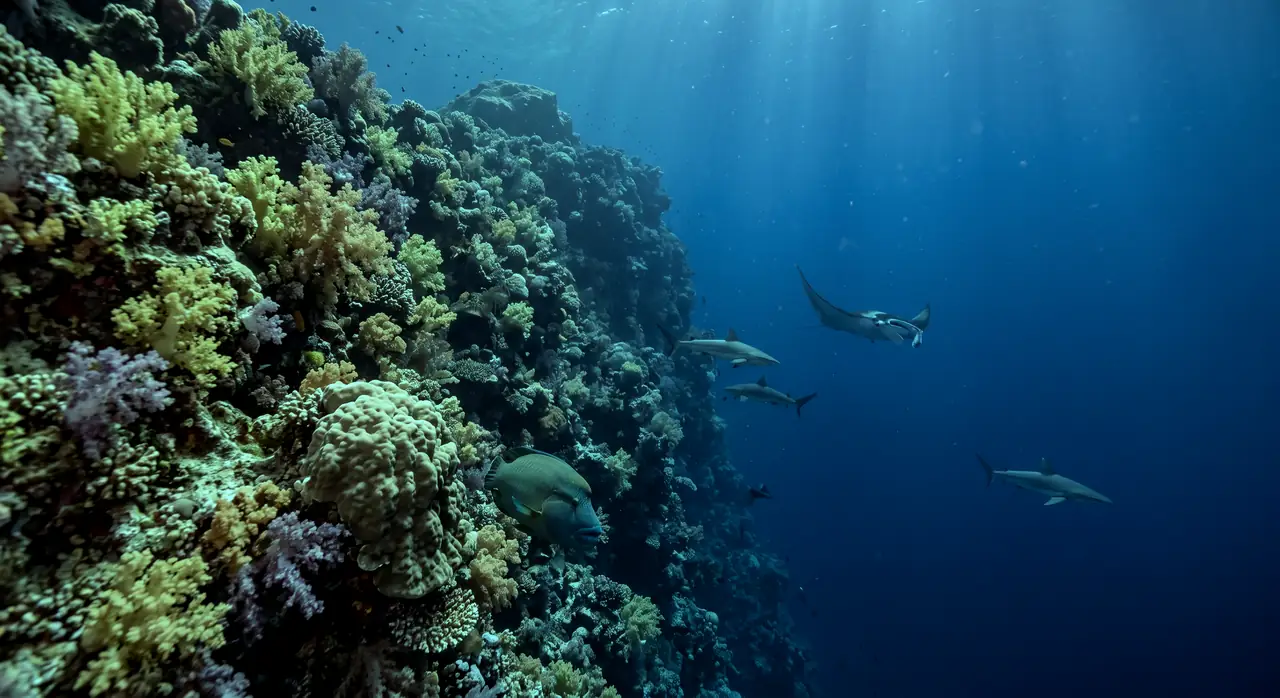
Rocky Island is little more than a barren rock breaking the Red Sea surface at Egypt's furthest south diving frontier, yet beneath this unpromising speck lies what many experienced divers consider the most beautiful wall diving in the entire Red Sea. The island's tiny size, extreme exposure, and distance from shore create conditions for coral growth and marine life density that even the famous Brothers Islands struggle to match. Reaching Rocky Island requires commitment. Liveaboard itineraries from Marsa Alam take 14 to 16 hours to reach this isolated outpost, which sits south of Zabargad Island in open water exposed to oceanic conditions. The island is barely 50 metres across at its widest point, rising a few metres above the waves. Below the waterline, it transforms into something extraordinary. The walls drop vertically from just below the surface to beyond technical diving depths, their faces carpeted in soft corals of staggering density and colour. Dendronephthya in every shade of purple, pink, orange, and red cover the vertical surfaces so completely that no bare rock is visible. Gorgonian fans two metres across grow perpendicular to the wall face, their branching frames silhouetted against deep blue water. The combination of pristine soft coral and visibility regularly exceeding 40 metres creates underwater scenery of cinematic quality. The southern point is Rocky Island's shark territory. Grey reef sharks in groups of 5 to 15 patrol the reef edge where the wall meets open water, their presence so reliable it borders on guaranteed. They cruise at 15 to 25 metres, occasionally rising toward the surface when curious about divers. The deeper wall sections host silvertip sharks, one of the Red Sea's most impressive shark species, recognizable by their white-tipped dorsal and tail fins and powerful build. Manta rays visit Rocky Island during summer months, attracted by plankton concentrations in the current-rich waters. They circle the island on cleaning routes, visiting stations on the shallow reef crest where cleaner wrasses remove parasites. Their appearance transforms an already exceptional dive into something transcendent. The reef circumnavigation is Rocky Island's classic dive profile. The island is small enough that a comfortable swim at moderate depth covers the entire perimeter in a single dive, experiencing the shifting character of each face. The north side shelters from prevailing winds and offers the densest soft coral growth. The east and west faces receive the strongest currents and concentrate pelagic action. The southern point delivers sharks. Rocky Island earns its reputation through a combination of visual beauty and wildlife encounters that few sites in the Red Sea can rival. The commitment required to reach it filters out casual visitors, ensuring that every diver sharing the water has the experience and appreciation to recognize something genuinely special.
Early access
Plan a dive here
Open the DiveOne planner to sketch a recreational plan before you go. It is a planning assistant, not a dive computer.
Marine life
Dive profile
DEPTH PROFILE
DEPTH PROGRESSION & WAYPOINTS: Rocky Island
Location
Frequently asked questions
How do I reach Rocky Island?
Rocky Island is the furthest south dive site regularly accessed from Egyptian ports, lying south of Zabargad Island. It is reached only by liveaboard on deep south itineraries from Port Ghalib or Marsa Alam, typically combined with Zabargad, St. Johns, and Sha'ab Sheer. The sailing time from port exceeds 14 hours. Only operators with deep south permits can access this area, and weather conditions may prevent visits.
What makes Rocky Island special compared to other deep south sites?
Rocky Island combines three elements rarely found together: pristine coral walls of exceptional beauty, reliable shark encounters with multiple species, and the sheer drama of diving at a tiny rock in the open Red Sea. The island's small size means the entire reef can be circumnavigated, and its exposure to open ocean currents brings nutrient-rich water that supports both spectacular coral growth and large predator populations.
What are the conditions like at Rocky Island?
Conditions are oceanic and can be demanding. The island is fully exposed with no shelter, so wind and waves can make diving impossible on rough days. Currents range from mild to very strong and can change direction rapidly. The reward for accepting these conditions is diving in visibility often exceeding 40 metres on walls that many consider the finest soft coral displays in the entire Red Sea. Advanced certification and significant experience are essential.
Reviews
Reviews
No reviews yet
Data Provenance
This profile is compiled from 3 operator submissions and 142 community logs. Key facts (depth, entry) are verified against official hydrographic charts.