Rocher du Diamant
Overview
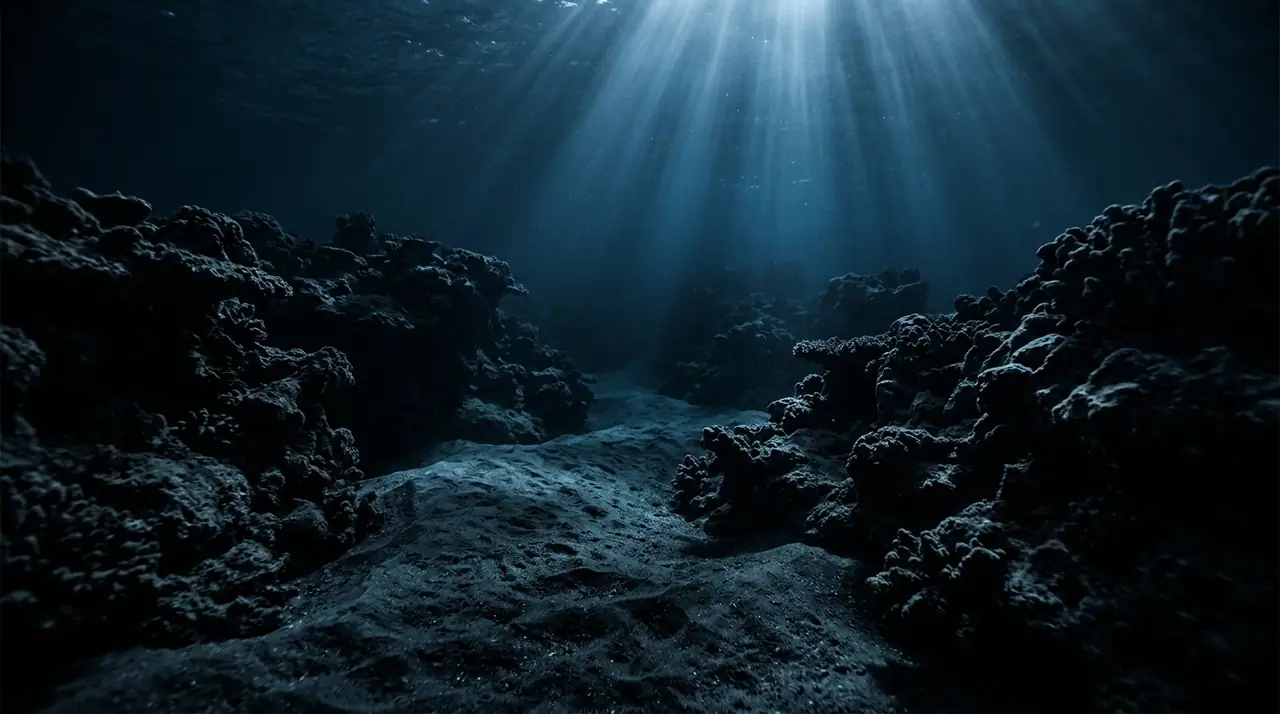
Diamond Rock erupts from the Caribbean Sea like a volcanic fist, a sheer-sided monolith of andesite rising 175 metres above the waves off Martinique's southern coast. The British Navy once fortified this rock as a warship, HMS Diamond Rock, garrisoning it with cannon and crew during the Napoleonic Wars. Below the waterline the military history gives way to marine biology, and the rock's submerged walls host one of the most dramatic underwater landscapes in the French Caribbean. The dive boat anchored in the relative shelter of the eastern face and we descended along a wall that drops from a shallow boulder field into deep blue water. The first impression was sponges. Giant barrel sponges grew from every ledge and crevice, some large enough to sit inside, their interiors glowing with a warm amber light where the sun penetrated. Orange elephant ear sponges spread across the rock face in irregular patches, and rope sponges dangled from overhangs like organic stalactites. The sponge diversity here rivals the best of Bonaire or Saba. At twenty metres the wall became vertical and the fish life intensified. Schools of Creole wrasse hung in the water column, their purple bodies catching the current while blue chromis formed shimmering clouds above the reef. A spotted drum, one of the Caribbean's most photogenic fish, performed its characteristic slow-motion dance in the shadow of an overhang, its elongated dorsal fin trailing like a banner. Hawksbill turtles are resident around the rock, and I watched one methodically pulling sponge from the wall with its narrow beak, chewing each piece with visible satisfaction. Rounding the southeastern corner, the current picked up and the wall dropped below forty metres. Here in the deeper water a Caribbean reef shark appeared, then another, then a third. They patrolled the base of the rock in a wide circuit, crossing our depth occasionally but mostly staying below at thirty-five metres. A nurse shark rested on a sand patch at the wall's base, its tail draped across a coral head, seemingly asleep. The ascent followed a series of swim-throughs and shallow caves where the rock's volcanic geology created natural tunnels. Light filtered through cracks and fissures, casting blue shafts across walls encrusted with encrusting corals and anemones. In one chamber a cluster of spiny lobsters backed into a crevice, their antennae waving like flags of surrender. The safety stop at five metres offered a view straight up the rock face to the summit, where the ruins of British cannon emplacements are still visible, a fortress above and a reef below, both equally worth defending.
Early access
Plan a dive here
Open the DiveOne planner to sketch a recreational plan before you go. It is a planning assistant, not a dive computer.
Marine life
Dive profile
DEPTH PROFILE
DEPTH PROGRESSION & WAYPOINTS: Rocher du Diamant
Location
Near Le Diamant, in the Southern Martinique region of Martinique.
Frequently asked questions
How far is Rocher du Diamant from shore and how do I get there?
Rocher du Diamant sits approximately 1.8 kilometres off the southern coast of Martinique near the village of Le Diamant. The boat ride takes about 15 minutes from the nearest marina. Several dive centres in Le Diamant and nearby Sainte-Luce run regular trips to the rock, weather permitting. The crossing can be choppy when the trade winds are strong, and conditions around the rock itself are often rougher than inshore sites. Most operators cancel trips when swells exceed 2 metres.
What is the historical significance of Diamond Rock?
In 1804, during the Napoleonic Wars, the British Royal Navy landed a garrison of about 120 sailors on the rock and fortified it with cannons, effectively commissioning it as HMS Diamond Rock. From this improbable fortress, the British blockaded the nearby French port of Fort-de-France for seventeen months before a combined French and Spanish force recaptured it in 1805. Cannon positions and steps carved into the rock are still visible above the waterline. Underwater, ballast stones and occasional artefacts from the naval occupation can be spotted on the seabed around the base.
What certification level is needed to dive Diamond Rock?
An Open Water certification is sufficient for the shallower eastern side of the rock where depths stay within 18 metres and conditions are more sheltered. The deeper western and southern walls require Advanced Open Water certification as depths quickly exceed 30 metres and currents can be significant. Most dive operators in Martinique will assess conditions on the day and choose which side of the rock to dive accordingly. Divers should be comfortable with moderate currents and boat entries in potentially rough water.
Reviews
Reviews
No reviews yet
Data Provenance
This profile is compiled from 3 operator submissions and 142 community logs. Key facts (depth, entry) are verified against official hydrographic charts.