Rasdhoo Hammerhead Point
Overview
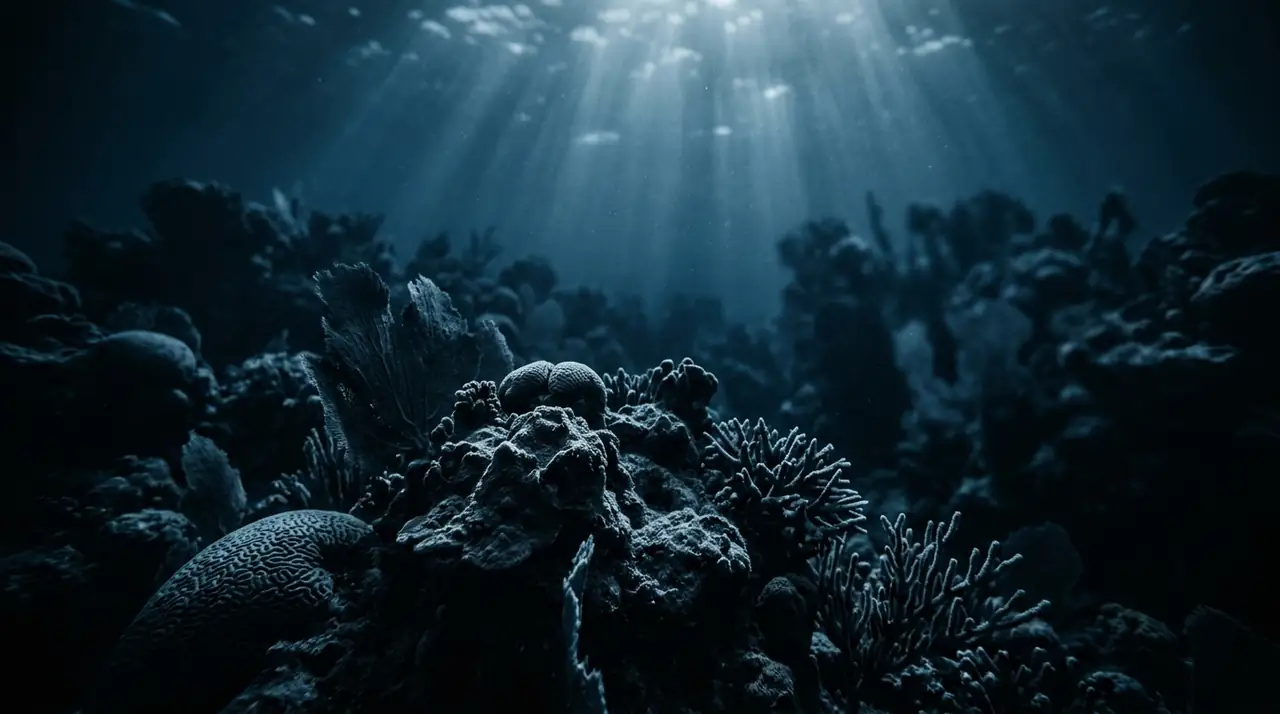
Rasdhoo Hammerhead Point is one of those dives that exists more as a rumour than a certainty, whispered about in dive centre bars across the Maldives. The premise is simple and thrilling: descend into the pre-dawn blue water at the outer edge of Rasdhoo Atoll and hope to find yourself in the presence of schooling scalloped hammerhead sharks. When it works, it is among the most electrifying dive experiences in the Indian Ocean. The boat departed in darkness at five-thirty, the crew navigating by GPS to a point where the outer reef drops into deep oceanic water. We geared up under stars, the only light our torches illuminating the deck. The briefing was direct: drop fast to 30 metres, face the current, scan the blue, and stay together. If hammerheads appear, remain still and let them come to you. The descent was into nothing. No reef reference, no bottom visible, just deepening blue fading to black below. At 30 metres I inflated slightly to arrest the descent and hung in open water, the only fixed points my buddy's torch beam and the faint glow of dawn filtering from above. The current pushed steadily from the northeast. Four minutes in, a shape materialized from the haze at the edge of visibility. The distinctive hammer-shaped head was unmistakable even in the low light. Then more shapes behind it. A loose school of perhaps twenty hammerheads cruised past at our depth, their bodies oscillating with the characteristic swimming motion of sphyrnids. The closest passed within ten metres, close enough to see its eye tracking us with evident awareness before the school dissolved into the blue to our left. The encounter lasted perhaps ninety seconds. The walk back to shallower water felt like returning from another world. At 15 metres, the reef edge appeared below and normality reasserted itself: grey reef sharks patrolled, trevally hunted, and the dawn light illuminated a healthy coral slope. Rasdhoo Hammerhead Point is not comfortable diving. It is cold at depth in the early morning, the current is unpredictable, and there are no guarantees. Many mornings the sharks do not show. But when they do, when you hang in the blue and watch those ancient silhouettes parade past, it justifies every early alarm and every blank dive that preceded it.
Early access
Plan a dive here
Open the DiveOne planner to sketch a recreational plan before you go. It is a planning assistant, not a dive computer.
Marine life
Dive profile
DEPTH PROFILE
DEPTH PROGRESSION & WAYPOINTS: Rasdhoo Hammerhead Point
Location
Frequently asked questions
What time do the hammerhead dives start?
Hammerhead dives at Rasdhoo depart before dawn, typically between 5:30 and 6:00 in the morning. The sharks are present in shallower water during the early morning darkness and retreat to greater depths as sunlight increases. Being in the water by first light maximizes the chance of encountering the school. Most operators run these as the first dive of a multi-dive day, with divers returning for breakfast before subsequent dives at other sites.
What are the chances of seeing hammerheads?
During peak season from December to April, experienced operators report hammerhead sightings on approximately 60 to 70 percent of early morning dives when conditions allow. Sightings are not guaranteed and depend on current patterns, water temperature, and visibility. Schools range from a few individuals to groups exceeding thirty sharks. The animals are typically seen at depths between 25 and 40 metres, often as silhouettes against the early morning light. Patience and willingness to scan the blue rather than focus on the reef are essential.
What experience level is required?
This is an advanced dive requiring a minimum of Advanced Open Water certification, deep diving experience to 40 metres, and comfort in open blue water with strong unpredictable currents. Most operators require at least 50 to 100 logged dives and conduct a checkout dive the day before. The dive involves descending rapidly to depth in open water, maintaining position against current, and conducting a safe ascent without reef reference points. It is not suitable for newly certified or nervous divers.
Reviews
Reviews
No reviews yet
Data Provenance
This profile is compiled from 3 operator submissions and 142 community logs. Key facts (depth, entry) are verified against official hydrographic charts.