Ras Nasrani
Overview
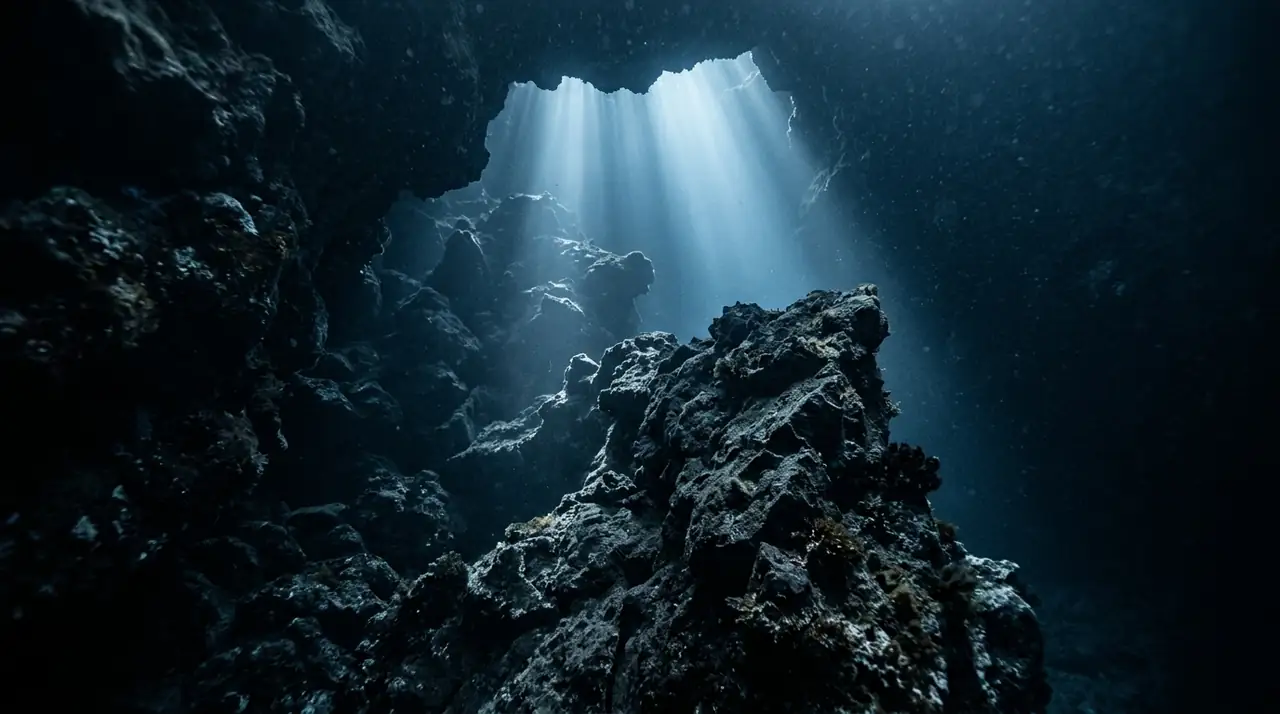
Ras Nasrani marks the northernmost diving headland of Sharm El Sheikh, a jutting coral promontory where the Egyptian coastline meets the Straits of Tiran. This exposed position places the site directly in the path of nutrient-rich currents flowing between the Gulf of Aqaba and the Red Sea, creating conditions that attract marine life rarely matched by more sheltered sites along the Sharm coast. I rolled off the boat on the northern side into a moderate current that immediately carried me along the wall. The coral is superb -- vertical sections draped in purple and orange soft corals, gorgonian fans spanning a meter or more extending into the current, and dense fire coral along the upper edge. Visibility was around 30 meters, and the silhouettes of a large barracuda school held position in the current, their bodies aligned like silver arrows. The drift carried me around the headland's point, where the current accelerated. A pair of eagle rays swept past below, their spotted wings beating in slow, powerful strokes. Napoleon wrasse cruised the wall edge with complete indifference to divers. Schools of bigeye trevally circled in tight formations, while snappers and groupers held territory along deeper ledges. The southern side offers contrast -- the current eases into the lee of the headland, and the reef transitions to a gradual coral slope covered in hard coral gardens. Here the macro life emerges: giant moray eels coiled in overhangs, lionfish hovering beneath table corals, octopuses slipping between rocks, and dense communities of anthias and butterflyfish swarming every formation. What makes Ras Nasrani special is accessibility combined with genuine pelagic encounters. You are minutes from Sharm's hotels yet diving a site that delivers wall scenery comparable to much more remote Red Sea destinations. The dual character of exposed and sheltered sides means every dive offers something different.
Early access
Plan a dive here
Open the DiveOne planner to sketch a recreational plan before you go. It is a planning assistant, not a dive computer.
Marine life
Dive profile
DEPTH PROFILE
DEPTH PROGRESSION & WAYPOINTS: Ras Nasrani
Location
Near Sharm El Sheikh, in the Sinai Peninsula region of Egypt.
Frequently asked questions
How does Ras Nasrani compare to the Tiran Strait reefs?
Ras Nasrani offers a different character to the famous Tiran reefs. While Jackson and Thomas Reefs are remote offshore pinnacles requiring boat trips into the strait, Ras Nasrani is a mainland headland close to Sharm El Sheikh's northern hotels. Currents tend to be more predictable, and the coral wall is more accessible. Fish life is comparable in diversity, though Tiran typically attracts more sharks. Ras Nasrani compensates with better soft coral coverage and a more sheltered feel on its southern side.
When are currents strongest at Ras Nasrani?
Currents at Ras Nasrani are driven by tidal flow through the Straits of Tiran and are strongest during spring tides, which occur around full and new moons. The northerly current that brings nutrients and pelagics is typically strongest in summer months from June through September. Dive operators check conditions before each dive and adjust the entry point and drift direction accordingly. When currents are strong, the site is better suited to experienced divers with good buoyancy control.
Can beginners dive Ras Nasrani?
The site is generally rated as intermediate due to the currents around the headland. However, on calm days with minimal current, particularly on the sheltered southern side of the point, experienced instructors do bring advanced beginners here. The key factor is current conditions on the day, which vary significantly. Most dive centres will assess conditions and divert to a more sheltered site if currents are too strong for the group's experience level.
Reviews
Reviews
No reviews yet
Data Provenance
This profile is compiled from 3 operator submissions and 142 community logs. Key facts (depth, entry) are verified against official hydrographic charts.