Rarotonga Reef Passages
Overview
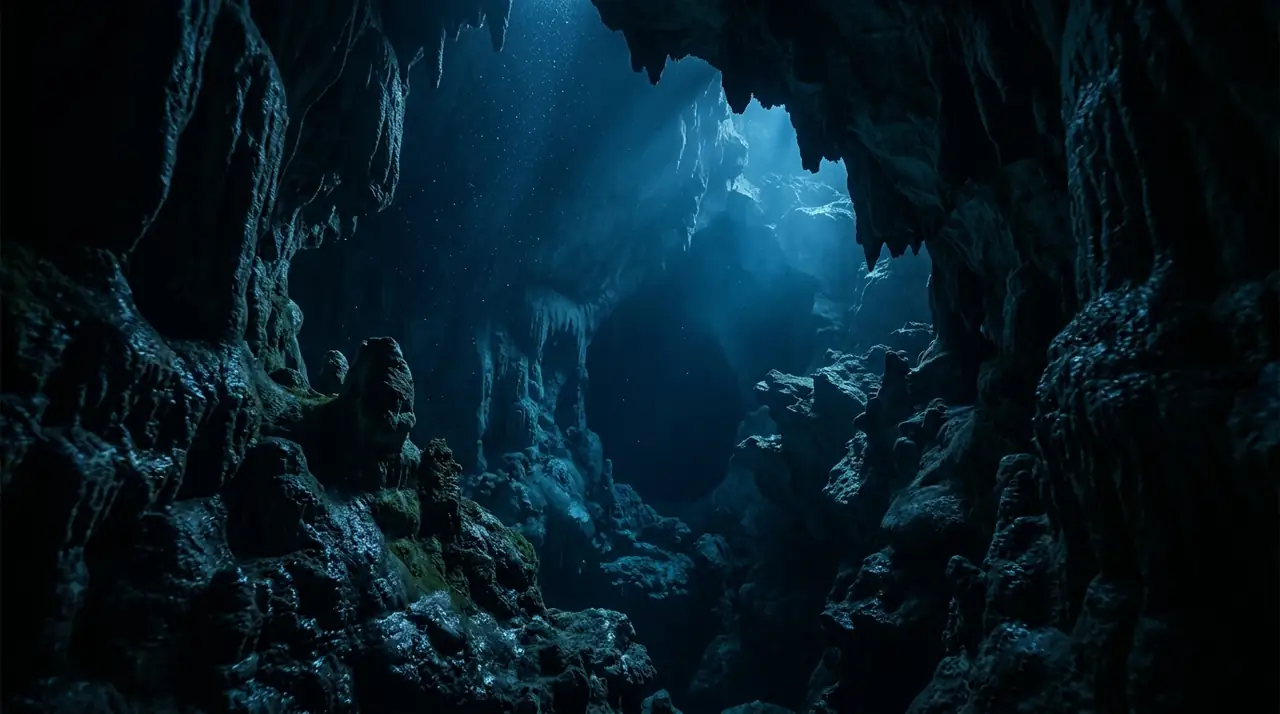
Rarotonga is a volcanic island encircled by a fringing reef that drops away sharply to the deep Pacific beyond. Where natural passages break through this reef, tidal currents funnel water between the shallow lagoon and the open ocean, creating channels that concentrate marine life with the efficiency of a natural fish trap. These passages are Rarotonga's premier dive sites, offering drift dives through coral-walled channels where pelagic visitors from the deep mix with the resident reef community in water so clear it feels like flying. I dropped into Papua Passage on the north coast on a calm August morning, the water a shade of blue that does not exist in cooler latitudes. The passage was roughly thirty metres wide, its walls built of hard coral in overlapping plate and branching formations that created a vertical garden on both sides. The current was running outward, pulling me gently seaward at a comfortable pace. I drifted with it, maintaining neutral buoyancy at fifteen metres and scanning the channel ahead. The first eagle ray appeared as a dark diamond shape against the blue, gliding across the passage with slow, deliberate wingbeats. It was followed by two more, their spotted dorsal surfaces flashing white at the turn. Spotted eagle rays are regular visitors to Rarotonga's passages, drawn by the concentration of crustaceans and molluscs in the current-swept sand at the channel floor. I watched the trio disappear into the blue beyond the reef edge, their long tails trailing behind like streamers. Deeper in the passage, where the walls dropped to 25 metres and the channel widened toward the open ocean, a pair of grey reef sharks patrolled the boundary between reef and blue water. They moved with the effortless economy of motion that sharks always display, banking and turning in wide arcs without ever seeming to accelerate. A school of giant trevally, perhaps forty fish, held station in the current near the outer wall, their silver-bronze flanks catching the sunlight in bursts.
Early access
Plan a dive here
Open the DiveOne planner to sketch a recreational plan before you go. It is a planning assistant, not a dive computer.
Marine life
Dive profile
DEPTH PROFILE
DEPTH PROGRESSION & WAYPOINTS: Rarotonga Reef Passages
Location
Frequently asked questions
What are the best reef passages to dive at Rarotonga?
Rarotonga has several natural passages through its fringing reef, with the most popular for diving being the passages on the north and west coasts where the outer reef drops away steeply. Papua Passage on the north coast is one of the most frequently dived, offering a channel approximately 30 metres wide with walls dropping to 25 metres and regular sightings of eagle rays and reef sharks. The passages on the west coast near the Avana harbour area also provide excellent drift diving. Your dive operator will select passages based on tidal timing and current conditions.
Is Rarotonga diving suitable for beginners?
The reef passage dives involve moderate currents and are best suited to intermediate and above divers with drift diving experience. However, Rarotonga also has sheltered lagoon sites inside the reef that are perfect for beginners and discover scuba experiences. The lagoon areas offer calm, shallow water with good coral coverage and abundant reef fish. Several dive operators on Rarotonga offer introductory dives in the lagoon as well as open water courses. The passage dives are typically recommended for divers with at least 20 logged dives.
When is the best time to dive Rarotonga?
The best diving conditions at Rarotonga occur during the dry season from April to November, when southeast trade winds provide stable weather and visibility regularly exceeds 30 metres. The wet season from December to March brings warmer water but also more rainfall, occasional cyclone risk, and reduced visibility. Humpback whales pass through Cook Islands waters from July to October, and while they are more commonly seen at Aitutaki, they are occasionally encountered at Rarotonga as well. Water temperatures are comfortable year-round at 24 to 28 degrees.
Reviews
Reviews
No reviews yet
Data Provenance
This profile is compiled from 3 operator submissions and 142 community logs. Key facts (depth, entry) are verified against official hydrographic charts.