Raouche Sea Caves
Overview
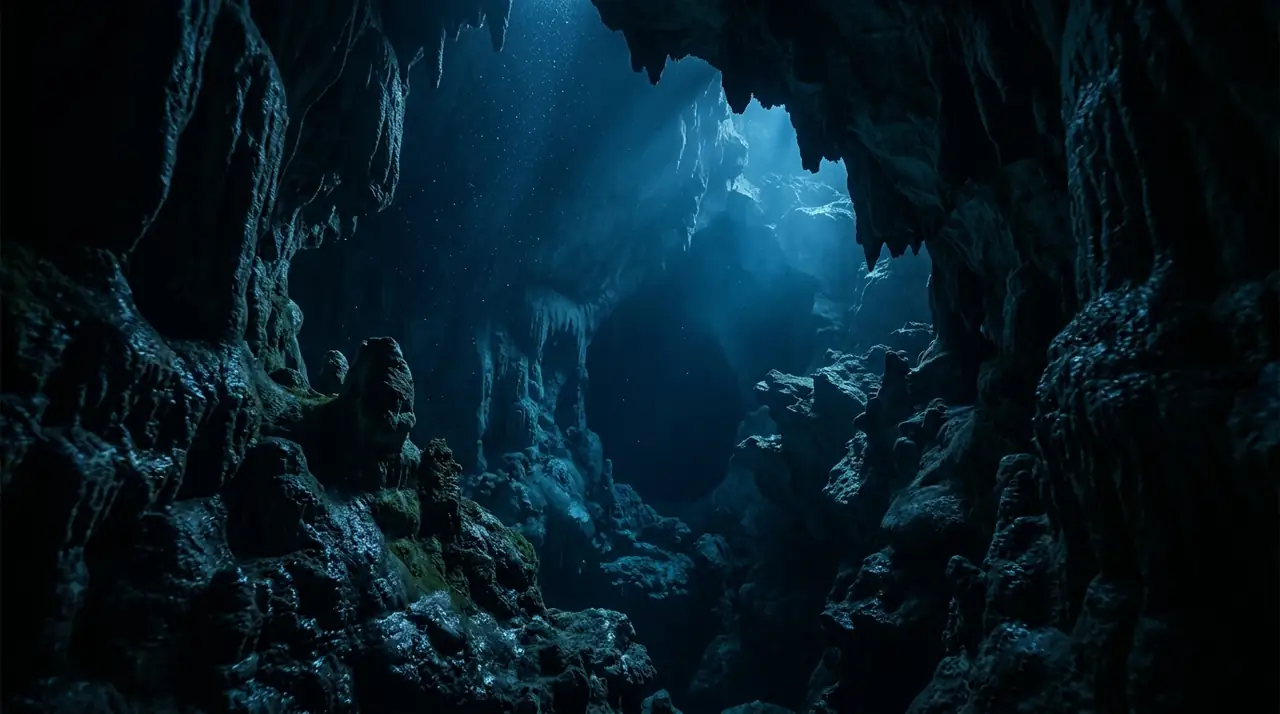
The Raouche Sea Caves lie beneath one of Beirut's most photographed landmarks -- the Pigeon Rocks, dramatic natural limestone arches rising from the Mediterranean off the Raouche clifftop promenade. Thousands walk the corniche daily, never suspecting that below the waterline lies a network of sea caves and grottoes harbouring one of the eastern Mediterranean's most atmospheric dive sites. I dropped in from a small RIB thirty meters from the base of the rocks, descending into a landscape of tumbled boulders and cave openings. The first cavern was wide and inviting, its ceiling around 5 meters above the sandy floor, with shafts of sunlight penetrating from openings above to create moving columns of blue-green light. The walls were covered in encrusting sponges of orange, yellow, and purple, and a large dusky grouper watched from the shadows before retreating into a deeper recess. The cave system extends through multiple chambers connected by swim-throughs. Some are generous enough for two divers abreast, others require single-file passage. Moray eels are everywhere -- heads protruding from crevices, mouths working in their characteristic breathing rhythm. Octopuses occupy sandy patches between formations, changing texture as they move between hunting grounds. The outer walls of the Pigeon Rocks drop to 25 meters on their seaward face, patrolled by schools of sea bream and occasional barracuda. Scorpionfish flatten against the rocky substrate, nearly invisible until they shift. Nudibranchs in vivid colours dot the encrusted surfaces, and spiny lobsters back into narrow crevices as torchlight finds them. What makes Raouche exceptional is context. You surface from a cave system that predates human memory, and there is Beirut -- one of the oldest continuously inhabited cities on Earth -- spread across the cliffs above. People photograph the rocks from the railing, utterly unaware that divers explore the hidden world directly beneath them. It is a combination of natural beauty and urban juxtaposition that no other Mediterranean dive site can match.
Early access
Plan a dive here
Open the DiveOne planner to sketch a recreational plan before you go. It is a planning assistant, not a dive computer.
Marine life
Dive profile
DEPTH PROFILE
DEPTH PROGRESSION & WAYPOINTS: Raouche Sea Caves
Location
Frequently asked questions
Can you dive directly at the Pigeon Rocks?
Yes, dive operators in Beirut run boat trips to the base of the Pigeon Rocks (Raouche Rocks), where several sea caves and grottoes are accessible to divers. The iconic natural arch formations that are photographed from the clifftop promenade above have an equally dramatic underwater aspect, with caverns, swim-throughs, and rocky walls extending to around 25 meters depth. Boat entry is standard, as the cliff faces make shore access impractical.
Is Beirut a practical base for diving?
Beirut has several established dive centres that offer trips to sites along the Lebanese coast, including the Raouche caves, shipwrecks, and reef sites. The city's coastal location means dive sites are accessible within minutes by boat. Infrastructure is well-developed with equipment rental, certification courses, and guided dives available. The combination of world-class dining, nightlife, and historical sites with accessible Mediterranean diving makes Beirut an appealing option for divers who want more than a single-activity holiday.
What is the visibility like at Raouche?
Visibility at the Raouche sea caves varies seasonally and with conditions. Summer months from June to September typically offer the best visibility at 15 to 20 meters, while spring and autumn see more variable conditions. Inside the caves, visibility can be reduced by silt disturbance and is generally lower than in open water. The site is best dived on calm days when there is no significant swell, as wave action can reduce visibility near cave entrances and make entry less comfortable.
Reviews
Reviews
No reviews yet
Data Provenance
This profile is compiled from 3 operator submissions and 142 community logs. Key facts (depth, entry) are verified against official hydrographic charts.