Rabaul Wrecks
Overview
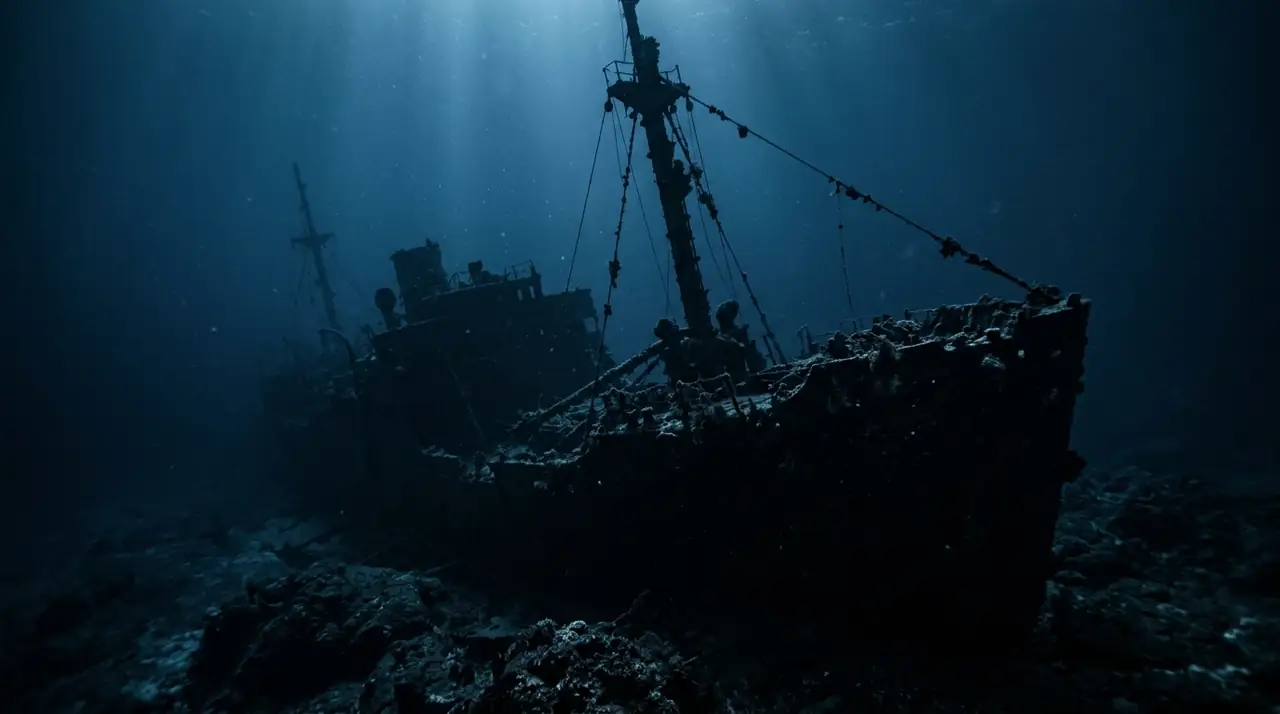
Rabaul was Japan's most important naval and air base in the South Pacific during World War Two, and the harbour floor tells that story in rusting steel and encrusted aluminium. Situated on the northeastern tip of New Britain island, this deep natural harbour was the staging point for Japanese operations across the Solomon Islands, New Guinea, and beyond. Allied bombing raids from 1943 to 1945 sent dozens of ships and aircraft to the bottom, where they now form one of the most historically significant wreck diving sites in the Pacific. The harbour's centrepiece is the submarine wreck, resting on a silty bottom at around 30 metres, its conning tower still rising toward the surface. Soft corals and hydroids have colonised the hull, while schools of batfish circle the superstructure in lazy orbits. Nearby, transport ships lie broken on the harbour floor, their cargo holds open to exploration. A Japanese Zero fighter sits at diveable depth with its cockpit remarkably preserved, the control panel visible through the canopy, its wings now home to ascidians and feather stars. What sets Rabaul apart is its volcanic setting. The harbour is a flooded caldera, and the twin cones of Tavurvur and Vulcan rise directly from the water's edge. Tavurvur's 1994 eruption buried the old town under metres of ash, and traces of volcanic activity — warm vents, sulphur deposits, tremors — remind you this landscape is still alive. The mineral-rich water supports lush coral growth on the wrecks, and the black volcanic sand harbours nudibranchs, mantis shrimp, and scorpionfish. Rabaul sees far fewer divers than Truk Lagoon, and that obscurity preserves both the wrecks and the experience. Local operators offer personalised guiding with deep knowledge of both the diving and the history. Conditions are best from May to November when southeast trade winds keep the harbour calm and visibility peaks. It is wreck diving with a geological edge — you surface into a view of smoking volcanoes and wonder at the layers of drama this corner of the Pacific has witnessed.
Early access
Plan a dive here
Open the DiveOne planner to sketch a recreational plan before you go. It is a planning assistant, not a dive computer.
Marine life
Dive profile
DEPTH PROFILE
DEPTH PROGRESSION & WAYPOINTS: Rabaul Wrecks
Location
Near Rabaul, in the East New Britain Province region of Papua New Guinea.
Frequently asked questions
What types of wrecks can be dived at Rabaul?
Rabaul harbour contains a diverse collection of WWII Japanese wrecks including submarines, transport ships, barges, and aircraft. The most famous include a Japanese submarine, several large Maru transport vessels, and a near-intact Zero fighter plane. Some wrecks sit in shallow water suitable for recreational divers, while deeper wrecks require advanced certification. The volcanic eruption of 1994 buried some shallower wrecks in ash, but many remain accessible.
Is Rabaul safe to visit given the volcanic activity?
Rabaul has active volcanoes including Tavurvur, which erupted catastrophically in 1994, burying much of the old town. The volcanoes are monitored continuously by the Rabaul Volcanological Observatory, and an early warning system is in place. Dive operators maintain close contact with the observatory and adjust plans if activity increases. The volcanic landscape adds a dramatic dimension to the diving experience, and the mineral-rich water supports lush coral growth.
How do I get to Rabaul for wreck diving?
Air Niugini and PNG Air operate flights from Port Moresby to Tokua airport near Rabaul, with connections sometimes available from Lae or other PNG cities. The flight from Port Moresby takes approximately one hour and forty minutes. Several small dive operators in Rabaul offer guided wreck diving trips. Liveaboard vessels occasionally include Rabaul in their itineraries. Accommodation ranges from simple guesthouses to comfortable lodges in the Kokopo area.
Reviews
Reviews
No reviews yet
Data Provenance
This profile is compiled from 3 operator submissions and 142 community logs. Key facts (depth, entry) are verified against official hydrographic charts.