Proselyte Reef
Overview
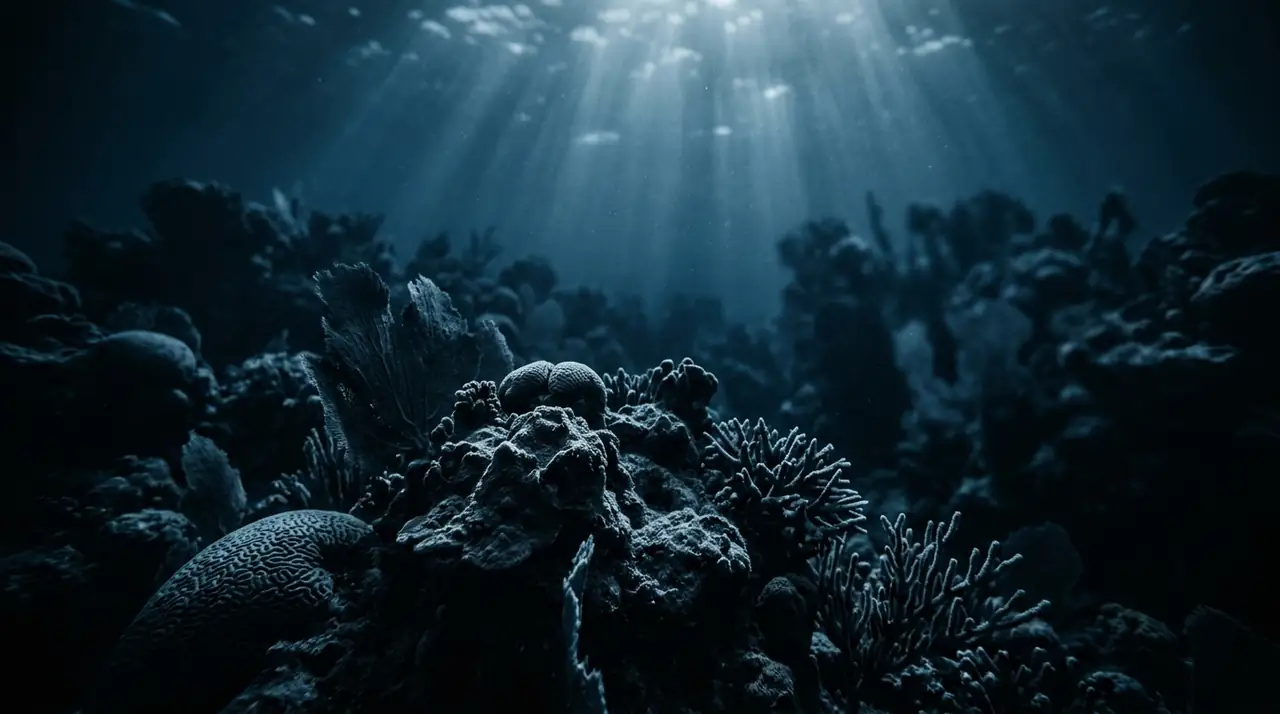
Proselyte Reef lies off the south coast of Sint Maarten, the Dutch side of the island that Christopher Columbus named for the warrior saint. The reef takes its name from HMS Proselyte, a Royal Navy frigate that met its end here on the fourth of September 1801 when its hull struck an uncharted coral head and the ship settled onto the reef that would forever bear its name. Two centuries have passed since the Proselyte sank, and in that time, the sea has performed its characteristic magic: dissolving the wooden hull, scattering the metal fittings, and weaving the remains into the fabric of the living reef until shipwreck and coral have become inseparable. I dived Proselyte Reef on a January afternoon when the Caribbean was at its most benign, the surface a plate of turquoise glass disturbed only by the gentle wake of our dive boat. The mooring was set in fourteen metres of water above a reef that was visible from the surface, its coral formations casting shadows on the white sand like clouds viewed from an aeroplane. The clarity was exceptional, perhaps twenty-five metres, and the entire dive site was laid out below like a map. The descent revealed the wreck's remains as a scattered constellation of iron objects distributed across the reef. Cannon were the most immediately recognisable artefacts, their cylindrical forms now encrusted with coral and sponge growth that softened their martial lines into organic shapes. I counted four cannon on the eastern section of the reef, each lying where it had fallen when the ship's wooden gun deck disintegrated around it. The largest was perhaps two metres long, its bore still open and serving as a home for a green moray eel that watched my approach with characteristic suspicion from the muzzle end.
Early access
Plan a dive here
Open the DiveOne planner to sketch a recreational plan before you go. It is a planning assistant, not a dive computer.
Marine life
Dive profile
DEPTH PROFILE
DEPTH PROGRESSION & WAYPOINTS: Proselyte Reef
Location
Near Philipsburg, in the Caribbean Netherlands region of Sint Maarten.
Frequently asked questions
What is the history of HMS Proselyte?
HMS Proselyte was a thirty-two-gun fifth-rate frigate of the Royal Navy that struck an uncharted reef off the south coast of St. Maarten on 4 September 1801 and sank. The ship was originally a Dutch vessel, the Jason, captured by the British and renamed. No lives were lost in the sinking, as the crew was able to evacuate before the ship settled on the reef. Over two centuries, the wooden hull has mostly disintegrated, but the heavier elements including iron cannon, anchors, copper sheathing fragments, and stone ballast remain on the seabed, now incorporated into the natural reef structure. The wreck site is protected under Sint Maarten maritime heritage regulations, and removing any artefacts is illegal.
What diving experience do I need for Proselyte Reef?
Proselyte Reef is suitable for divers of all levels, from recently certified Open Water divers to experienced wreck specialists. The maximum depth is around eighteen metres, and the site is typically calm with minimal current. The wreck elements are scattered across a wide area of reef rather than concentrated in a single deep structure, so there are no penetration hazards. Beginners can enjoy the shallow coral sections and fish life, while more experienced divers can spend time identifying historical artefacts among the coral. Several dive operators in Philipsburg and Simpson Bay offer regular boat trips to the site, with the journey taking approximately fifteen minutes.
What marine life can I expect at Proselyte Reef?
The combination of wreck structure and natural reef creates exceptional habitat diversity. Southern stingrays are frequently found resting on the sandy patches around the wreck debris. Green moray eels occupy holes in both the natural reef and the wreck's ballast pile. Lobsters shelter under cannon and anchor structures. French angelfish and queen angelfish are common along the reef edges. Barracuda patrol the upper water column, and nurse sharks occasionally rest under larger reef overhangs. The wreck's iron elements have created localised enrichment zones where encrusting organisms grow densely, attracting cleaning stations that draw a variety of reef fish. Night dives at Proselyte Reef are particularly rewarding, with octopus, basket stars, and hunting squid adding to the daytime species list.
Reviews
Reviews
No reviews yet
Data Provenance
This profile is compiled from 3 operator submissions and 142 community logs. Key facts (depth, entry) are verified against official hydrographic charts.