Prony Needle
Overview
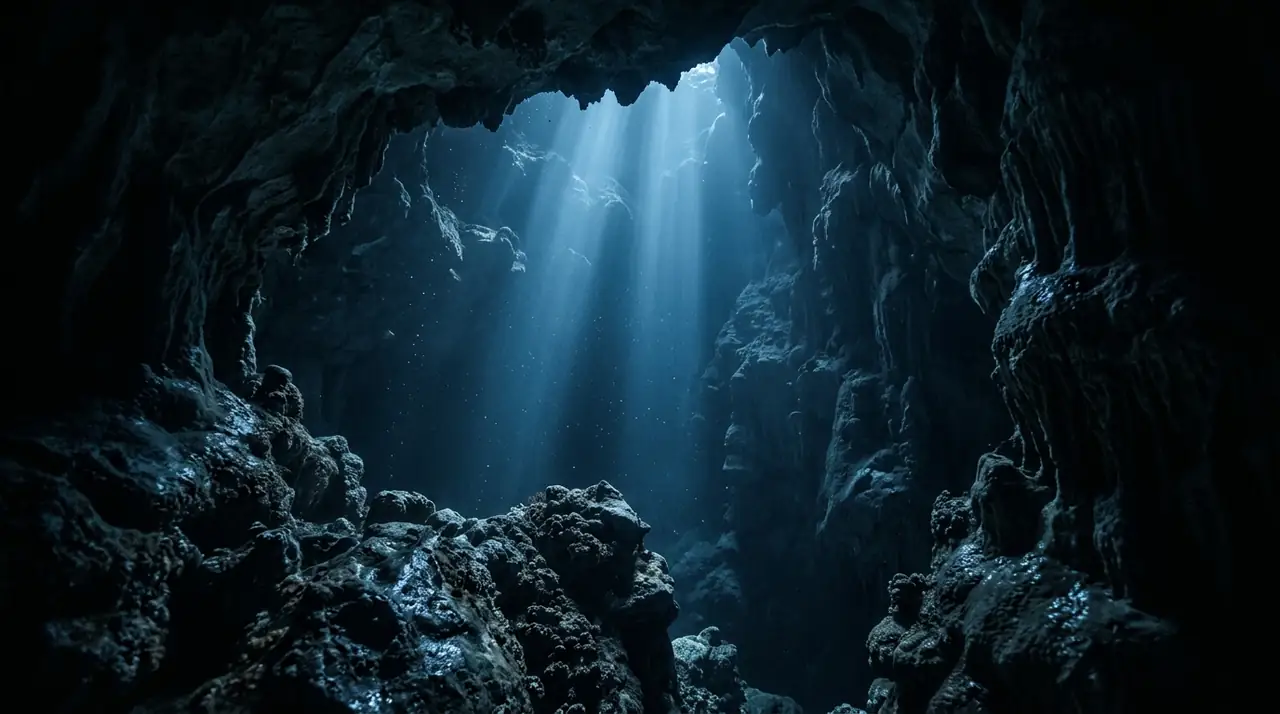
The Prony Needle rises from the murky floor of Baie du Prony like a chimney from a geological underworld. It is not coral, not rock in any conventional sense, but a tower of mineral deposits created by hydrothermal springs that have been seeping alkaline water from the earth's mantle for thousands of years. The process responsible, serpentinisation, is the same chemistry that scientists believe may have kindled life on early Earth, and diving the Prony Needle carries a sense of witnessing something fundamental, a geological process that connects the present moment to the planet's deepest history. I reached the needle after a ninety-minute boat ride from Noumea, crossing the calm waters of New Caledonia's southern lagoon before entering the enclosed bay. Baie du Prony is a drowned river valley, its steep forested sides plunging into dark water that carries the tannins and sediments of the surrounding rainforest. The water colour was a deep olive-green, nothing like the turquoise clarity of the lagoon, and visibility was estimated at twelve metres. The descent was along a mooring line that led directly to the needle's summit at three metres below the surface. Even from the surface, the needle was visible as a pale shape in the dark water, its white mineral deposits contrasting sharply with the green surroundings. As I descended, the structure resolved into extraordinary detail. The needle's surface was a complex landscape of mineral formations: layered deposits that resembled frozen waterfalls, bulbous protrusions that looked like melted wax, and delicate crystalline structures that would shatter at a careless touch. The white and cream colours of the mineral deposits created a visual effect that was genuinely otherworldly. Against the dark green water, the needle appeared to glow with an internal light, its surfaces catching and reflecting the limited ambient illumination in ways that natural rock does not. The active venting areas were visible as shimmering distortions in the water, heat-haze-like effects where the alkaline spring water mixed with the surrounding seawater. Tiny bubbles of hydrogen gas rose from some vents, ascending in silver chains toward the surface.
Early access
Plan a dive here
Open the DiveOne planner to sketch a recreational plan before you go. It is a planning assistant, not a dive computer.
Marine life
Dive profile
DEPTH PROFILE
DEPTH PROGRESSION & WAYPOINTS: Prony Needle
Location
Frequently asked questions
What is the Prony Needle and how was it formed?
The Prony Needle is a tower-like formation on the floor of Baie du Prony, created by the precipitation of minerals from alkaline hydrothermal springs. The process responsible is serpentinisation, a chemical reaction between the ultramafic rock of New Caledonia's ancient oceanic crust and seawater. This reaction produces highly alkaline water with a pH approaching twelve, along with hydrogen and methane gases. As the alkaline spring water meets the surrounding seawater, calcium carbonate and brucite minerals precipitate, slowly building the needle formation over thousands of years. The main needle rises from approximately thirty-five metres to within two metres of the surface. Several smaller formations exist nearby, and active venting is visible from some structures as shimmering water columns.
What diving experience is required for the Prony Needle?
The Prony Needle dive is rated advanced due to the depth of the needle's base at thirty-five metres and the occasionally limited visibility in the bay. The dive itself is not technically difficult: there is minimal current, and the needle provides a clear vertical reference that eliminates navigation concerns. However, the unique chemistry of the site means that the alkaline water from the vents can cause skin irritation on exposed areas, and divers should avoid direct contact with actively venting areas. A minimum of thirty logged dives is recommended. Nitrox certification is advantageous for extended bottom time at the needle's base. Dry suit diving is not necessary as water temperatures remain between twenty-two and twenty-seven degrees.
How do I reach Baie du Prony for diving?
Baie du Prony is located at the southern tip of New Caledonia's main island, Grande Terre, approximately two hours by road from Noumea. The bay is accessed by boat from a small marina at Prony village. Several dive operators in Noumea offer day trips to the Prony Needle, with the boat journey from Noumea taking approximately ninety minutes. Alternatively, boats can be arranged from the closer access point at Prony village. The bay is sheltered and generally calm, though the drive to Prony village involves unpaved roads for the final section. Some operators offer multi-day trips that combine the Prony Needle with reef dives on New Caledonia's southern barrier reef.
Reviews
Reviews
No reviews yet
Data Provenance
This profile is compiled from 3 operator submissions and 142 community logs. Key facts (depth, entry) are verified against official hydrographic charts.