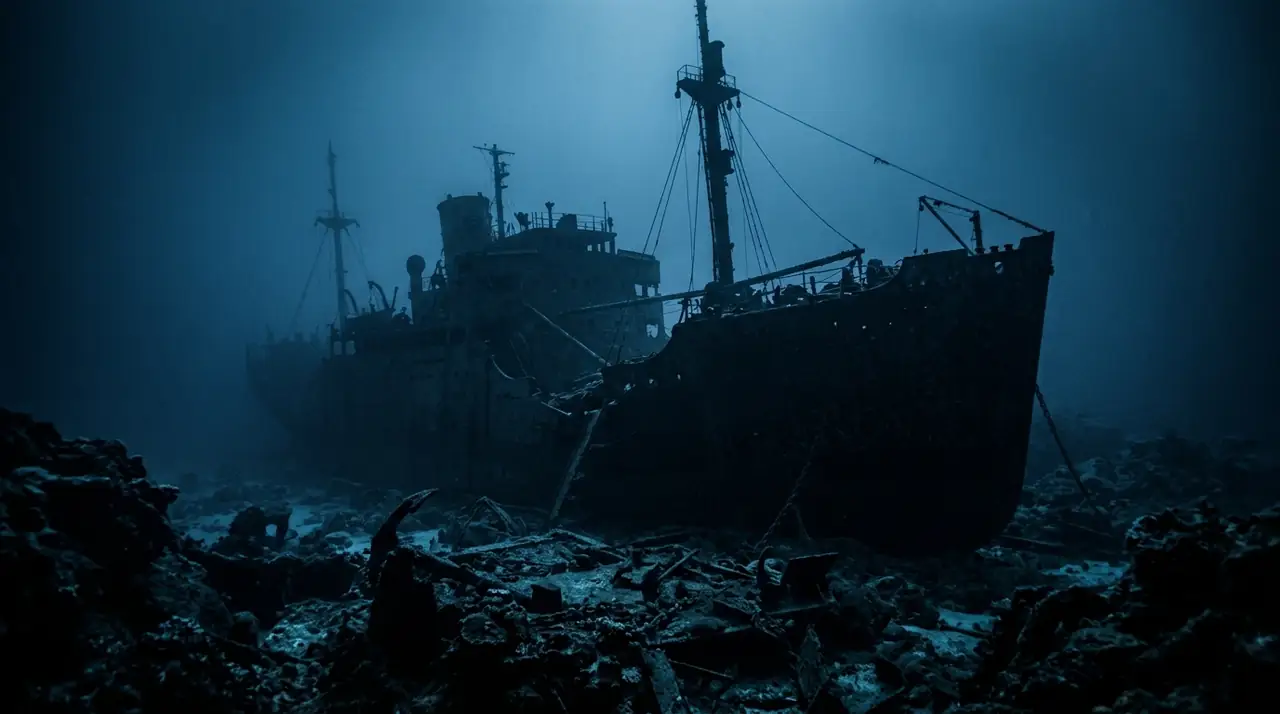
Praslin Whale Rock
Overview
Praslin Whale Rock is a submerged granite pinnacle that rises from 25 metres to within 8 metres of the surface approximately two kilometres off Praslin's northeast coast. Its whale-back shape gives it its name, and its position in a current-swept channel between Praslin and Curieuse Island makes it a magnet for marine life ranging from schools of fusiliers to seasonal whale sharks. For divers based on Praslin, it represents the island's most exciting dive site and a genuine chance at large pelagic encounters. The pinnacle is roughly 60 metres long and 20 metres wide, oriented northeast to southwest. The top is a broad plateau of granite covered in hard coral and coralline algae, while the sides drop more steeply, covered in sea fans and soft corals sustained by the passing current. The topography concentrates fish life around the structure, with the pinnacle acting as an oasis in otherwise sandy seabed. I descended the mooring line to the pinnacle top at 10 metres and was immediately surrounded by fish. Schools of yellowback fusiliers streamed past in dense ribbons. Beneath them, bluefin trevally hunted in coordinated packs, their silver-blue bodies flashing as they accelerated through the fusilier clouds. A large Napoleon wrasse materialized from deeper water, circling the pinnacle with proprietary confidence. Rounding the northeastern corner, I found three spotted eagle rays hovering in formation just off the pinnacle wall at 15 metres. Their wings beat in slow synchrony as they held position in the current, their white-spotted dorsal surfaces unmistakable. They allowed close approach before banking away towards deeper water. The pinnacle walls yield macro treasures between the larger encounters. Large groupers occupy territorial caves. Batfish hover in stacked formation under overhangs. Green turtles use the pinnacle as a resting station, wedging themselves into crevices out of the current. During the October-November plankton bloom, the water around Whale Rock becomes soupy with nutrients, visibility drops, but the chance of whale shark encounters increases dramatically. These gentle giants cruise near the surface above the pinnacle, feeding on the concentrated plankton. Encounters are typically brief but profoundly memorable, the largest fish in the ocean passing within metres in Seychellois waters.
Early access
Plan a dive here
Open the DiveOne planner to sketch a recreational plan before you go. It is a planning assistant, not a dive computer.
Marine life
Dive profile
DEPTH PROFILE
DEPTH PROGRESSION & WAYPOINTS: Praslin Whale Rock
Location
Frequently asked questions
When do whale sharks visit Whale Rock?
Whale sharks are most commonly encountered around Whale Rock during October and November when seasonal plankton blooms concentrate around the pinnacle. During these months the water around the pinnacle becomes nutrient-rich, attracting plankton, baitfish, and the whale sharks that feed on them. Sightings are not guaranteed and vary year to year depending on oceanographic conditions. When whale sharks are present they are typically seen near the surface above the pinnacle, and encounters are often on snorkel rather than scuba.
How far is Whale Rock from Praslin?
Whale Rock is located approximately 2 kilometres off the northeast coast of Praslin, roughly a 10-minute boat ride from Anse Volbert or Cote d'Or beach. Several dive operators based in the Anse Volbert area run regular trips to the site. The short boat ride makes it accessible as both a morning and afternoon dive, and its proximity to shore means operators can quickly assess conditions before committing.
What certification level is needed for Whale Rock?
Whale Rock is best suited to divers with Advanced Open Water certification or equivalent due to the exposed location and moderate currents that can develop. The pinnacle top sits at 8 metres so the dive involves depths manageable for Open Water divers, but the current and open-water location mean experience and good buoyancy control are important. Most operators accept confident Open Water divers with 20 or more logged dives on calm days but recommend advanced certification for full exploration of the deeper sections to 25 metres.
Reviews
Reviews
No reviews yet
Data Provenance
This profile is compiled from 3 operator submissions and 142 community logs. Key facts (depth, entry) are verified against official hydrographic charts.