Port Royal Sunken City
Overview
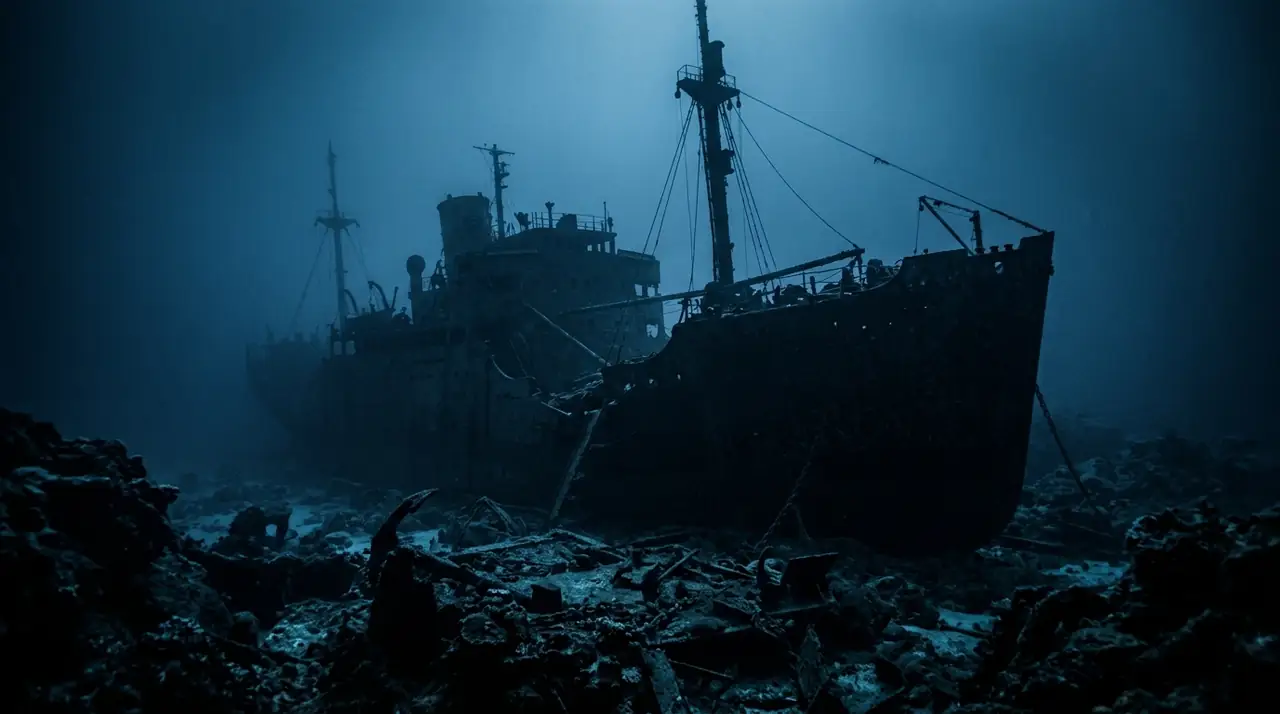
Port Royal was once called the wickedest city on Earth, a boomtown at the mouth of Kingston Harbour where pirate captains spent their plunder on rum, gambling, and pleasures that scandalised the colonial governors. Henry Morgan used it as his base, and at its peak in the late 1680s, Port Royal rivalled Boston in population and exceeded it in per-capita wealth. Then at eleven forty-three on the morning of June 7, 1692, the earthquake came, and within minutes two-thirds of the city slid beneath the harbour waters. It remains there still. Diving the sunken city of Port Royal is unlike any other experience in Caribbean diving. You descend into shallow, often murky water in Kingston Harbour and find yourself hovering above the remains of a three-hundred-year-old colonial city. Brick walls rise from the sandy seabed, still retaining their rectangular outlines. Building foundations trace the footprints of warehouses, taverns, and merchant houses. The street grid is discernible in places, and the sheer ordinariness of the urban layout — this was a functioning city, with shops and homes and churches — makes the destruction feel immediate rather than historical. Visibility is the primary challenge. Kingston Harbour receives river runoff and port traffic, and visibility on any given day can range from three to ten metres. On good days, the experience is atmospheric and moving; on poor days, it becomes an exercise in close-range observation and imagination. The shallow depth, generally between three and twelve metres, means long bottom times and the ability to examine structures in detail. Marine life has colonised the ruins thoroughly. Sponges and soft corals encrust the brick walls, nurse sharks rest in the shadows of fallen structures, and schools of snapper cruise the old street lines. The ecological dimension adds a layer of interest: a man-made urban environment slowly being reclaimed by the natural world over three centuries. Archaeological work at Port Royal has continued since the 1960s, led by teams from Texas A&M University, the Institute of Nautical Archaeology, and the Jamaica National Heritage Trust. Excavations have recovered thousands of artifacts including perfectly preserved pewter plates, silver coins from the Spanish Main, clay pipes, wine bottles, and a pocket watch famously stopped at eleven forty-three. The site is a candidate for UNESCO World Heritage designation. Diving here requires the right expectations. This is not a crystal-clear tropical reef dive. It is an underwater archaeological site of global significance, a place where natural disaster preserved a moment in Caribbean history as effectively as volcanic ash preserved Pompeii. For divers with an interest in history, the murky waters of Kingston Harbour hold treasures that no coral garden can match.
Early access
Plan a dive here
Open the DiveOne planner to sketch a recreational plan before you go. It is a planning assistant, not a dive computer.
Marine life
Dive profile
DEPTH PROFILE
DEPTH PROGRESSION & WAYPOINTS: Port Royal Sunken City
Location
Frequently asked questions
Can anyone dive the sunken city of Port Royal?
Access to the Port Royal underwater archaeological site requires coordination with Jamaican authorities, specifically the Jamaica National Heritage Trust. The site is a protected underwater cultural heritage area, and diving is permitted only with authorised operators who hold specific permits. Recreational diving is possible at designated areas around the sunken city, but the core archaeological zone has restricted access. Several Kingston-based dive operators offer permitted heritage dives that include a historical briefing and guided underwater tour of accessible sections. Artifacts must not be touched or removed.
What happened to Port Royal in 1692?
On June 7, 1692, a massive earthquake struck Port Royal, then the largest and wealthiest English city in the Americas. The earthquake caused widespread liquefaction of the sandy soil on which the city was built, and approximately two-thirds of the town sank into Kingston Harbour within minutes. Over two thousand people died immediately, and a subsequent tsunami and disease killed thousands more. The disaster was widely interpreted as divine punishment for the city's notorious association with piracy, gambling, and debauchery. The sunken portion of the city was preserved by sediment and water, creating one of the most significant underwater archaeological sites in the Western Hemisphere.
What can you actually see underwater at Port Royal?
Depending on visibility conditions and the specific dive area, divers can observe brick walls and building foundations from the 17th-century city, remnants of streets and property boundaries, and occasionally exposed artifacts including bottles, pottery fragments, and building materials. The most intact structures lie in shallow water between 3 and 12 metres deep. Professional archaeological excavations since the 1960s have recovered thousands of artifacts including pewter ware, silver coins, clay pipes, and even a pocket watch stopped at the time of the earthquake. The site continues to yield new discoveries.
Reviews
Reviews
No reviews yet
Data Provenance
This profile is compiled from 3 operator submissions and 142 community logs. Key facts (depth, entry) are verified against official hydrographic charts.