Pondicherry Temple Reef
Overview
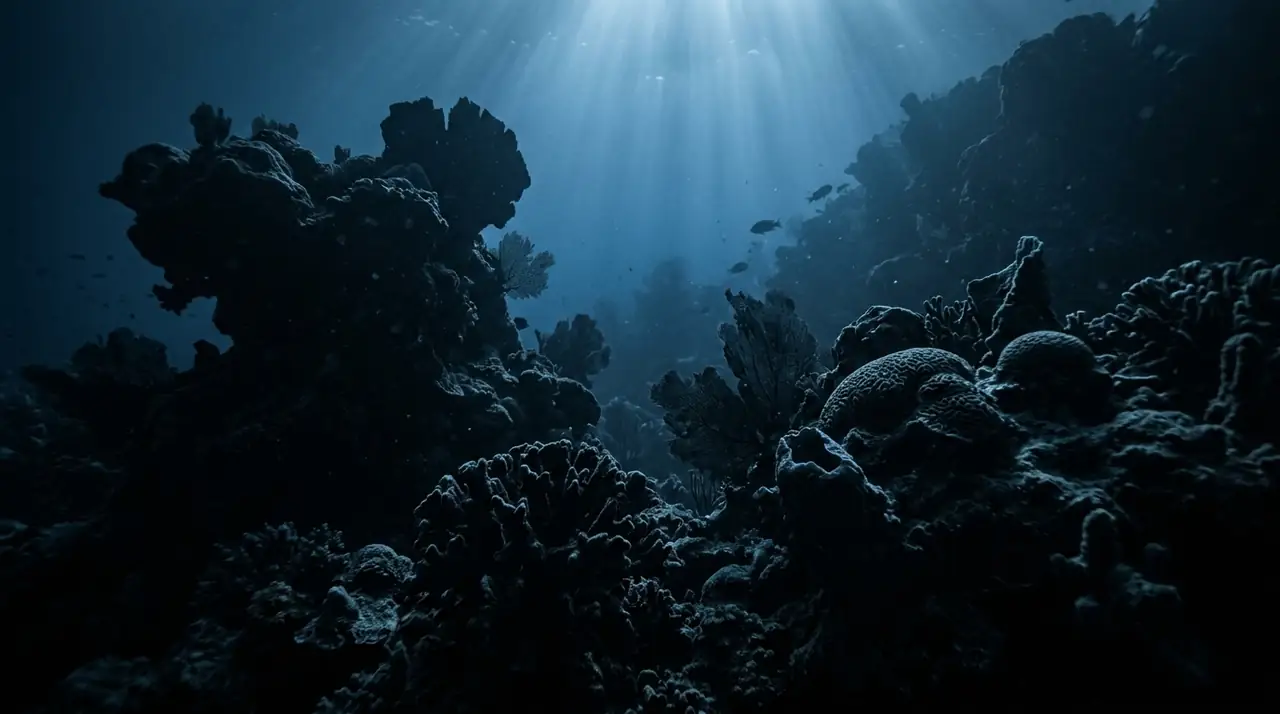
Pondicherry is better known for its French colonial architecture, its ashrams, and its seafront promenade than for its diving, but beneath the Bay of Bengal off this Tamil coast lies a reef system that is quietly earning a reputation among Indian divers. The Temple Reef, named for a submerged rock formation that locals say resembles the gopuram of a Tamil temple, sits about four kilometres offshore in water that ranges from eight to twenty-two metres deep. It is one of a handful of sites that make Pondicherry the only notable dive destination on India's entire east coast. The boat from the harbour took twenty minutes, cutting through a light chop under a January sky bleached white by humidity. We descended through warm, slightly green water onto a rocky substrate covered in a patchwork of recovering corals. Branching Acropora colonies had established on the higher points, their tips electric blue, while massive brain corals occupied the sheltered sides of boulders. The coral coverage is not wall-to-wall but is clearly improving, and the artificial reef structures deployed by a local conservation group nearby were already thick with coral recruits and encrusting organisms. A honeycomb moray eel occupied a crevice in the main reef structure, its spotted body thick as my thigh, mouth gaping in that misleading threat display that is really just breathing. Blue-spotted stingrays lay on the sand between reef patches, erupting in puffs of silt when approached too closely. Cuttlefish hovered over the artificial reefs, their chromatophores pulsing in rapid sequences of brown, white, and gold as they communicated with each other in their silent electric language. The guide led us to a deeper section at eighteen metres where a small school of barracuda held station in the mild current. Below them, partly buried in the sandy bottom, lay a guitar shark, its flattened body and elongated snout giving it the appearance of a ray that had decided to become a shark halfway through evolution. It rested motionless until my fin wash disturbed it, then lifted off the sand and glided away with slow, powerful tail strokes. The second dive was on a shallower section where groupers of various species occupied every hole and overhang. Lionfish drifted in the shadows, their venomous spines fanned wide, and sea cucumbers littered the sandy patches between coral heads. The marine life density was impressive for a site with limited visibility, a reminder that productive seas are not always clear seas. Pondicherry will never compete with the Andamans for visibility, but what it offers is accessibility, warm water, and the frontier appeal of a dive scene that is still being written.
Early access
Plan a dive here
Open the DiveOne planner to sketch a recreational plan before you go. It is a planning assistant, not a dive computer.
Marine life
Dive profile
DEPTH PROFILE
DEPTH PROGRESSION & WAYPOINTS: Pondicherry Temple Reef
Location
Frequently asked questions
How developed is diving in Pondicherry and what operators are available?
Pondicherry's dive industry is small but growing. A handful of PADI and SSI centres operate from the town, offering trips to the Temple Reef and surrounding sites. The boat ride to the reef takes about 20 to 30 minutes from the harbour. Equipment standards are generally good at established centres, though the range of rental gear may be limited compared to major dive destinations. Most operators offer beginner courses and guided fun dives. The diving is seasonal, with the best conditions from January through April before the monsoon season begins.
What is the visibility like at Pondicherry Temple Reef?
Visibility at Pondicherry is variable and generally lower than Indian Ocean destinations like the Maldives or Andaman Islands. Expect between five and fifteen metres depending on season, tide, and recent weather. The best visibility occurs from February to April when seas are calmest and plankton levels are moderate. After heavy rain or during the monsoon season from October to December, visibility can drop below three metres and diving is often suspended entirely. The Bay of Bengal has higher sediment loads than the Arabian Sea side of India.
Is Pondicherry Temple Reef suitable for beginners?
Yes, the site is well-suited to beginners. Maximum depths are around 22 metres but most of the interesting reef structure lies between 8 and 15 metres. Currents are generally mild, and the boat ride is short. Several operators offer Discover Scuba Diving experiences that include a guided dive on the shallower sections of the reef. The water is warm year-round at 26 to 30 degrees so only a thin wetsuit or skin is needed. The main consideration for beginners is visibility, which can be lower than expected for first-time divers accustomed to pool-clear water.
Reviews
Reviews
No reviews yet
Data Provenance
This profile is compiled from 3 operator submissions and 142 community logs. Key facts (depth, entry) are verified against official hydrographic charts.