Pakri Peninsula Wrecks
Overview
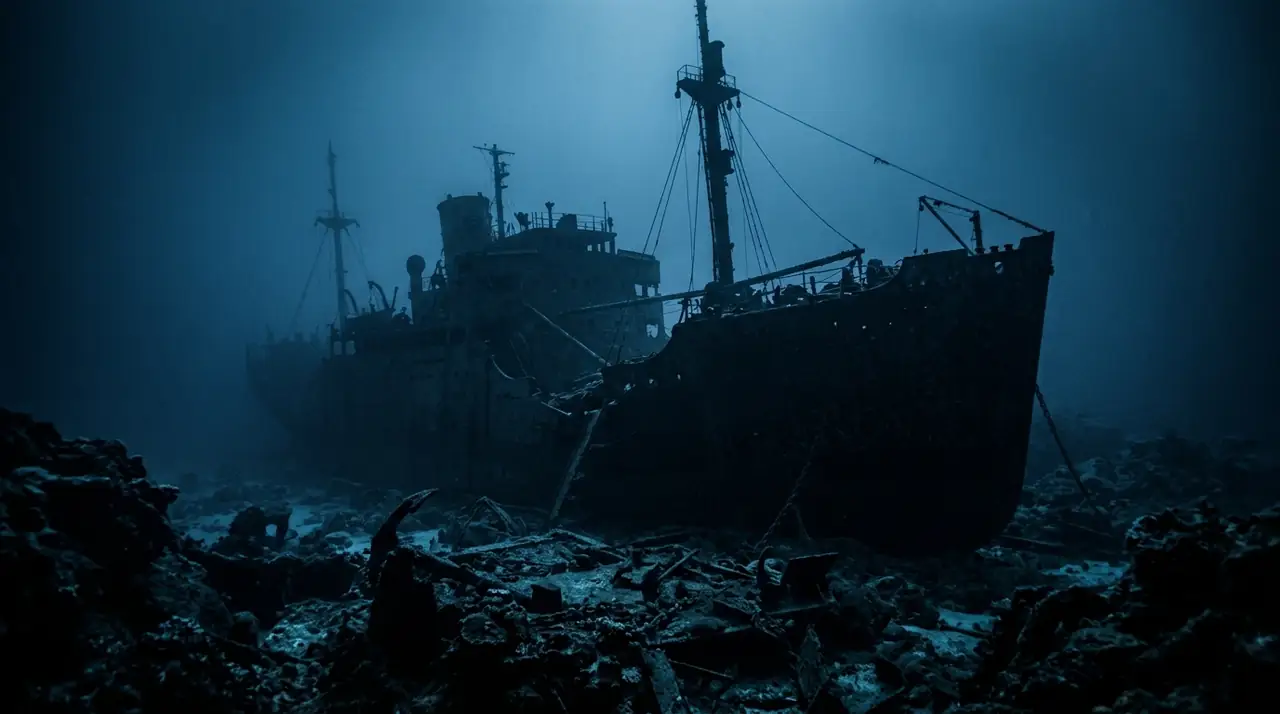
The Pakri Peninsula juts into the Gulf of Finland from Estonia's northwestern coast, a dramatic slab of Ordovician limestone rising in sheer cliffs above a shallow, wreck-strewn seabed. For most of the Cold War the nearby town of Paldiski was a closed Soviet naval city, home to a nuclear submarine training facility and off-limits to civilians. That military past has left its mark both on shore, in the form of crumbling concrete bunkers and reactor buildings, and underwater, where naval vessels and wartime transports litter the seabed alongside much older merchant wrecks. I joined a dive boat out of Paldiski harbour on a grey August morning, the limestone cliffs of Pakri Cliff looming to the north like a fortress wall. Our first site was a WWII-era German transport vessel sitting upright on a sandy bottom at 22 metres. The descent through the green Baltic water was like entering a different century. The wreck appeared as a dark mass below, her hull plates buckled amidships but the bow section remarkably intact. I swam along the port rail, running my light over deck fittings still bolted in place, their surfaces coated in a fine fur of mussel spat and hydroids. The cargo holds were open and empty, long since salvaged, but the engine room remained a tangle of machinery frozen in time. Pipes, valve wheels, and gauge housings protruded from the gloom in every direction. A school of Baltic herring had taken up residence in the hold, their silver sides flashing in my torch beam as they turned in unison. Round gobies, the invasive species that has colonised much of the Baltic in recent decades, watched from every horizontal surface with their absurdly large heads and bulging eyes.
Early access
Plan a dive here
Open the DiveOne planner to sketch a recreational plan before you go. It is a planning assistant, not a dive computer.
Marine life
Dive profile
DEPTH PROFILE
DEPTH PROGRESSION & WAYPOINTS: Pakri Peninsula Wrecks
Location
Frequently asked questions
What kinds of wrecks are found at Pakri Peninsula?
The Pakri Peninsula area contains a diverse collection of wrecks spanning from the early 20th century through the Cold War period. Notable sites include WWII-era German and Soviet transport vessels, a scuttled Soviet minesweeper, and several merchant ships that foundered on the shallow limestone reefs. Some wrecks are in relatively shallow water at 10 to 15 metres, making them accessible to intermediate divers, while deeper sites at 25 to 30 metres offer more challenging penetration opportunities. The Estonian Maritime Museum maintains records of documented wrecks, and some are protected heritage sites.
Is Paldiski easy to reach from Tallinn?
Paldiski is approximately 50 kilometres west of Tallinn, about a 45-minute drive or a one-hour train ride on the Elron commuter rail service. Several Estonian dive operators based in Tallinn run regular trips to Pakri Peninsula wreck sites during the summer season. The harbour at Paldiski provides sheltered boat launching, and most wreck sites are within 15 to 30 minutes by boat from the harbour. Accommodation options in Paldiski are limited, so most visiting divers base themselves in Tallinn.
Do I need any special permits to dive at Pakri Peninsula?
Recreational diving at most Pakri Peninsula sites does not require a permit, but certain wrecks are classified as protected underwater cultural heritage by the Estonian government, and diving on those requires prior notification to the National Heritage Board. Your dive operator will know which sites have restrictions. The former Soviet military infrastructure on shore is largely abandoned but some areas remain restricted. All divers should carry a surface marker buoy as there is occasional commercial shipping traffic in the area.
Reviews
Reviews
No reviews yet
Data Provenance
This profile is compiled from 3 operator submissions and 142 community logs. Key facts (depth, entry) are verified against official hydrographic charts.