Pain de Sucre
Overview
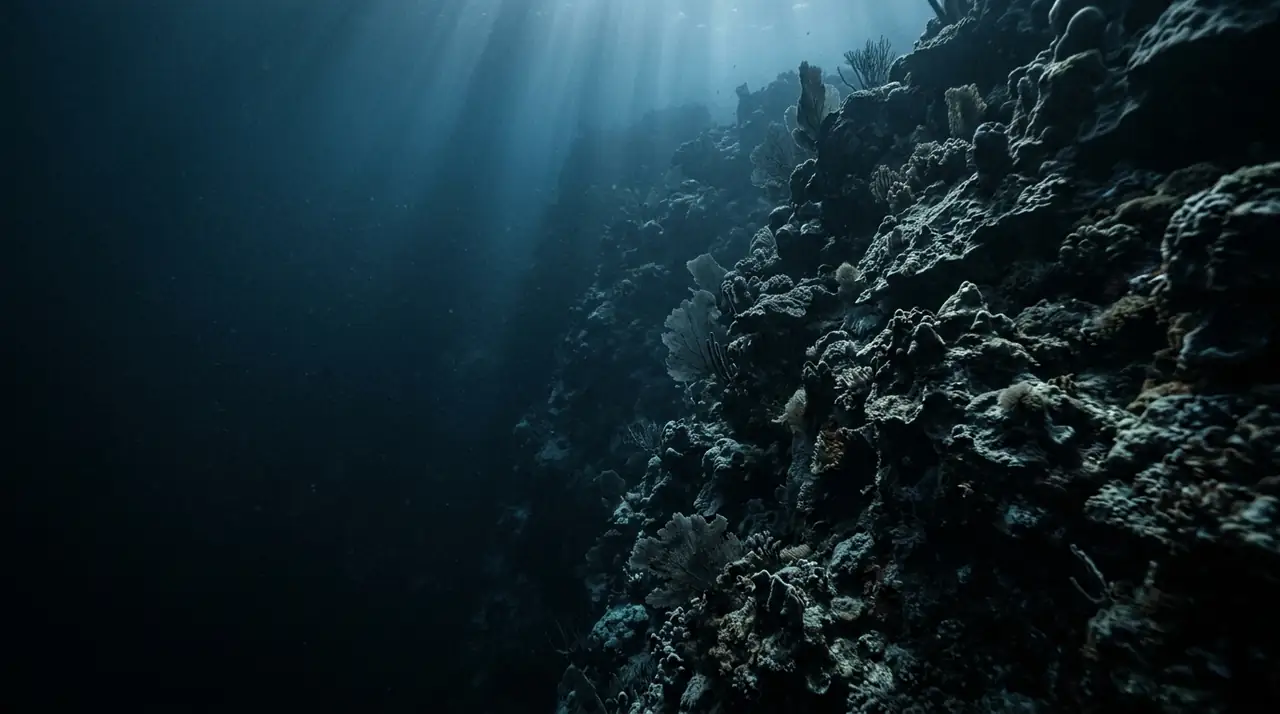
Pain de Sucre, the Sugarloaf, is a conical rock formation that rises from the Caribbean Sea on the western edge of Gustavia, the diminutive capital of Saint-Barthelemy. Above water, it is one of the island's most photographed landmarks, its symmetrical peak silhouetted against Caribbean sunsets. Below water, the cove at its base shelters a marine community of remarkable richness for so small a space, a pocket of Caribbean biodiversity that benefits from the calm conditions and strict protection afforded by the island's marine reserve. I walked down the short trail from the road above on a February morning, carrying a single tank and a camera. The cove appeared below as a crescent of turquoise water bounded by dark volcanic rock on three sides and the open Caribbean on the fourth. The water clarity was immediately striking: from the rocks above, I could see the bottom in its entirety, the coral formations, the sand patches, the seagrass beds, and the unmistakable shapes of turtles moving across the reef like slow-motion satellites orbiting their green planet. The entry was a simple step from the rocks into a metre of water, where I knelt to put on my fins before swimming out over the reef. The bottom dropped gradually from the shoreline to a maximum of about twelve metres near the cove's outer edge, the reef slope gentle enough to explore at any depth without feeling the pull of the deeper zones. I chose to stay between four and eight metres, where the coral coverage was densest and the light effects most beautiful.
Early access
Plan a dive here
Open the DiveOne planner to sketch a recreational plan before you go. It is a planning assistant, not a dive computer.
Marine life
Dive profile
DEPTH PROFILE
DEPTH PROGRESSION & WAYPOINTS: Pain de Sucre
Location
Near Gustavia, in the Leeward Islands region of Saint Barthelemy.
Frequently asked questions
How do I access Pain de Sucre for diving?
Pain de Sucre is located on the western outskirts of Gustavia, St. Barths' charming capital. The cove is accessed via a short trail from the end of a residential road. Parking is very limited, with space for perhaps five or six cars. The trail descends to a small rocky beach from which both snorkellers and divers can enter the water. The entry is straightforward in calm conditions, stepping from the rocks into waist-deep water. Several dive centres in Gustavia offer guided shore dives at Pain de Sucre, providing equipment transport down the trail. The site is small and can feel crowded during peak tourist season from December to March, so early morning visits are recommended.
What is the best depth to dive at Pain de Sucre?
Pain de Sucre is a shallow site with a maximum useful depth of about fifteen metres. The best marine life is concentrated between three and ten metres, where the coral coverage is densest and the turtles spend most of their time feeding. The cove's sheltered nature means there is essentially no current, allowing extended dives at shallow depths without air consumption concerns. For scuba divers, the site is excellent for a relaxed single-tank dive of sixty to ninety minutes. Many experienced divers choose to snorkel here instead, as the shallow depth and exceptional clarity make surface observation almost as rewarding as diving. The bottom composition is a mix of coral-covered rock, sand patches, and seagrass beds.
Is Pain de Sucre part of a marine reserve?
Pain de Sucre falls within the Marine Natural Reserve of Saint-Barthelemy, established in 1996 and managed by the Territorial Environmental Agency. The reserve designates the cove as a protected area where fishing, anchoring on coral, and collecting marine organisms are prohibited. These protections have been effective, as evidenced by the healthy coral coverage and abundant turtle population. Divers and snorkellers are expected to follow reserve rules: no touching marine life, no standing on coral, no feeding fish, and no gloves. The reserve management monitors the site regularly and has installed moorings offshore to prevent anchor damage. Entry to the reserve is free, but donations are encouraged.
Reviews
Reviews
No reviews yet
Data Provenance
This profile is compiled from 3 operator submissions and 142 community logs. Key facts (depth, entry) are verified against official hydrographic charts.