Nosy Iranja Reef
Overview
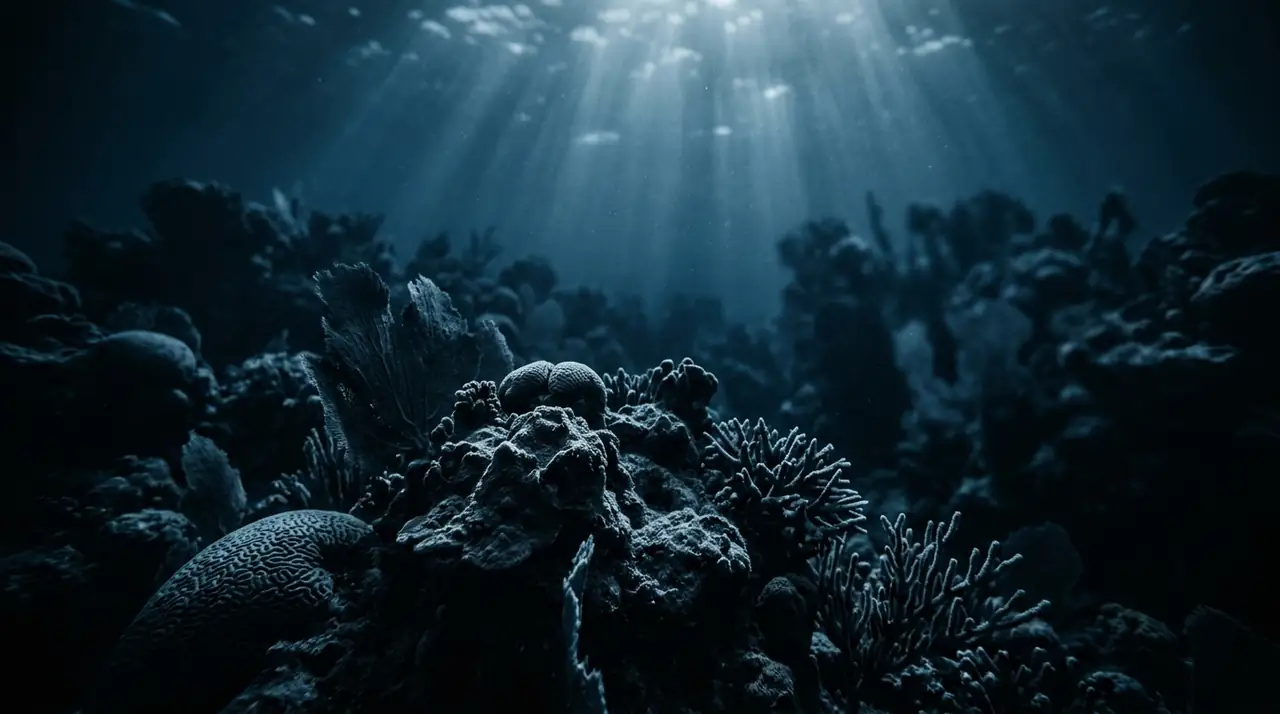
Nosy Iranja is a pair of small islands connected by a spectacular tidal sandbar, lying roughly 45 kilometres south of Nosy Be off Madagascar's northwest coast. The larger island has a small fishing village and eco-lodge. The smaller island is an uninhabited turtle nesting sanctuary. Between them, the reef system showcases what Malagasy waters look like when protected from destructive fishing practices. The boat ride from Nosy Be crosses open water before the two islands appear on the horizon, connected by a white sandbar emerging at low tide. Approaching by boat, the reef is visible through clear water, dark coral formations contrasting with pale sandy channels. I descended on the western side into a reef sloping from 5 to 25 metres over a broad coral plateau. The coral coverage was immediately striking. Table corals in large, intact formations created tiered canopies, sheltering clouds of damselfish and anthias. The absence of blast damage was visible in the intact structural complexity, a contrast to rubble fields on reefs closer to the mainland. Hawksbill turtles are the headline residents. I encountered three during a single dive, each foraging on sponges. These critically endangered animals use Nosy Iranja's beaches for nesting, and their underwater presence is regular and unhurried. One individual allowed me to drift alongside for several minutes, its ancient beaked face working methodically at a sponge. Whitetip reef sharks rest beneath coral overhangs on deeper sections, and giant trevally patrol the reef edge. Napoleon wrasses appear occasionally, unmistakable even at distance. Groupers of various species occupy holes and caves throughout the reef structure. The sandbar connecting the islands creates interesting current dynamics, channelling water through gaps that concentrate plankton and attract feeding fish. Diving the sandbar channel during a changing tide produces faster current but denser fish aggregations than the open reef. Nosy Iranja represents the potential of Madagascar's marine environment when given space to function. The challenges facing Malagasy reefs are significant, but sites like this demonstrate that biological richness remains, waiting to recover where protection is effective.
Early access
Plan a dive here
Open the DiveOne planner to sketch a recreational plan before you go. It is a planning assistant, not a dive computer.
Marine life
Dive profile
DEPTH PROFILE
DEPTH PROGRESSION & WAYPOINTS: Nosy Iranja Reef
Location
Frequently asked questions
How do I get to Nosy Iranja for diving?
Nosy Iranja is reached by boat from Nosy Be, Madagascar's main tourist island, with the journey taking approximately one to one and a half hours depending on sea conditions and vessel speed. Most dive operators based on Nosy Be offer day trips that combine diving with beach time on the famous sandbar. Some operators offer multi-day camping or lodge-based trips on the island for extended diving. There is a small eco-lodge on the larger island, Nosy Iranja Be, though facilities are basic. The boat crossing can be rough during the transition months, and operators monitor conditions daily.
When do hawksbill turtles nest at Nosy Iranja?
Hawksbill turtles nest on the beaches of Nosy Iranja primarily between October and February, with peak activity in November and December. During this period, female turtles haul out onto the sandy beaches at night to lay their eggs. Divers visiting during the nesting season may encounter adult females on the reef approaching or departing from nesting beaches. The smaller island, Nosy Iranja Kely, is a designated turtle nesting sanctuary with restricted access during the nesting season. Conservation programmes monitor nesting activity and protect nests from predation.
Is the reef at Nosy Iranja affected by the same degradation seen on mainland Madagascar reefs?
Nosy Iranja's reefs are in significantly better condition than many mainland Madagascar reef systems, which have suffered from dynamite fishing, sedimentation from deforestation, and overfishing. The island's distance from the mainland and from major fishing communities has provided some natural protection. However, the reefs are not immune to broader threats including warming-related coral bleaching and occasional illegal fishing incursions. Local conservation efforts supported by Nosy Be dive operators and NGOs are working to maintain reef health and establish effective community-based management of the surrounding waters.
Reviews
Reviews
No reviews yet
Data Provenance
This profile is compiled from 3 operator submissions and 142 community logs. Key facts (depth, entry) are verified against official hydrographic charts.