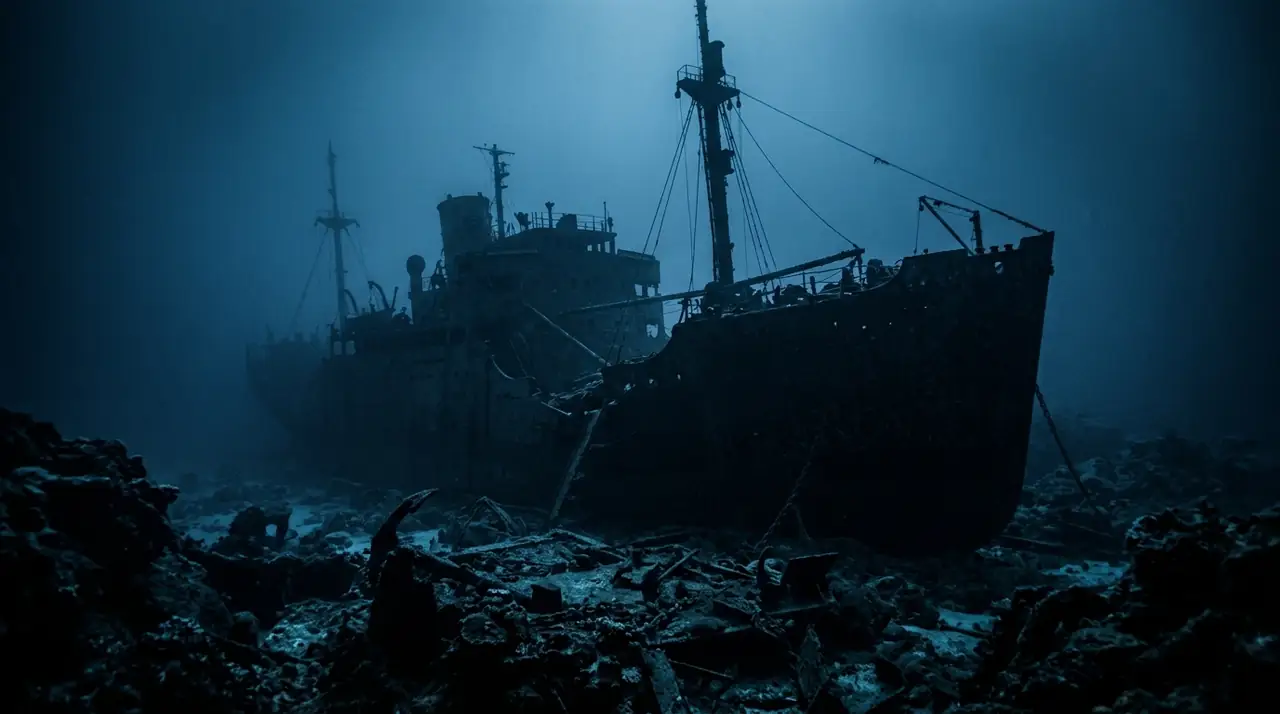
Norrköping Wrecks
Overview
The waters off Norrköping on Sweden's eastern coast conceal a maritime graveyard of remarkable historical significance. The Baltic Sea here, with its cold temperatures, low salinity, and limited oxygen at depth, creates preservation conditions so exceptional that wooden shipwrecks that sank centuries ago retain structural detail that would have been consumed by marine organisms within years in the open ocean. For wreck diving enthusiasts who appreciate historical context alongside underwater adventure, the Norrköping area offers a genuinely unique experience. The wrecks scattered across this stretch of the Baltic span several centuries of Swedish maritime history. Wooden merchant vessels that carried goods along the coastal trade routes of the 17th and 18th centuries lie on the sandy seabed with their hull planking, ribs, and deck structures still recognisably intact. Iron steamships from the industrialisation era rest at greater depths, their machinery and fittings frozen in time. Each wreck tells a story of commerce, conflict, or misfortune, and Swedish maritime archaeologists have documented many of them, adding rich historical context to the diving experience. I dived several wrecks near Norrköping in late June, and what struck me most forcefully was the state of preservation. On one 18th-century merchant wreck at 22 metres, I could clearly make out individual planks in the hull, the frames that supported them, and even remnants of the deck railing. The cold, brackish water — roughly a third the salinity of the open ocean — ensures that the notorious shipworm Teredo navalis cannot survive here, sparing wooden hulls the fate that awaits them in warmer seas. The wreck surfaces have developed a patina of bladderwrack seaweed and freshwater mussels, but the underlying structure endures. Marine life on the Baltic wrecks is subdued compared to saltwater environments, but far from absent. Pike and perch patrol the wreck structures, using them as hunting grounds for smaller fish. Baltic herring school in the mid-water above the wrecks, and flounder rest on the sandy bottom nearby. The wreck surfaces host colonies of freshwater mussels, and crayfish occasionally emerge from gaps in the timber. Visibility ranges from 5 to 15 metres with the best clarity in early summer and autumn. Water temperatures vary dramatically with depth — surface layers reach 18 degrees in summer while temperatures below the thermocline can drop to single digits, making a drysuit advisable for deeper wreck dives. Norrköping is easily reached from Stockholm by train in 90 minutes, and several local dive clubs and operators offer guided wreck charters during the summer season.
Early access
Plan a dive here
Open the DiveOne planner to sketch a recreational plan before you go. It is a planning assistant, not a dive computer.
Marine life
Dive profile
DEPTH PROFILE
DEPTH PROGRESSION & WAYPOINTS: Norrköping Wrecks
Location
Frequently asked questions
Why are the wrecks in the Baltic Sea so well preserved?
The Baltic Sea creates ideal preservation conditions through a combination of factors. The cold water temperatures slow biological decay. The low salinity, roughly one-third that of ocean water, means that the destructive shipworm Teredo navalis cannot survive, protecting wooden hulls that would be consumed within decades in saltwater. The low oxygen levels in deeper Baltic water further inhibit decomposition. These conditions have preserved wrecks in the Baltic for centuries in condition that would be impossible in warmer or more saline waters.
What types of wrecks can be dived near Norrköping?
The Norrköping area offers a range of wrecks spanning several centuries of maritime history. These include wooden merchant vessels from the 17th and 18th centuries, iron and steel steamships from the 19th century, and various smaller craft. Some wrecks are identified and documented by the Swedish maritime museums while others remain anonymous. Depths range from 8 to 35 metres, with many of the best-preserved wooden wrecks in the 15 to 30 metre range.
What is the best time of year to dive the Norrköping wrecks?
The diving season runs from May through October, with the best combination of visibility and water temperature from June through September. Summer water temperatures reach 15 to 18 degrees in the upper layers, though a thermocline typically develops at 10 to 15 metres with significantly colder water below. Visibility is best in early summer and autumn at 10 to 15 metres. A drysuit is recommended even in summer for the deeper wreck dives below the thermocline.
Reviews
Reviews
No reviews yet
Data Provenance
This profile is compiled from 3 operator submissions and 142 community logs. Key facts (depth, entry) are verified against official hydrographic charts.