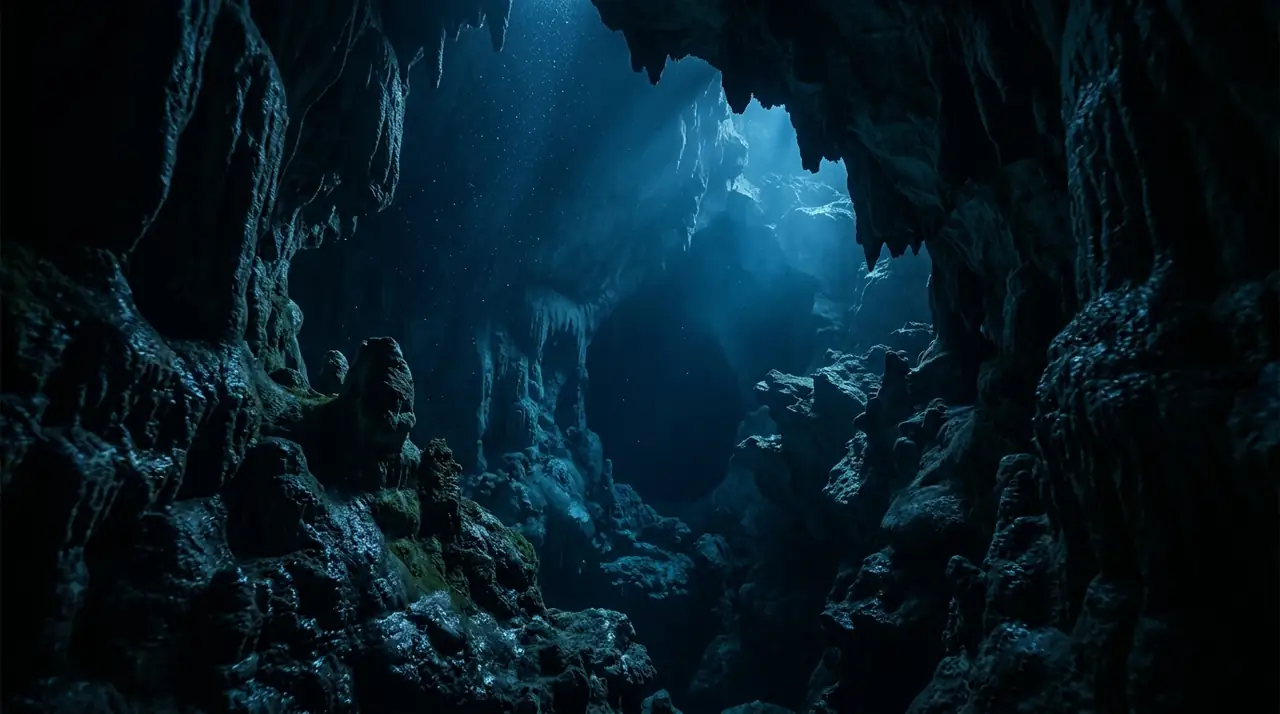
Naigoro Passage
Overview
Naigoro Passage cuts through the southern fringing reef of Kadavu like a river through rock, a narrow tidal channel where the open Pacific forces itself into the shallow lagoon twice daily. This constant exchange of oceanic and lagoon water creates one of Fiji's most dynamic dive environments: a corridor of extravagant soft coral growth, resident manta rays, and the kind of big-fish action that the more accessible Great Astrolabe Reef rarely delivers. The passage is perhaps eighty metres wide at its narrowest, flanked by walls dropping from the reef flat to a sandy floor at thirty metres. On an incoming tide, the dive becomes a controlled drift along walls so densely covered in soft coral that the rock beneath disappears entirely. Dendronephthya corals in electric purple, magenta, and orange cluster in such profusion that wide-angle photographers struggle to frame shots that do not look artificially saturated. The cleaning stations draw the mantas. At two points along the passage walls, coral bommies rise to around fifteen metres, and here cleaner wrasses maintain stations that manta rays visit with remarkable regularity. I watched three mantas queuing in a slow circle above a bommie, each taking its turn to hover motionless while tiny fish picked parasites from gills and skin. Grey reef sharks patrol the deeper sections, particularly near the outer mouth where the channel meets open ocean. Schools of giant trevally work the current edges, and barracuda form shimmering curtains in the blue water above the reef crest. Napoleon wrasses cruise the walls with the unhurried confidence of fish that have never been hunted. Kadavu remains one of Fiji's least developed islands, and Naigoro Passage receives perhaps three or four boats per week during high season. Getting here requires a short domestic flight from Suva or Nadi to Vunisea, followed by a boat transfer to one of two or three small dive resorts. The infrastructure is modest, the diving is extraordinary, and the sense of discovery is genuine.
Early access
Plan a dive here
Open the DiveOne planner to sketch a recreational plan before you go. It is a planning assistant, not a dive computer.
Marine life
Dive profile
DEPTH PROFILE
DEPTH PROGRESSION & WAYPOINTS: Naigoro Passage
Location
Frequently asked questions
How does Naigoro Passage differ from the Great Astrolabe Reef?
While the Great Astrolabe Reef is a broad barrier reef system offering sheltered coral gardens and wide reef flats, Naigoro Passage is a narrow tidal channel cutting through Kadavu's southern fringing reef. The passage funnels ocean currents, creating a nutrient-rich corridor that attracts manta rays and pelagic species rarely seen on the main reef. The diving style is fundamentally different: drift diving through a current-swept channel versus exploratory reef diving. Naigoro demands stronger skills but rewards with big animal encounters and spectacular soft coral density.
When are manta rays most reliably seen at Naigoro Passage?
Manta rays frequent Naigoro Passage year-round, but the highest concentrations occur between May and October when cooler nutrient-rich waters flow through the channel. During this period, plankton density increases dramatically, and mantas congregate at cleaning stations on the passage walls. Morning dives on an incoming tide offer the best combination of current direction and manta activity. Divers typically see between two and six mantas per dive during peak season, with occasional aggregations exceeding ten individuals.
What experience level is needed for diving Naigoro Passage?
Naigoro Passage is an advanced dive site due to strong and sometimes unpredictable tidal currents. Divers should hold Advanced Open Water certification at minimum and have significant experience with drift diving and current management. The ability to deploy a surface marker buoy is essential. Local dive operators from Matana and Papageno resorts brief divers thoroughly on current patterns and typically dive only on favourable tidal phases. The channel depth ranges from 12 to 30 metres, with the cleaning stations located between 15 and 22 metres.
Reviews
Reviews
No reviews yet
Data Provenance
This profile is compiled from 3 operator submissions and 142 community logs. Key facts (depth, entry) are verified against official hydrographic charts.