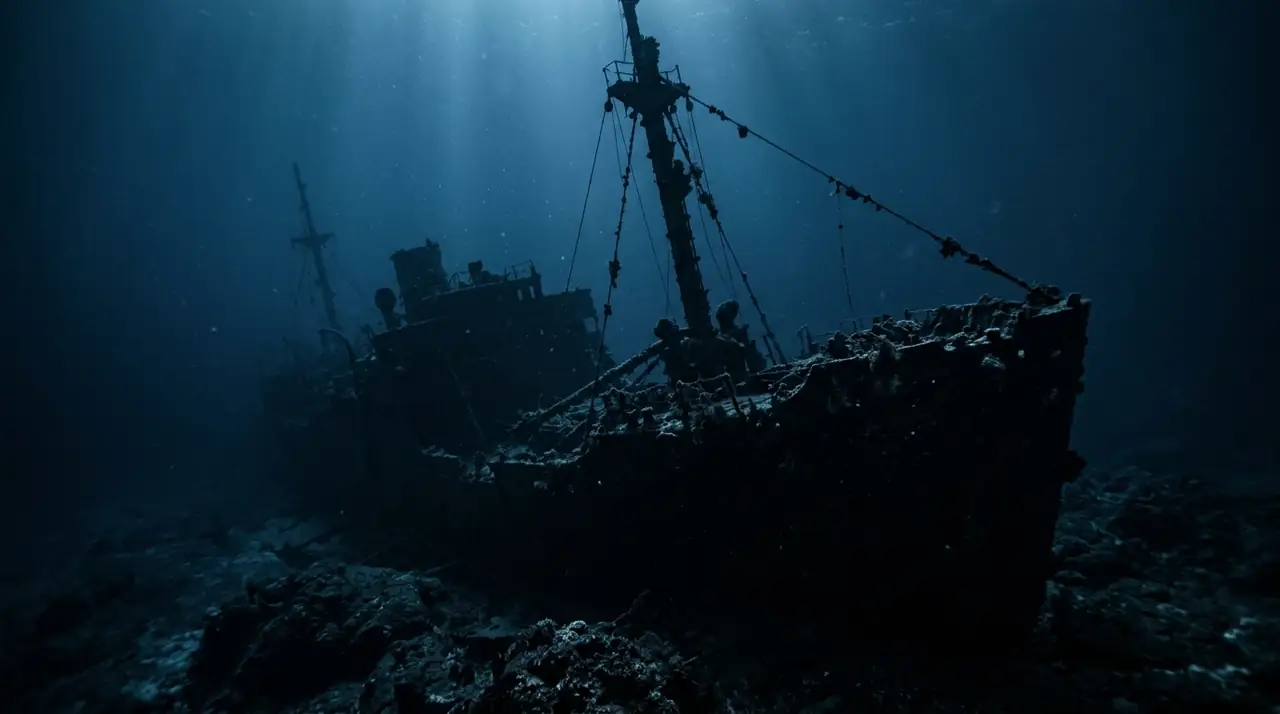
Morotai WWII Wrecks
Overview
Morotai Island sits at the northernmost edge of the Maluku archipelago, closer to the Philippines than to Java, and holds one of the Pacific's most compelling underwater war museums. During 1944 and 1945, this remote island served as a critical staging base for General Douglas MacArthur's campaign to liberate the Philippines, hosting over 60,000 Allied troops and one of the largest air complexes in the Pacific theater. The price of that massive military operation is written on the seafloor: dozens of aircraft, landing craft, and supply vessels that never made it home. The most striking wreck is a P-47 Thunderbolt fighter that rests upright on a sandy bottom at 20 meters, its propeller still attached and cockpit open as if the pilot simply climbed out and swam away. The aircraft's silhouette is unmistakable, and the play of tropical sunlight through clear water onto its aluminum fuselage creates an image that stays with you long after surfacing. Nearby, a second aircraft, likely a reconnaissance plane, lies on its belly with wings intact, soft corals growing along its trailing edges in shades of orange and pink. The Japanese wrecks tell a different story. Landing barges and small transport vessels, some clearly damaged by strafing runs, sit scattered across sandy flats between 15 and 30 meters. These have been underwater for eight decades and have become genuine artificial reefs. Massive barrel sponges grow from deck plates, moray eels occupy engine compartments, and hawksbill turtles use the superstructures as resting stations between foraging runs. Beyond the wrecks themselves, Morotai's reefs are surprisingly healthy. The island's extreme remoteness means fishing pressure is light, and the reef flats surrounding the wreck sites harbor schools of batfish, sweetlips, and hunting barracuda. Visibility runs between 15 and 25 meters, with the clearest conditions during the dry season from March through November. Currents are generally mild around the wreck sites, which sit in relatively sheltered waters on the island's southern coast. Diving Morotai requires patience and planning. Infrastructure is minimal, flights are irregular, and conditions can be unpredictable. But for divers with an interest in history and a willingness to travel beyond the circuit, Morotai offers wreck diving that combines Pacific War significance with genuine tropical beauty in a setting that receives perhaps a few dozen visiting divers per year.
Early access
Plan a dive here
Open the DiveOne planner to sketch a recreational plan before you go. It is a planning assistant, not a dive computer.
Marine life
Dive profile
DEPTH PROFILE
DEPTH PROGRESSION & WAYPOINTS: Morotai WWII Wrecks
Location
Frequently asked questions
What World War II history does Morotai hold?
Morotai was a major staging base for General MacArthur's campaign to retake the Philippines in 1944. The island hosted over 60,000 Allied troops and became one of the largest air bases in the Pacific theater. Dozens of aircraft were lost to operational accidents in the surrounding waters, and Japanese defensive positions left their own underwater debris field. The most famous story from Morotai is that of Private Teruo Nakamura, the last Japanese soldier to surrender in 1974, having hidden in the jungle for 30 years.
How do I reach Morotai Island?
Fly from Ternate or Manado to Morotai's Pitu Airport on small regional aircraft. Flights operate several times per week but schedules can be irregular. From Daruba, the island's main town, local boat operators can arrange dive trips to the wreck sites. Dive infrastructure is minimal, so bringing your own equipment or arranging everything through a liveaboard is advisable. The island is being developed for tourism but remains very remote.
What condition are the WWII wrecks in?
The wrecks vary in condition. The aircraft are remarkably well preserved due to warm tropical water with relatively low corrosive salinity, and some sit upright on sandy bottoms with clearly identifiable features including propellers, cockpits, and wing markings. The larger landing craft and supply vessels show more deterioration but are heavily colonized by soft corals and sponges, creating artificial reefs. Penetration is possible on some larger wrecks but requires wreck diving certification.
Reviews
Reviews
No reviews yet
Data Provenance
This profile is compiled from 3 operator submissions and 142 community logs. Key facts (depth, entry) are verified against official hydrographic charts.