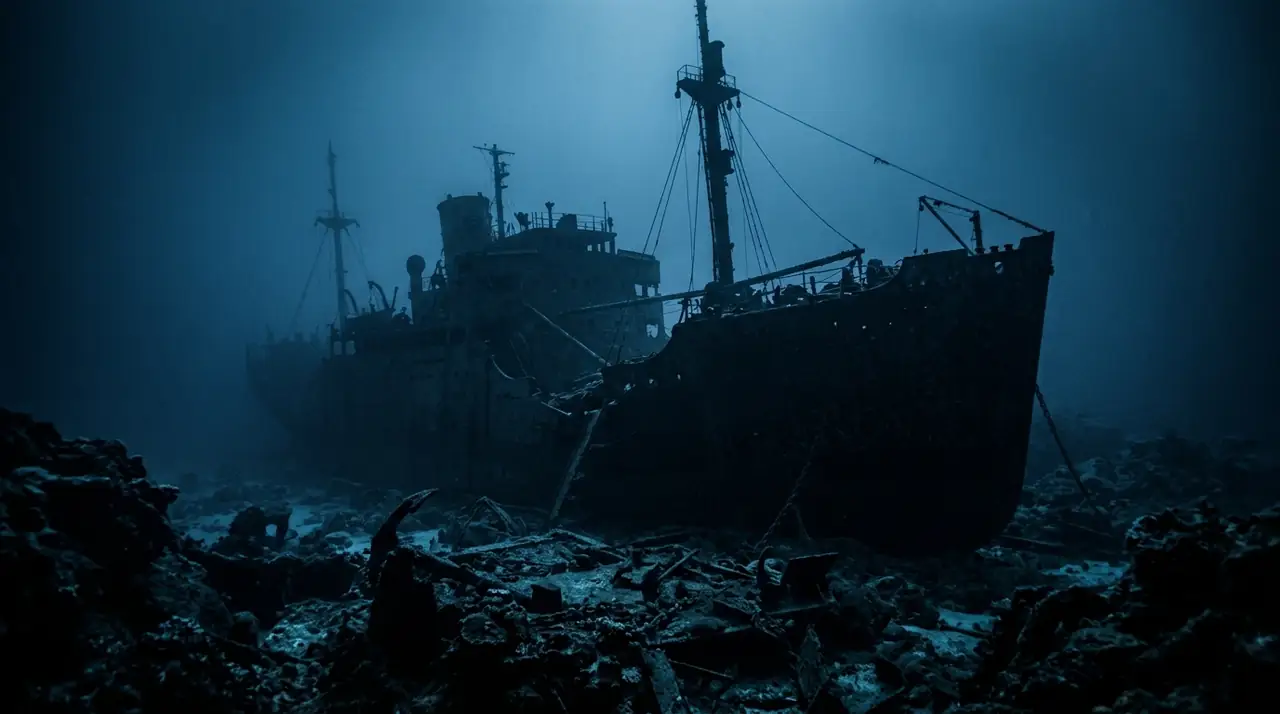
Montana & Constellation Wrecks
Overview
The Montana and Constellation wrecks are Bermuda's most accessible and atmospheric dive — two vessels from different centuries lying side by side on a sandy bottom in startlingly clear water. The Montana, a Civil War-era paddle-wheel steamer that sank in 1863 while running the Union blockade, rests alongside the Constellation, a wooden-hulled schooner lost in 1943 carrying drugs, whisky, and cement. The Constellation inspired Peter Benchley to write 'The Deep' after diving the wreck in the 1970s. What makes this site so appealing is the depth — or rather, the lack of it. Both wrecks sit between 10 and 15 metres, bathed in natural light and surrounded by Bermuda's famously clear water. Visibility routinely exceeds 30 metres and can reach 40 on exceptional days. The warmth of the light, white sand between the structures, and impossibly blue water create a scene almost too beautiful to be real. Decades of coral growth have softened the wrecks' outlines into organic shapes. The Montana's iron ribs rise from the sand like a prehistoric skeleton, draped in fire coral, brain coral, and sea fans. The Constellation's wooden hull has largely disintegrated, but her cargo remains scattered across the seabed — bottles, ceramic fragments, and timbers telling a visual story of maritime disaster. Marine life is abundant: blue angelfish drift between wreck frames, barracuda hover overhead, queen triggerfish root in the sand, and bermuda chub mill about in loose schools. The dive is typically done as a relaxed multilevel profile, starting at the deeper Montana and working to the shallower Constellation. Mild current allows unhurried exploration, and the shallow depth means generous bottom times — often 50 minutes or more on a single tank. The boat ride from Hamilton takes about twenty minutes. For divers new to Bermuda, this double wreck is the ideal introduction: accessible to all levels, visually stunning, historically fascinating, and proof that the best dives do not always require deep descents.
Early access
Plan a dive here
Open the DiveOne planner to sketch a recreational plan before you go. It is a planning assistant, not a dive computer.
Marine life
Dive profile
DEPTH PROFILE
DEPTH PROGRESSION & WAYPOINTS: Montana & Constellation Wrecks
Location
Frequently asked questions
How shallow are the Montana and Constellation wrecks in Bermuda?
Both wrecks sit in remarkably shallow water, between 10 and 15 metres depth. This makes them accessible to divers of all levels, including those on introductory dives. The shallow depth also means extended bottom times and plenty of natural light for photography. Some sections are even visible from the surface on calm days.
What is the connection between these wrecks and the novel 'The Deep'?
Author Peter Benchley dove on the Constellation wreck while visiting Bermuda and was inspired by its cargo of medicine bottles and amphorae. The wreck and the surrounding reef became the basis for his 1976 novel 'The Deep,' later adapted into a feature film. The real wreck, a wooden-hulled schooner that sank in 1943, still has remnants of its cargo scattered across the seabed.
Can I snorkel on these wrecks or do I need to scuba dive?
While scuba diving provides the best experience, skilled freedivers and snorkelers can see portions of the wrecks from the surface on very calm days, as the shallowest parts sit at around 10 metres. However, most visitors scuba dive the site to appreciate the details up close. The shallow depth makes this an excellent site for discover scuba divers making their first ocean dive.
Reviews
Reviews
No reviews yet
Data Provenance
This profile is compiled from 3 operator submissions and 142 community logs. Key facts (depth, entry) are verified against official hydrographic charts.