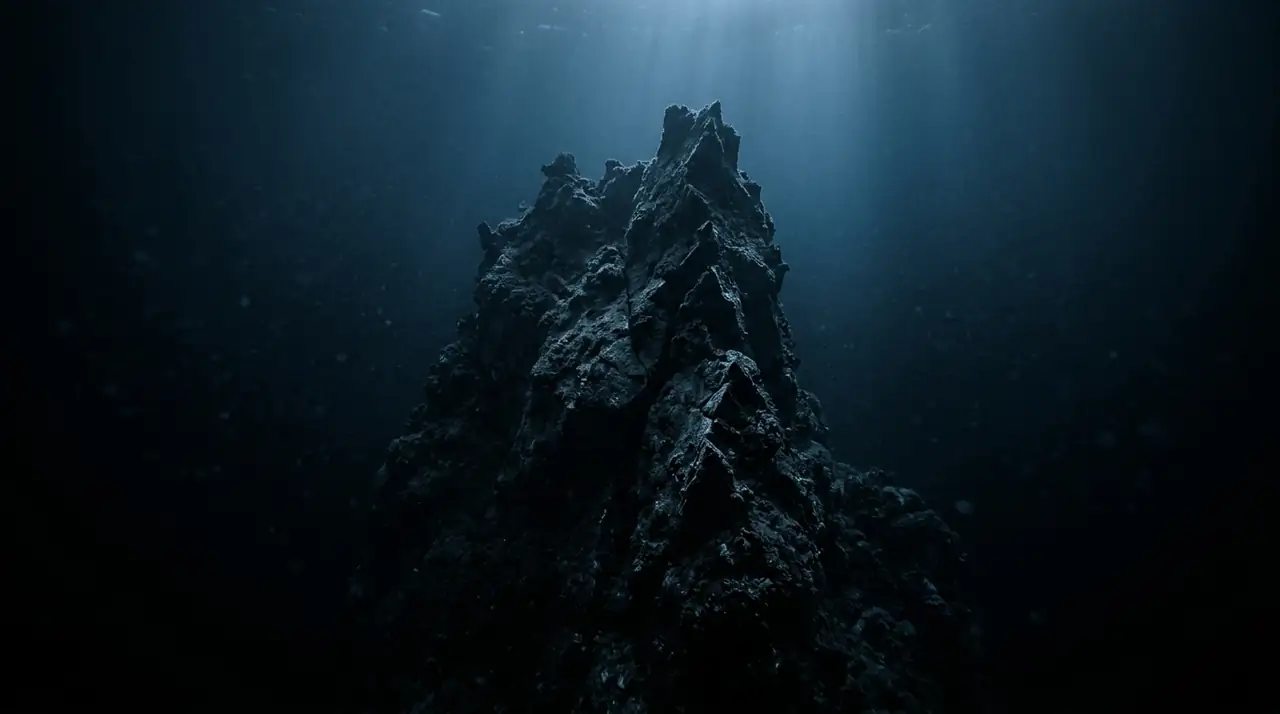
Moai Underwater (Hanga Roa Bay)
Overview
Rapa Nui, or Easter Island, is the most remote inhabited island on Earth, lying over 3,500 kilometres from the Chilean mainland and more than 2,000 kilometres from the nearest populated island. This extreme isolation, combined with volcanic geology and the absence of river runoff or harbour pollution, gives its waters a clarity that is almost unimaginable: visibility routinely exceeds 60 metres, making it one of the clearest diving destinations in the world. The signature dive is the underwater Moai, a replica statue from the 1994 film Rapa Nui that was deliberately placed on a volcanic slope in Hanga Roa Bay at approximately 22 metres depth. Over three decades, the statue has been gradually colonised by coral growth, lending it an increasingly weathered and ancient appearance that makes for hauntingly photogenic images. The Moai sits slightly tilted upward on the volcanic rock, its stone face gazing toward the surface with an expression that perfectly captures the mysterious spirit of the island. Beyond the Moai, the dive sites around Rapa Nui are shaped entirely by volcanic activity. Lava tubes, arches, caverns, and dramatic boulder fields create an underwater landscape unlike anything in the tropical Pacific. The volcanic rock is dark, providing striking contrast against the electric blue water and the colourful marine life. Many of the fish species found here are endemic to Easter Island, including a local butterflyfish and a unique moray eel species, adding biological interest to the geological spectacle. Diving is concentrated along the sheltered western coast near Hanga Roa, the island's only settlement. Water temperature ranges from 20 to 26 degrees Celsius, warmest from January to April. Currents can be moderate and are somewhat unpredictable due to the island's exposure to open ocean swells. Two dive operators serve the island, and advance booking is recommended especially during the busy summer months. The experience of diving at the most isolated point of human habitation, in water so clear it feels like flying, with a Moai statue watching silently from the volcanic depths, is one that stays with divers for a lifetime.
Early access
Plan a dive here
Open the DiveOne planner to sketch a recreational plan before you go. It is a planning assistant, not a dive computer.
Marine life
Dive profile
DEPTH PROFILE
DEPTH PROGRESSION & WAYPOINTS: Moai Underwater (Hanga Roa Bay)
Location
Near Hanga Roa, in the Rapa Nui (Easter Island) region of Chile.
Frequently asked questions
Is the underwater Moai at Easter Island real or a replica?
The underwater Moai in Hanga Roa Bay is a replica, originally created as a prop for the 1994 film Rapa Nui. After filming, the statue was deliberately sunk at approximately 22 metres depth on a volcanic slope. Over the decades, it has become colonised by coral and marine growth, giving it an increasingly authentic ancient appearance. It is now one of Easter Island's most iconic dive attractions.
How good is the visibility when diving at Easter Island?
Easter Island has some of the best visibility in the world, regularly exceeding 60 metres and sometimes reaching 70 metres. This extraordinary clarity is due to the island's extreme isolation in the South Pacific, the volcanic soil that filters rainwater before it enters the ocean, and the absence of ports and river runoff. The crystal-clear water is one of the diving highlights.
What other dive sites are there at Easter Island besides the Moai?
Easter Island offers approximately 25 dive sites, mostly along the sheltered western coast near Hanga Roa. Highlights include Motu Nui, a rocky islet with caverns and swim-throughs, and Cathedral, a stunning lava tube formation. The volcanic underwater topography features arches, tunnels, and dramatic drop-offs. Many fish species are endemic to Easter Island, found nowhere else on Earth.
Reviews
Reviews
No reviews yet
Data Provenance
This profile is compiled from 3 operator submissions and 142 community logs. Key facts (depth, entry) are verified against official hydrographic charts.