Mnemba Outside Reef
Overview
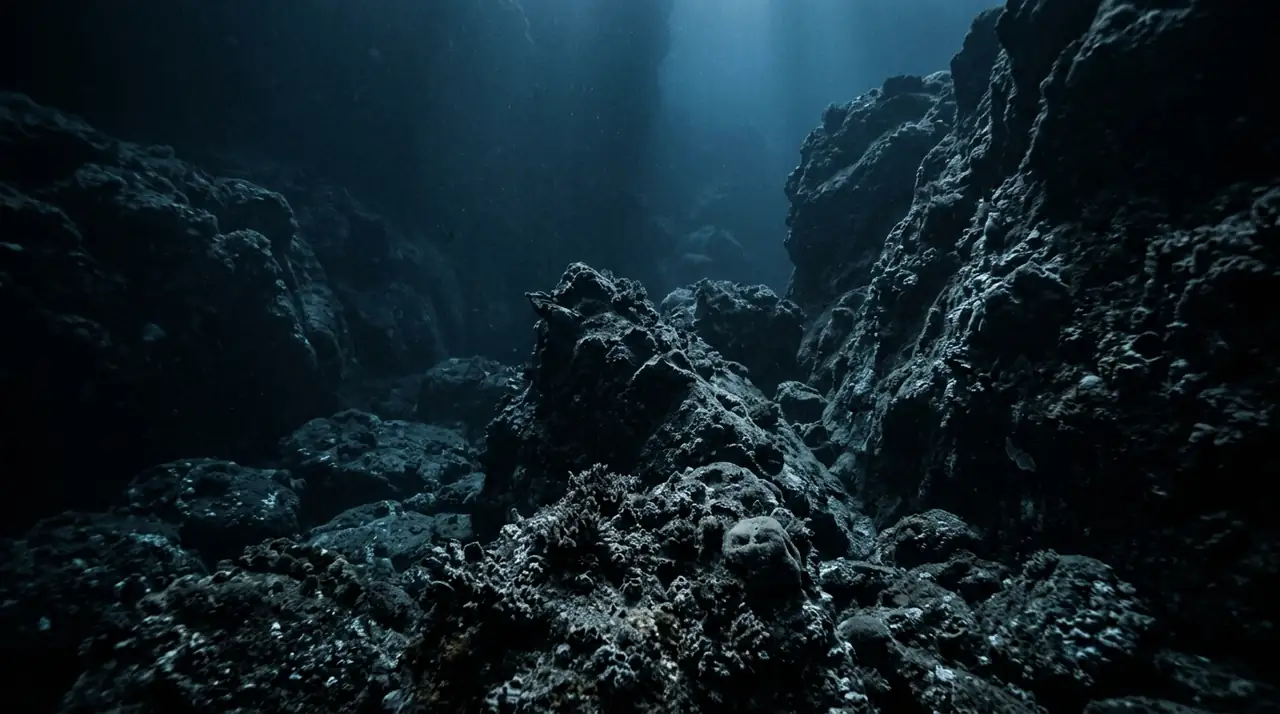
Mnemba Outside Reef is the wild counterpart to the gentle inner atoll that most divers experience when visiting Zanzibar's most famous marine area. While the protected lagoon side offers easy coral gardens and turtle encounters in bathtub-calm conditions, the outer wall faces the open Indian Ocean with full exposure to current, depth, and the pelagic life that deep oceanic water delivers. It is a genuinely different dive that happens to share an island with one of East Africa's most popular snorkelling destinations. The wall begins at a narrow reef flat around 8 metres depth and drops vertically to beyond 60 metres. The recreational section between 10 and 35 metres is where the action concentrates. Large gorgonian sea fans protrude from the wall face, angled into the prevailing current to capture plankton. Between them, soft corals in yellows and purples add colour to the grey limestone substrate. The wall is alive with movement: anthias swarm in clouds, lionfish hang inverted under overhangs, and moray eels peer from crevices. Green turtles are the stars here. I encountered seven on a single dive, most resting in alcoves carved into the wall face, their shells wedged securely against the current. One large female emerged from her resting spot as I passed, stretched her flippers, and glided effortlessly along the wall before tucking into another alcove twenty metres further. The density of turtles on this wall exceeds any site I have dived in the western Indian Ocean. At the edge of visibility, movement in the blue resolved into a pod of bottlenose dolphins. Perhaps fifteen individuals cruised along the wall, their movements purposeful and coordinated. They passed within fifteen metres, close enough to hear their clicks and whistles through the water, before continuing north along the reef edge. The encounter lasted barely a minute but elevated the entire dive. Giant trevally hunted along the wall edge in pairs and threes. A whitetip reef shark rested on a sandy ledge at 28 metres. Spotted eagle rays appeared twice, gliding parallel to the wall with their characteristic wing-beat rhythm. Mnemba Outside demands patience with conditions. Strong currents cancel dives regularly, and the site is only offered when wind, swell, and current align favourably. But when conditions permit, it delivers East Africa's most complete wall dive.
Early access
Plan a dive here
Open the DiveOne planner to sketch a recreational plan before you go. It is a planning assistant, not a dive computer.
Marine life
Dive profile
DEPTH PROFILE
DEPTH PROGRESSION & WAYPOINTS: Mnemba Outside Reef
Location
Frequently asked questions
How does the Outside Reef differ from Mnemba Atoll's inner sites?
Mnemba's inner atoll sites are shallow, sheltered, and suitable for all levels with calm conditions and abundant reef fish. The Outside Reef is fundamentally different: an exposed oceanic wall with strong unpredictable currents, depths exceeding 35 metres on the recreational section, and pelagic encounters that the sheltered inner sites rarely deliver. The trade-off is that weather and current conditions must align for the Outside to be diveable, meaning it is cancelled more often than inner sites.
What certification is required for Mnemba Outside?
Most operators require Advanced Open Water certification and a minimum of 30 logged dives for the Outside Reef. Strong currents, depth, and the exposed open-ocean setting demand confident buoyancy control and drift diving experience. A safety sausage and dive computer are considered mandatory. Some operators run a checkout dive on an inner site before permitting access to the Outside, particularly for divers they have not previously worked with.
When are dolphins most likely seen?
Bottlenose dolphins are most frequently encountered along the Outside Reef during the morning, typically on the first dive of the day between 7 and 9 in the morning. They travel along the outer reef edge hunting for fish, and encounters are often fleeting with the pod passing through the dive site within minutes. During the October to March season when the site is most frequently dived, dolphin encounters occur on roughly one in three dives. Spinner dolphins are occasionally seen in larger pods further offshore.
Reviews
Reviews
No reviews yet
Data Provenance
This profile is compiled from 3 operator submissions and 142 community logs. Key facts (depth, entry) are verified against official hydrographic charts.