Milford Sound
Overview
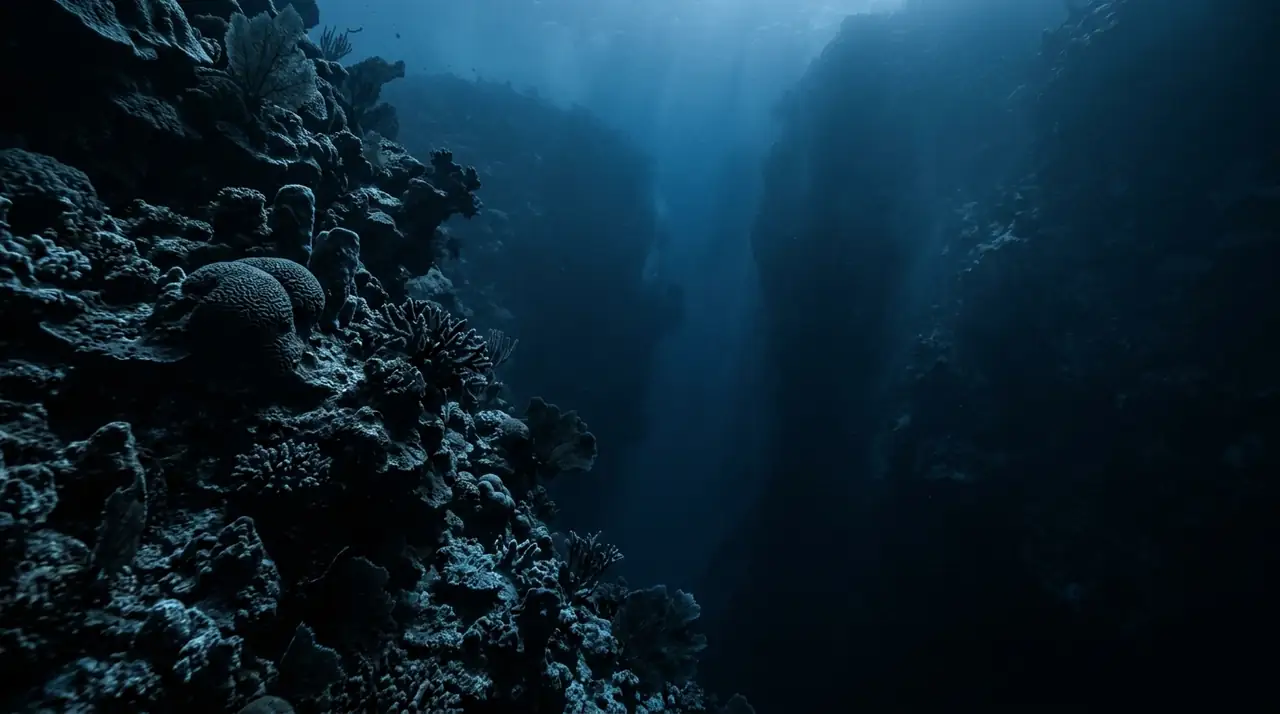
Milford Sound, known in Maori as Piopiotahi, is New Zealand's most celebrated fiord, a glacier-carved inlet flanked by sheer granite walls rising over 1,200 metres from the water. But beneath the dramatic surface scenery lies one of the world's most unusual diving environments, where deep-water species thrive at snorkelling depths and black coral forests grow in waters that would normally be far too shallow for them. The phenomenon that makes Milford Sound diving unique is its freshwater layer. With rainfall exceeding 8 metres per year, a permanent 3-5 metre layer of dark, tannin-stained freshwater from the surrounding rainforest sits atop the denser saltwater below. This dark cap blocks sunlight so effectively that the underlying saltwater exists in a state of perpetual twilight, replicating light conditions found at depths of 200 metres or more in open ocean. The result is a phenomenon known as deep-water emergence, where organisms that would normally inhabit the deep sea are found at accessible diving depths. Black coral, Antipathes fiordensis, is the star attraction. These delicate tree-like animals, whose skeleton is black but whose living tissue appears white or pale gold, typically grow below 80 metres in offshore waters. In Milford Sound, they flourish from just 8 metres depth, forming extensive forests that drape the fiord walls. Eleven-arm sea stars, brachiopods, ancient animals virtually unchanged for millions of years, tubeworms, and red coral complete a community that resembles the deep sea more than a shallow temperate coast. Descending through the freshwater layer is an experience unlike any other in diving. The first few metres are dark and murky, with visibility dropping to less than a metre. Then, as you pass through the halocline into the clear saltwater, the underwater world materialises around you, an eerie, atmospheric transition that heightens the sense of entering an alien environment. Below the freshwater cap, visibility typically ranges from 5 to 15 metres in the saltwater. The fiord is home to bottlenose dolphins, fur seals that rest on rocks near the entrance, and the rare Fiordland crested penguin. Crayfish are abundant on the walls, and sea perch hover among the black coral branches. Water temperatures range from 10 to 16 degrees Celsius, making drysuit diving standard. The diving season runs from November to April when weather is most stable, though diving is possible year-round for those prepared for the conditions. Access is from Te Anau, approximately two hours' drive through some of New Zealand's most spectacular mountain scenery.
Early access
Plan a dive here
Open the DiveOne planner to sketch a recreational plan before you go. It is a planning assistant, not a dive computer.
Marine life
Dive profile
DEPTH PROFILE
DEPTH PROGRESSION & WAYPOINTS: Milford Sound
Location
Frequently asked questions
Why is black coral found so shallow in Milford Sound?
Milford Sound receives up to 8 metres of rainfall annually, creating a permanent 3-5 metre layer of tannin-stained freshwater that sits on top of the denser saltwater below. This dark layer blocks most sunlight from reaching the deeper saltwater, mimicking deep-ocean light conditions at very shallow depths. Black coral, which normally grows below 80-200 metres in open ocean, thrives here from just 8 metres depth because the light levels match its preferred deep-water habitat.
What is it like diving through the freshwater layer in Milford Sound?
Descending through the freshwater layer is one of the most unique sensations in diving. The first 3-5 metres are dark and murky, stained brown by tannins from rainforest runoff and filled with suspended particles. Visibility can be less than a metre. Then suddenly, you break through into the clear saltwater below, and the underwater world opens up dramatically. The contrast is startling and atmospheric, like parting a curtain into another realm.
How do I arrange diving in Milford Sound?
Diving in Milford Sound is operated by specialist providers based in Te Anau, about a two-hour drive from the sound. Descend Scuba Diving is the primary operator, offering guided boat dives within the fiord. Due to Milford Sound's remote location and unpredictable weather, advance booking is essential. Dives are conducted from a purpose-built vessel, and full equipment including drysuits is provided. Water temperatures range from 10 to 16 degrees Celsius, so drysuit experience is recommended.
Reviews
Reviews
No reviews yet
Data Provenance
This profile is compiled from 3 operator submissions and 142 community logs. Key facts (depth, entry) are verified against official hydrographic charts.